Click this link to read the romance novel:


There can be little other explanation why, some twenty years after the release of the moderately enjoyable but by no means extraordinary The Devil Wears Prada, a creatively bankrupt follow-up has been foisted upon the film-going community. This probably sounds unfairly negative - the original is widely beloved and brought in a tidy $125M domestic in 2006 dollars - but this is certainly among the more extreme examples of nostalgia-mining. It is the kind of movie you attend simply to catch up with the characters, hear a few barbed one-liners from Meryl Streep, and ignore the turgid, mostly pointless storyline. It is, in many ways, the fashion world's equivalent of Star Trek: The Motion Picture.
The jaunty trailer for The Devil Wears Prada 2 promises something the movie fails to deliver: a revival of the snarky banter and edgy interactions that made the first two-thirds of the original so much fun. Sadly, all the good stuff is packed into that three-minute piece of marketing genius. The remaining 110 minutes of the actual film operate at a considerably lower level. All the primary players have returned: director David Frankel, screenwriter Aline Brosh McKenna, and stars Anne Hathaway, Meryl Streep, Emily Blunt, and Stanley Tucci. I am quite certain there were many commas and zeros on those paychecks.
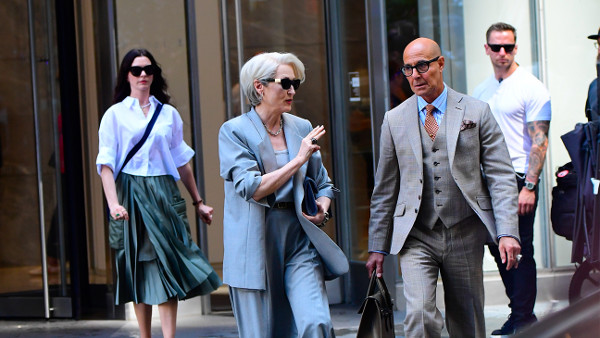 The film reprises nearly everything that was mediocre about
the first installment while discarding far too much of what was effective. To
quote my review from twenty years ago: Its trite message…rings false, and
the cloying ending feels like it was written for another film then tacked onto
the end of this one. Those words are even more applicable to the sequel.
It offers plenty of messages - writ large so they cannot be missed - but no true
depth. It is a collage of happily-ever-after endings that feel unearned,
populated by subplots and characters that take up space without justifying
their existence. As for the satirical zingers and acerbic one-liners? You must
hunt diligently to find them and be very generous if you want to laugh.
The film reprises nearly everything that was mediocre about
the first installment while discarding far too much of what was effective. To
quote my review from twenty years ago: Its trite message…rings false, and
the cloying ending feels like it was written for another film then tacked onto
the end of this one. Those words are even more applicable to the sequel.
It offers plenty of messages - writ large so they cannot be missed - but no true
depth. It is a collage of happily-ever-after endings that feel unearned,
populated by subplots and characters that take up space without justifying
their existence. As for the satirical zingers and acerbic one-liners? You must
hunt diligently to find them and be very generous if you want to laugh.
 In terms of narrative focus, the movie is equally confused.
I suppose the bottom line is a tardy acknowledgment that print journalism is
dying and that AI and uncaring billionaires are poised to gut the cultural core
of the artistic community. The plot mechanics contrive to bring former personal
assistant Andy Sachs (Anne Hathaway), now an award-winning features writer,
back into the orbit of her former boss, Miranda Priestly (Meryl Streep). It
seems a whiff of scandal has descended upon Runway magazine, and
Miranda’s septuagenarian boss thinks Andy - with her sterling reputation and
solid writing chops - is the ideal person to clean up the mess. Along the way,
Andy crosses paths with Nigel Kipling (Stanley Tucci) and Emily Charlton (Emily
Blunt), finds new love with the man who renovated her apartment, and discovers
Kenneth Branagh wandering around Miranda’s house, seemingly waiting for his
next outing as Poirot. (I may have invented that last bit. Or perhaps not.)
In terms of narrative focus, the movie is equally confused.
I suppose the bottom line is a tardy acknowledgment that print journalism is
dying and that AI and uncaring billionaires are poised to gut the cultural core
of the artistic community. The plot mechanics contrive to bring former personal
assistant Andy Sachs (Anne Hathaway), now an award-winning features writer,
back into the orbit of her former boss, Miranda Priestly (Meryl Streep). It
seems a whiff of scandal has descended upon Runway magazine, and
Miranda’s septuagenarian boss thinks Andy - with her sterling reputation and
solid writing chops - is the ideal person to clean up the mess. Along the way,
Andy crosses paths with Nigel Kipling (Stanley Tucci) and Emily Charlton (Emily
Blunt), finds new love with the man who renovated her apartment, and discovers
Kenneth Branagh wandering around Miranda’s house, seemingly waiting for his
next outing as Poirot. (I may have invented that last bit. Or perhaps not.)
The biggest disappointment, despite the sloppiness of McKenna’s cobbled-together screenplay, is the presentation of Miranda two decades after her first screen appearance. Streep has returned, but her performance is strangely subdued. Miranda seems old and tired. Her put-downs, once capable of making even the most stalwart underling cringe, have a stale, obligatory taste. When she first encounters Andy, she seemingly fails to recognize her former assistant. While this is intended to underscore Miranda’s cold-bloodedness - where every relationship is transitory and transactional - it made me immediately wonder about the onset of dementia.
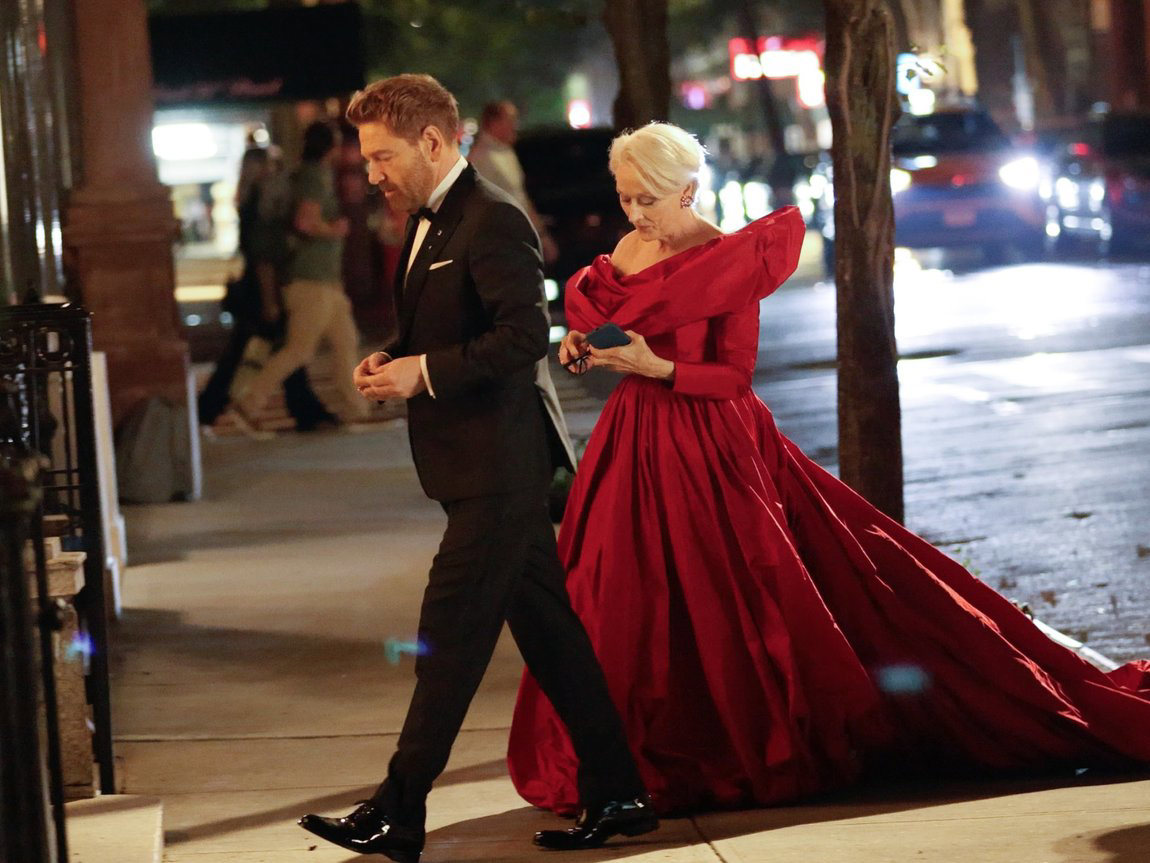 As sequels go, this is far from the worst. It delivers on
core expectations without ever expending the energy to do anything truly
creative. There are a few entertaining sequences along the way (keep an eye out
for a famous singer), a handful of cameos from people I did not recognize, and
the occasional castrating barb from Miranda that hits home. And, if Streep and
Blunt are a little disappointing, Stanley Tucci is in fine form. Fifteen
minutes into the film, I was desperately wishing they had made the story about
Nigel.
As sequels go, this is far from the worst. It delivers on
core expectations without ever expending the energy to do anything truly
creative. There are a few entertaining sequences along the way (keep an eye out
for a famous singer), a handful of cameos from people I did not recognize, and
the occasional castrating barb from Miranda that hits home. And, if Streep and
Blunt are a little disappointing, Stanley Tucci is in fine form. Fifteen
minutes into the film, I was desperately wishing they had made the story about
Nigel.
So, like so many sequels, fans will likely be satisfied while non-believers will give it a pass. This is not destination cinema. The Devil Wears Prada 2 is harmless enough, although it exists more as an afterthought than a legitimate continuation of a story that was fully told twenty years ago after the first 105 minutes. [Berardinelli's rating: 2 stars out of 4]
Labels: comedy, drama, Emily Blunt, satire
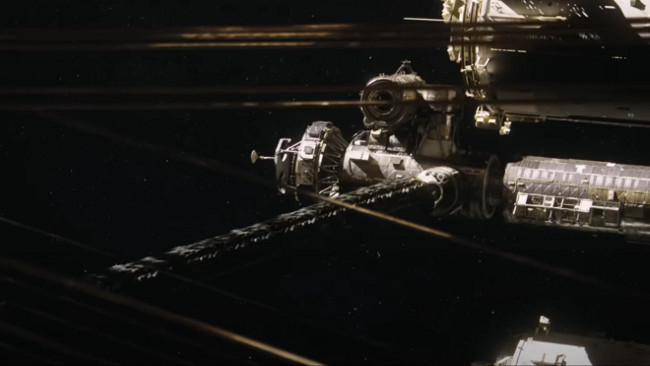
Labels: adventure, comedy, sci-fi
IMDb 82/100
MetaCritic (critics=77, viewers=82)
RottenTomatoes Averages (critics=82, viewers=94)
Blu-ray
Berardinelli's review


A film review by Sherin Nicole for RogerEbert.com on June 19, 2026.

Grief and love can make us vulnerable; they can also open us up to new
possibilities. That’s the central theme of this Black List breakout
screenplay, now a Netflix rom-com. Starring Zoey Deutch as Jill and Nick Robinson as Wes, Voicemails for Isabelle follows Jill, an aspiring pastry
chef, in the aftermath of losing the love of her life - her little sister.
Struggling to cope, she continues to leave Izzy voicemail messages. It’s
super sweet and very You’ve Got Mail, because Jill has no idea Wes, an
Austin real estate agent, is now receiving her extremely personal audio
diaries. He’s listening in on her deep dive into the horrors of dating
in San Francisco, and he’s all in.
Written and directed by Leah McKendrick, Voicemails for Isabelle is
two love stories in one. The first is the tale of two sisters. Jill is a
fully self-actualized ‘live, laugh, love’ kind of girl. Izzy
is chronically ill with cystic fibrosis and spends most of her time
between home and the hospital. That’s why Jill is living life x 2,
experiencing the biggest feelings in the most colorful ways so Izzy can
experience them too. When Izzy dies, Jill doesn’t slow down, but she
struggles to find a connection. After a life of dating disappointments
that started on the playground, the only person she can talk to is her
sister. She keeps replaying Izzy’s messages and responding with new
ones. As the movie points out, it’s her attempt to heal, and that’s
pretty healthy.
That’s where the second love story begins. Wes is a romantically
untouchable high-dollar realtor who spends his time with his cousin Andy
(Harry Shum Jr.) and Andy’s fiancée, Breeda (McKendrick). He’s the kind
of guy who’ll utilize any edge to attain his goals - even the ethically
questionable ones. It never occurs to Wes to stop listening to Jill’s
messages or to avoid using them in getting to know her when they
meet-cute. And although we cringe at his methods, the entire thing is so
adorable we’re mostly willing to forgive him - if Jill does - and he learns
his lesson.
This is a rom-com with many themes and an acute (sometimes pink) eye for
current dating woes, social media pitfalls, and misogyny. Giving us
classic rom-com aesthetics, McKendrick balances this story line whirlwind
without it becoming overblown. A big part of that is the writing and
cast. Deutch is fierce, but also awkward and perceptive, like Jill.
Robinson’s Wes is a sweetheart, but he’s clueless with wobbly
boundaries. Adding to the charm are Nick Offerman - when is he not the
secret sauce - and the character-acting chameleon Lukas Gage. They’re a
pair of posers/chefs who despise women, allowing the movie to cut deep
into the chauvinism found in the workplace. That works well alongside
the uncertainty that reigns during times of mourning. Shum Jr. and
McKendrick are the bestest couple, seeing and saying what’s right when
Wes doesn’t. If you don’t end up quoting them, that’s on you, bro.
This is a true rom-com; we know where it’s going, but the good times are
in the roadmap to getting there. The banter sparkles with the kind of
inside jokes found in friend groups (and the writing lets us in). The
grand gestures are unexpected, while the couple’s bonding moments are
real, ridiculous, or both. Voicemails for Isabelle has a high
emotional IQ, a romantic journey you’ll want to follow, and a real sense
of the lunacy that makes life hilarious - even when we’re hurting.
McKendrick packs a lot of ingredients into this big love burrito, and
just like the best taco trucks, it works ‘cause it meets us where we’re
at with the goods. (Nicole's rating: 3 stars out of 4)
Labels: comedy, drama, romance, tragedy
IMDb 74/100
MetaCritic (critics=62, viewers=59)
RottenTomatoes Averages (critics=67, viewers=90)
Netflix
Sherin Nicole's original review (3 stars out of 4)
A film review by James Berardinelli for ReelViews.net on Dec 18, 2025.

If you enjoy the music of Neil Diamond, then Song Sung
Blue will take you to places that not even Brother Love’s Traveling
Salvation Show can. But if the thought of hearing Sweet Caroline one more
time sounds like an act of torture, there’s nothing I can say about this
based-on-a-true-story drama that will soften the blow. It’s not about
Neil Diamond, but his music imbues the film with its energy and his songs are
omnipresent. He never makes an appearance, but his spirit hovers over the
entire production. Song Sung Blue is the (mostly) true story of
Diamond’s most devoted impersonation band, Lightning & Thunder, and when
magic happens on screen, it’s the result of the chemistry between Hugh Jackman,
Kate Hudson, and Diamond’s iconic music.
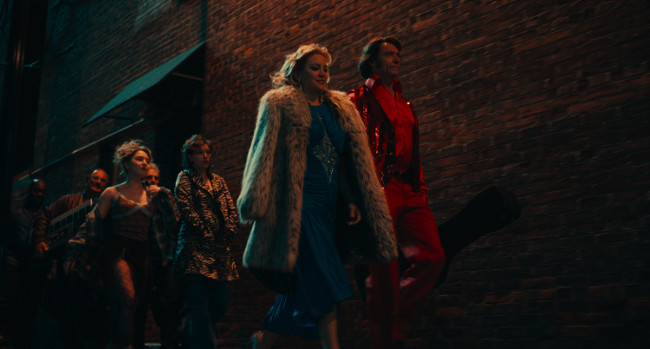
The first half of Song Sung Blue is frothy and
lighthearted, charting the romance between the two musicians - Mike Sardina,
a.k.a. Lightning (Jackman), and Claire Sardina, a.k.a. Thunder (Hudson) - which began when they first met in 1989. As their act evolves, he
morphs into Neil Diamond while she does Patsy Cline. Director Craig Brewer
gives us full renditions of a wide variety of Diamond’s greatest hits (with the
actual singer’s voice making a cameo - albeit for a Christmas song, not one of
his own melodies) as a backdrop to Mike and Claire’s deepening relationship.
They eventually marry and edge toward the cusp of stardom - opening for Pearl Jam
and singing along with Eddie Vedder on Forever in Blue Jeans - when tragedy
strikes.
 The film’s second half is more grounded. The rags-to-riches
arc peters out. There are physical challenges (she’s involved in a crippling
accident, he has a heart condition) and they must cope with the public’s fickle
fascination with tribute acts. And, with most of Diamond’s best-known songs
having been showcased during the first hour, the soundtrack becomes less
pop-heavy - at least until the rousing finale. Ultimately, this structure allows
Brewer to deliver a full serving of Diamond nostalgia without strip-mining the
singer’s life story. It’s a far better approach and makes Song Sung Blue
more accessible than either A Complete Unknown or Deliver Me from Nowhere, two recent examples of biographical overreach.
The film’s second half is more grounded. The rags-to-riches
arc peters out. There are physical challenges (she’s involved in a crippling
accident, he has a heart condition) and they must cope with the public’s fickle
fascination with tribute acts. And, with most of Diamond’s best-known songs
having been showcased during the first hour, the soundtrack becomes less
pop-heavy - at least until the rousing finale. Ultimately, this structure allows
Brewer to deliver a full serving of Diamond nostalgia without strip-mining the
singer’s life story. It’s a far better approach and makes Song Sung Blue
more accessible than either A Complete Unknown or Deliver Me from Nowhere, two recent examples of biographical overreach.
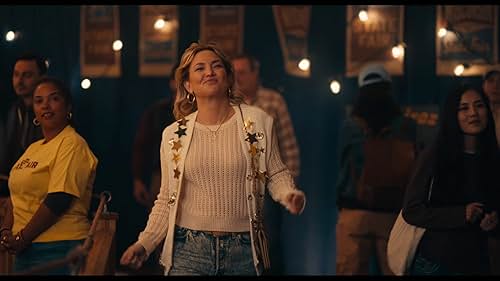
Jackman's interpretation of Lightning is solid. He’s got the
singing chops and does a convincing faux-Diamond, though he has more vocal
freedom since he’s not impersonating the singer directly but rather performing
a second-generation version. But Jackman, for all his star power, can’t quite
match Kate Hudson when it comes to lumens. This is the most magical she has
been since Almost Famous, another movie about the power of music.
There’s a kinship between Penny Lane and Claire - they’re soul mates of a sort - one
still young and unformed, the other older and more weathered. The thing that
surprised me most about Hudson’s performance was how good her voice is.
 Brewer’s source material for the screenplay is a
little-known 2008 documentary by Philadelphia-based filmmaker Greg Kohs, who
followed the duo on and off for about eight years, assembling footage. Kohs’ Song
Sung Blue did well on the film-festival circuit (it debuted at Slamdance)
but never gained much traction beyond that, in part because, despite their
renown in the Milwaukee area, Lightning & Thunder’s appeal never extended
much beyond regional interest. Still, when Brewer watched it, he recognized
the potential.
Brewer’s source material for the screenplay is a
little-known 2008 documentary by Philadelphia-based filmmaker Greg Kohs, who
followed the duo on and off for about eight years, assembling footage. Kohs’ Song
Sung Blue did well on the film-festival circuit (it debuted at Slamdance)
but never gained much traction beyond that, in part because, despite their
renown in the Milwaukee area, Lightning & Thunder’s appeal never extended
much beyond regional interest. Still, when Brewer watched it, he recognized
the potential.
As with most fictionalized versions of real events, Song Sung Blue doesn’t shy away from making changes to the historical record in the service of better drama and/or showmanship. The big moments in the movie are mostly reflective of real-life events, except the ending, which invents plenty of details, but the time frame is drastically condensed. Mike and Claire were connected for 17 years, but the movie shortens that to something like three or four years. (Their kids hardly seem to age.) Such quibbles, however, only matter to those who forget the mantra for movies like this: Never let the facts get in the way of a good story. And Song Sung Blue is a good story - heartwarming, uplifting, tear-jerking, and chock full of a beautiful noise. (Berardinelli's rating: 3 stars out of 4)
Labels: biography, documentary, drama, history, musical, tragedy,
IMDb 72/100
MetaCritic (critics=61, viewers=68)
RottenTomatoes (critics=77, viewers=97)
Netflix
Blu-ray
Jame Berardinelli's review (3 stars out of 4)

Ferrari drops us into Enzo’s life in early 1957, follows him through several months until just after the final Mille Miglia race (May 11-12), then exits with many plot threads left unresolved. It is therefore more of a snapshot than a full-fledged biography. The movie explores the business difficulties experienced by Ferrari (the company), which is drowning in red ink. Enzo, still emotionally rent by the death of his son, Dino (who died in June 1956), is involved in an increasingly difficult marriage with his wife of 34 years, Laura (Penelope Cruz), and is facing demands from his long-time mistress, Lina Lardi (Shailene Woodley), regarding his illegitimate son, Piero. While attempting to balance family issues, Enzo hires a new, hot shot driver, Alfonso De Portago (Gabriel Leone), and enters five cars into the 1000-mile cross-Italy Mille Miglia where a win would increase the company’s prestige sufficiently to allow Enzo to enter into a favorable partnership with a larger car manufacturer, such as Fiat or Ford.
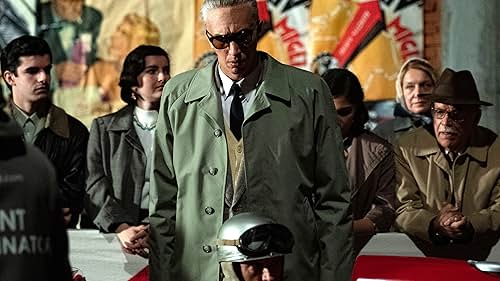 Mann’s typical high-energy approach imbues Ferrari
with intensity. The racing sequences generate tension and excitement
(especially the Mille Miglia). The film is less certain when focused on more
intimate interactions, such as Enzo’s dialogues with his wife and mistress. Mann’s
zenith as a filmmaker was in the 1990s (when he made, in succession, The Last of the Mohicans, Heat, and The Insider). Since then, his films
have been largely hit-and-miss affairs and he hasn’t made anything for eight
years (2015’s Blackhat). Ferrari seems an odd choice for his
return to the spotlight but, despite occasional moments of cinematic flair, one
would never associate this with the man who spearheaded Miami Vice.
Mann’s typical high-energy approach imbues Ferrari
with intensity. The racing sequences generate tension and excitement
(especially the Mille Miglia). The film is less certain when focused on more
intimate interactions, such as Enzo’s dialogues with his wife and mistress. Mann’s
zenith as a filmmaker was in the 1990s (when he made, in succession, The Last of the Mohicans, Heat, and The Insider). Since then, his films
have been largely hit-and-miss affairs and he hasn’t made anything for eight
years (2015’s Blackhat). Ferrari seems an odd choice for his
return to the spotlight but, despite occasional moments of cinematic flair, one
would never associate this with the man who spearheaded Miami Vice.
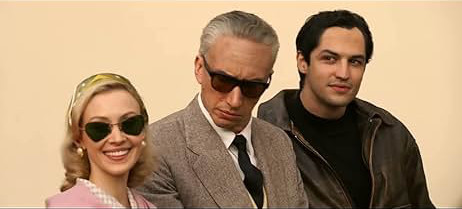
Ferrari is anchored by the strength of Driver’s performance. Partially obscured underneath effective aging makeup, he could easily be mistaken for Michael Imperioli. Driver’s portrayal presents Ferrari as a tragic figure trapped between a loveless marriage with a mentally unstable wife and an affair with the woman and child he wishes he could acknowledge. He is hyper-focused on business but not so consumed that he ignores the gravesite of his recently-deceased adult son, Dino. To the extent that we come to understand Ferrari, it’s more due to Driver’s performance than anything in the screenplay. He is ably supported by a vibrant Penelope Cruz, who enlivens the production whenever she’s on screen. The scene in which her character confronts Enzo with the truth behind her betrayal is riveting.
Ferrari may prove a difficult sale for distributors
NEON and STX Entertainment. Despite Mann’s involvement, it doesn’t have the
cache to be a prestige film and movies of this nature are typically finding
greater interest on streaming sites than in theaters. Although Driver’s
performance may earn some deserved Oscar buzz, that likely won’t be enough to
push the needle and there probably aren’t enough sports car enthusiasts to
juice the box office. As a well-acted standard-order bio-pic, Ferrari
delivers but as something more, it falls short. (Berardinelli's rating: 3 stars out of 4)
Labels: action, auto-racing, biography, drama, Ferrari, history, romance, sport, tragedy
IMDb 64/100
MetaCritic (critics=73, viewers=65)
RottenTomatoes (critics=73, viewers=73)
Blu-ray
Netflix
Berardinelli's original review (3 out of 4 stars)
Blogger's comment: While I appreciate Berardinelli's perspective, I believe this period in time was a defining moment in Ferrari's life and I appreciate the historical accuracy. The 1957 Mille Miglia was marred by the tragic death of Ferrari driver Alfonso de Portago, his navigator and nine roadside spectators, including five children, in the village of Guidizzolo when his car hit an object on the road, blew a tire, spun out and became airborne. As a result, the Italian government forever banned all racing on public roads, permanently ending the thousand mile road race.
If you are a fan of auto-racing, and you appreciate films like Grand Prix (1966), RUSH (2013), Ford v Ferrari (2019) and F1: The Movie (2025), I predict you will enjoy Ferrari.
