Pages

Showing posts with label Robert Redford. Show all posts

Friday, May 8, 2026

Barefoot in the Park (1967) [G] ****

 An uncredited review published in Time magazine, June 9, 1967

Barefoot in the Park is one of the few plays to be reincarnated on-screen while playing on the Broadway stage. Happily, it loses little in transition.

Essentially, author Neil Simon has taken a plot as bland as a potato, sliced it into thin bits—and made it as hard to resist as potato chips. Two spoiled young honeymooners (Robert Redford and Jane Fonda) settle into a six-flight walk-up apartment in Greenwich Village. In Ogden Nash's phrase, a little incompatibility is the spice of life, particularly if he has income and she is pattable. And so it proves in Barefoot. The puny pad she has chosen has no heat, no bathtub, and a hole in the skylight.

When Redford remonstrates, Fonda starts sniping - only to agree to a cease-fire when her middle-class mother (Mildred Natwick) arrives. Before long, they are joined by a randy reprobate of a neighbor (Charles Boyer) known as the Bluebeard of Tenth Street. Bluebeard leads the way to an Albanian hash house that serves such delicacies as black salad and ouzo. The foursome eventually wend their way home, whereupon Fonda and Redford drunkenly declare all-out war.

She is a nut, he declares, whose idea of fun is walking barefoot in the park in 17-degree weather. Your laundry arrived, she simpers. They stuffed your shirts beautifully. But if the couple's happiness seems as short as their tempers, their misery is just as temporary. By the final reel they are neck and neck in a race for the bed, and even Natwick and Boyer have found something in common - stomach trouble.

The film is not an original-cast production. Sly substitutions have been made, notably Fonda for Broadway's Elizabeth Ashley. Jane's performance is the best of her career: a clever caricature of a sex kitten who can purr or scratch with equal intensity. Among the tastiest leftovers from the stage are Redford as the harassed husband and Mildred Natwick, skittering on the edge of hysteria as she articulates the film's philosophy to her daughter: Make him feel important. If you do that, you'll have a happy and wonderful marriage, like two out of every ten couples.

Labels: comedy, Robert Redford, romance
IMDb 70/100
MetaCritic (critics=55, viewers=68)
RottenTomatoes (critics=81, viewers=79)
Blu-ray

Blogger's comments: Barefoot in the Park is notable for another reason. When Redford asks something like: We're going to be doing this for the next fifty years? and Fonda replies: We're only going to be married for fifty years? it reminded me that exactly half a century later they would star together in Our Souls at Night (2017) and she would say in an interview that she had fallen in love with him so deeply that she would look into his eyes and forget her lines. And I can see that passion in the intensity of her performance. 

And there's something else that most viewers will not see. The opening scene of the film is at the Plaza Hotel in New York City, where they get out of their horse-drawn carriage and enter the hotel to begin their week-long honeymoon. The same Plaza Hotel setting is used six years later in the final scene of the Redford - Streisand film The Way We Were (1973).

Arriving at the Plaza Hotel, Barefoot in the Park


Final Scene from The Way We Were


Monday, February 2, 2026

Downhill Racer (1969) [M] ****

A film review by Roger Ebert for Chicago Sun-Times on Dec 22, 1969.


Some of the best moments in Downhill Racer are moments during which nothing special seems to be happening. They’re moments devoted to capturing the angle of a glance, the curve of a smile, an embarrassed silence. Together they form a portrait of a man that is so complete, and so tragic, that Downhill Racer becomes the best movie ever made about sports — without really being about sports at all.

The champions in any field have got to be, to some degree, fanatics. To be the world’s best skier, or swimmer, or chess player, you’ve got to overdevelop that area of your ability while ignoring almost everything else. This is the point we miss when we persist in describing champions as regular, all-round Joes. If they were, they wouldn’t be champions.

This is the kind of man that Downhill Racer is about: David Chappellet, a member of the U.S. skiing team, who fully experiences his humanity only in the exhilaration of winning. The rest of the time, he’s a strangely cut-off person, incapable of feeling anything very deeply, incapable of communicating with anyone, incapable of love, incapable (even) of being very interesting.

Robert Redford plays this person very well, even though it must have been difficult for Redford to contain his own personality within such a limited character. He plays a man who does nothing well except ski downhill — and does that better than anyone.

But this isn’t one of those rags-to-riches collections of sports clichés, about the kid who fights his way up to champion. It’s closer in tone to the stories of the real champions of our time: Sandy Koufax, Muhammad Ali, Joe Namath, who were the best and knew they were the best and made no effort to mask their arrogance. There is no humility at all in the racer’s character: Not that there should be. At one point, he’s accused by a fellow American of not being a good team man. Another skier replies: Well, this isn’t exactly a team sport.

It isn’t; downhill racing is an intensely individual sport, and we feel that through some remarkable color photography. More often than not, races are shot from the racer’s point of view, and there are long takes that nearly produce vertigo as we hurtle down a mountain. Without bothering to explain much of the technical aspect of skiing, Downhill Racer tells us more about the sport than we imagined a movie could.

The joy of these action sequences is counterpointed by the daily life of the ski amateur. There are the anonymous hotel rooms, one after another, and the deadening continual contact with the team members, and the efforts of the coach (Gene Hackman in a superb performance) to hold the team together and placate its financial backers in New York.

And there is Chappellet’s casual affair with Carole Stahl (Camilla Sparv), who seems to be a sort of ski groupie. She wants to make love to him, and does, but he is so limited, so incapable of understanding her or anything beyond his own image, that she drops him. He never does quite understand why.

The movie balances nicely between this level, and the exuberance of its outdoor location photography. And it does a skillful job of involving us in the competition without really being a movie about competition. In the end, Downhill Racer succeeds so well that instead of wondering whether the hero will win the Olympic race, we want to see what will happen to him if he does. [Ebert's rating:4 stars out of 4]

Blogger's note: When you watch the film you will notice that in German ski racing, in the starting countdown (... three, two, one) the term zwo is used, instead of zwei, for the number two, as in drei, zwo, eins. This is a specific safety measure, designed to insure that zwei (two) is not misheard as drei (three).

Labels: drama, Robert Redford, romance, sport
IMDb 63/100
MetaCritic (critics=89, viewers=74)
RottenTomatoes (critics=85, viewers=57)
Blu-ray
Roger Ebert's original review


Saturday, December 13, 2025

Indecent Proposal (1993) [R] ***

A film review by James Berardinelli for reelviews.net 


David and Diana Murphy (Woody Harrelson and Demi Moore) are the ideal young couple. They have everything -- love, affection, companionship -- except money. Their combined meager income is just enough to keep them afloat, but when the recession hits and David loses his job, they go under. Needing fifty thousand dollars to satisfy their creditors, but possessing only five, they go to Las Vegas to get the rest at the tables. There they meet John Gage (Robert Redford), a billionaire businessman who throws around millions like pocket change. Gage is instantly attracted to Diana, and, in an attempt to lure her away from her husband, makes a proposal: he will give them one million dollars for one night with her.

Director Adrian Lyne, best known for bringing Fatal Attraction to the screen, is at the helm for Indecent Proposal. One of the key elements of the 1987 Glenn Close/Michael Douglas thriller -- obsession -- is also present here, albeit without the tension and violence that gave Fatal Attraction its spark. Here, a similar situation is examined from another perspective. Gage goes after Diana not with knives and threats, but with kind words, generous gifts, and moving tales of his youth.

The story is divided into three parts: the setup, the act, and the aftermath. Despite a somewhat confused sense of time early in the film, aspects of the first part work. We get a real sense of character, and the relationship between Diana and David comes across as genuine. Once the setup is over, however, Indecent Proposal starts to fall apart, with the implausibilities and contrivances getting worse with every passing minute.

I suppose the theme is that money can't buy love, but that message gets so muddled during the second half of the film that we're not sure what to believe by the end. Indecent Proposal ends with an audible thud as screenwriter Amy Holden Jones resorts to a hard-to-believe quick fix to conclude things.

From the voice-over narration to the incessant, unnecessary commentary, everything is overexplained. Any time there could be a misinterpretation, someone will say something to clarify matters. For a movie that is supposed to be a thinking romance, this one doesn't have a high opinion of who's supposed to be doing the thinking.

Demi Moore has a certain appeal as the beautiful woman caught between two men, and Robert Redford, no longer the sex symbol he once was, is effective the jaded, lonely billionaire striving for love -- the one thing that has eluded him for his entire life. However, while these two hold their own, Woody Harrelson has trouble once his role requires more than smiles, kisses, and tender stroking. He goes through all the motions, but the force of emotion necessary for us to empathize with David is absent.

The need to mold Indecent Proposal into a recognizable Hollywood type hurts its chances of saying, or being, anything meaningful. There are undercurrents of an intriguing story in Indecent Proposal, but they never reach the surface. Director Adrian Lyne may not be remaking Fatal Attraction, but the same audience-pleasing mentality is evident in this stagnant motion picture. [Berardinelli's rating: 2 stars out of 4]


From Celebrity News on Facebook:

When Robert Redford agreed to play billionaire John Gage in Indecent Proposal (1993), it caught many by surprise. Throughout his career, Redford had built a legacy portraying idealists and heroes — the Sundance Kid (Butch Cassidy and the Sundance Kid), Hubbell Gardiner (The Way We Were), Norman Sonny Steele (The Electric Horseman), Roy Hobbs (The Natural), Denys Finch-Hatton (Out of Africa), Tom Booker (The Horse Whisperer). Here, he was stepping into morally gray territory: a powerful man offering a struggling couple one million dollars for a night with the wife.

What many don’t know is that Redford was initially reluctant to take the part. He feared that Gage would come off as a sleazy villain, lacking depth or humanity. To ease his concerns, director Adrian Lyne revised the script with Redford’s input. Redford didn’t want Gage to be a caricature of wealth and manipulation — he wanted him to be charming, intelligent, even alluring. The story, he believed, would resonate more if audiences found themselves truly conflicted. The real power, he said, is in making people ask: Would I take the deal?

One memorable moment during the Las Vegas shoot underscored Redford’s quiet charisma. Between takes in a real casino, extras and even hotel staff began approaching him — not as an actor, but as if he really were a billionaire. Photos, autographs, flirtations — Redford’s aura blurred the line between fiction and reality. Demi Moore later joked, If Robert Redford asked you to dance, you wouldn’t say no — million dollars or not.

The film stirred cultural debate upon release, with many divided over its central premise. Redford, however, defended it as a story not about money or lust, but about the fragility of love, the boundaries of trust, and the ethical discomfort of choices no one wants to make. For him, John Gage wasn’t the villain — he was the question. And Redford, ever the thoughtful performer, made sure we didn’t walk away with easy answers.

Labels: drama, Robert Redford, romance
IMDb 6.0/10
MetaCritic (critics=45, viewers=56)
RottenTomatoes (critics=34, viewers=47)
Blu-ray
Suite from Indecent Proposal by John Barry


Tuesday, December 2, 2025

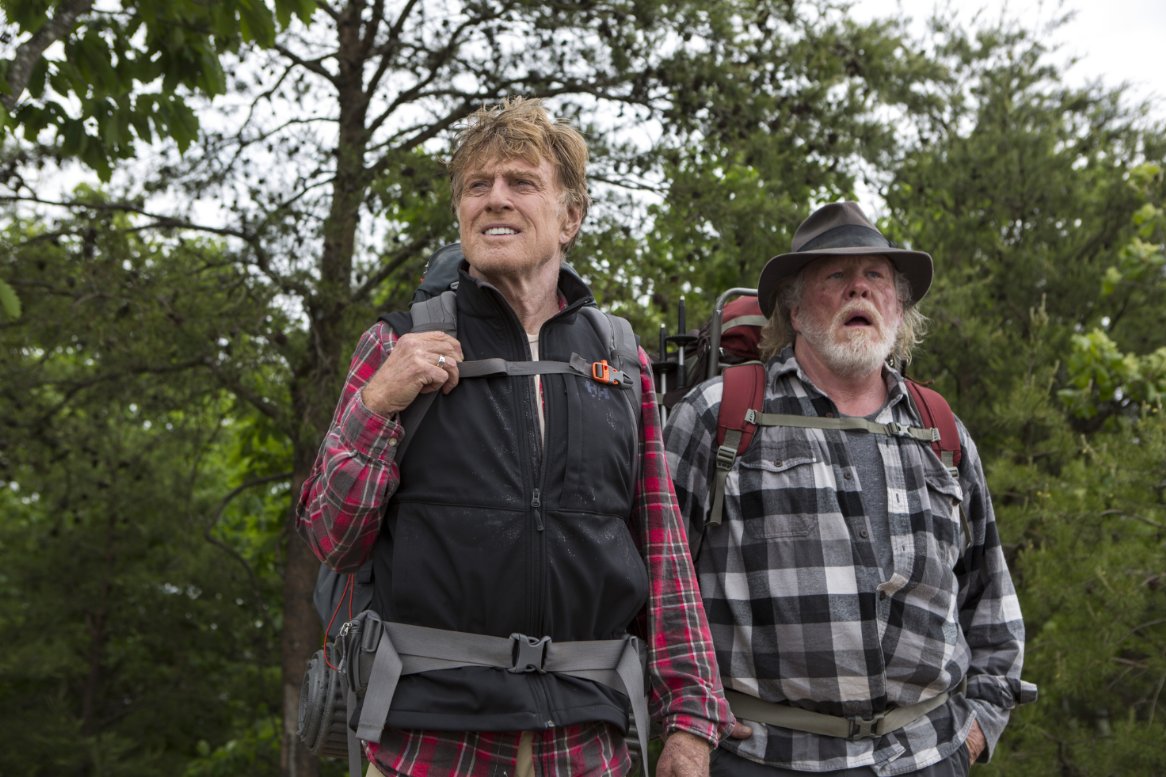
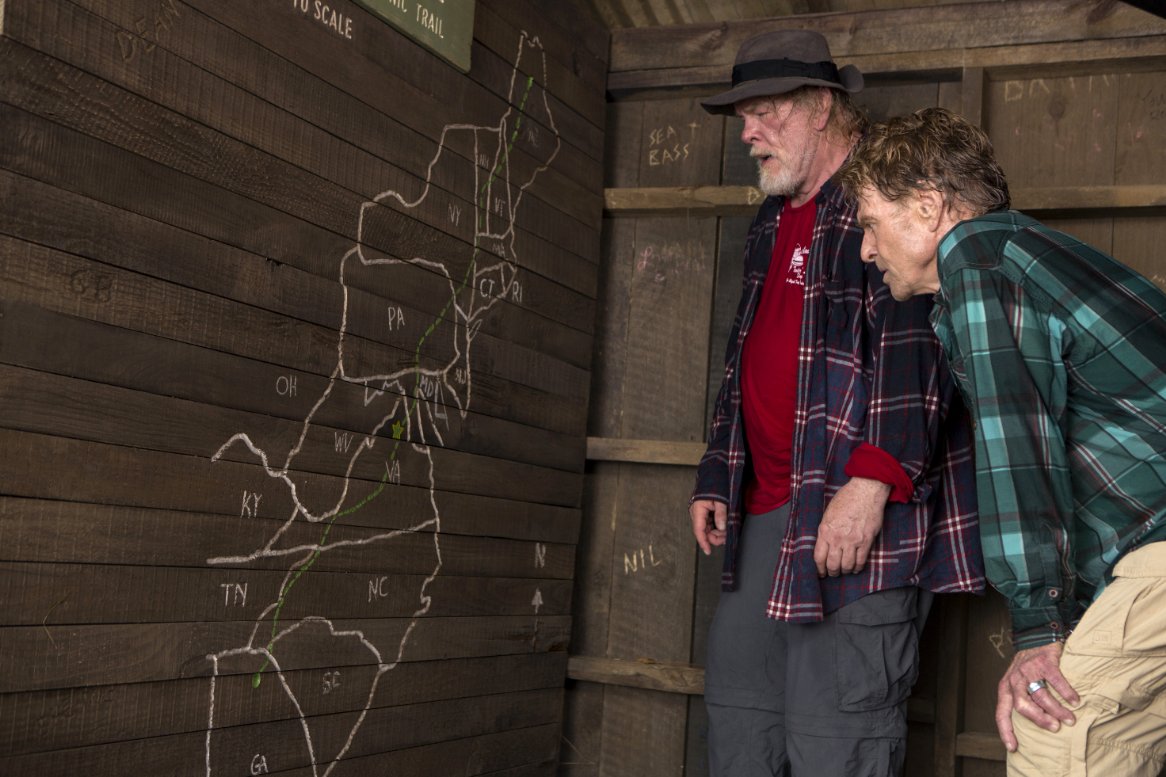
A Walk in the Woods (2015) [R] ***

A film review by James Berardinelli for ReelViews.net on Sept. 4, 2015.


A couple of old guys taking a walk on the Appalachian Trail - it doesn't sound like a winning motion picture formula and, as it turns out, it isn't. Like all road trip movies, the success (or lack thereof) of A Walk in the Woods relies heavily on the chemistry between the two leads, in this case Robert Redford and Nick Nolte. And, although both men do a reasonable job inhabiting their characters, as an odd couple, they don't click. There's something missing. Maybe if this had been made 20 years ago by Walter Matthau and Jack Lemmon. Or even 10 years ago, as originally planned, with Redford and Paul Newman…

A Walk in the Woods is surprisingly funny at times but, like many comedies, it runs out of steam about halfway through. Some of the humor is unexpectedly lowbrow, at least insofar as anything with Redford could be considered lowbrow. The iconic actor generally takes the high road, leaving the crass comments and physical slapstick to Nolte. There are some clever, witty one-liners. I found myself laughing more than once or twice but the jokes, like the movie as a whole, lack staying power. The first half is significantly more enjoyable than the second.


The narrative is more concerned with the predictable mismatched buddies interaction between Redford's Bill Bryson and Nolte's Stephen Katz than it is with the terrain they're crossing. Last year's Wild, with Reese Witherspoon, did a better job illustrating the perils of traveling the more than 2100-mile wilderness path from Georgia to Maine. Here, things like bears, slips and falls, and bad weather serve as punchlines. Following the road movie formula, A Walk in the Woods is divided into clearly delineated episodes: being trapped in the company of the most annoying hiker to walk the earth, flirting with an attractive motel owner, etc. The film also has a message Yoda would disagree with: trying is what really matters.

Bryson, a renowned travelogue author, decides to walk the Appalachian Trail on a whim - perhaps it's a delayed mid-life crisis or maybe he's thinking of a bucket list. His wife, Catharine (Emma Thompson), won't let him make the hike alone. After sending out feelers to most of his old friends and striking out, he is forced to invite the only one with interest - a man he hasn't seen in decades and with whom he didn't part on the best of terms. By his own admission, Katz hasn't done much with his life, and is so out-of-shape, it looks like he might have trouble hiking for a mile, let alone 2100+ of them. Together, the codgers hop on a plane to Georgia and the odyssey begins.


The screenplay was loosely adapted from Bill Bryson's nonfiction book and is directed by Ken Kwapis, who has an extensive TV resume to go along with a few big screen titles (for example, The Sisterhood of the Traveling Pants). There are times when one gets the sense Kwapis wants to capture the majesty of the trail but, even though there are some spectacular mountain shots, the postcard moments don't last long enough to inspire awe. Added to that, there's an instance in which shoddy production design undermines a scene. With ceramic rocks and an awful matte painting in the background, this key sequence is so obviously studio-bound that it becomes a distraction.

Decades removed from being considered a heartthrob, Redford is still able to command the camera's attention with his innate charisma and likability. He's a good foil for Nolte's oafishness; it's surprising the two don't mesh better in an oil-and-water fashion. The lighthearted tone keeps A Walk in the Woods from becoming too dour and, in contrast with other wilderness adventure movies (like the aforementioned Wild and the similarly-titled Into the Wild), there's never a sense that Nature is more than a cantankerous prankster. The message about mortality is underplayed - older people may be spry of mind but their bodies often don't cooperate. Any bittersweet element this might have injected into the proceedings is quickly washed away by a jokey turn. The film adamantly rejects being serious for more than a passing moment. A Walk in the Woods is pleasant but inconsequential, a passing diversion rather than a worthy cinematic destination. (Berardinelli's rating: 2.5 stars out of 4)

Labels: adventure, biography, comedy, drama, Robert Redford
IMDb: 64/100
MetaCritic (critics=51, viewers=57) 
RottenTomatoes (critics=46, viewers=48) 
Blu-ray
Berardinelli's original review


Friday, November 28, 2025

Inside Daisy Clover (1965) [PG] ***

A film review by Randy Miller III for blu-ray.com on July 4, 2020.

Movies about Hollywood's dark underbelly were nothing new by 1965, but Inside Daisy Clover explores the subject through a young woman who's quite literally pulled off the streets to be the next big thing. Former child star Natalie Wood portrays Daisy Clover, who lives with her mom near the Santa Monica Pier and may just be the least convincing 15-year-old ever portrayed on film. She ekes out a living selling fake autographs but loves singing, and is surprised to learn that the head of a major studio, Raymond Swan (Christopher Plummer), is interested in a demo record she sent. After a limo ride to Swan Studios, the young tomboy is caught off guard by his cold and uncaring demeanor: Raymond tears her down while promising to deliver Hollywood's new rising star to the unsuspecting masses. She's charmed by fellow studio actor Wade Lewis (Robert Redford) and they develop a whirlwind romance, which ends up doubling as a microcosm of her brief time in the spotlight: it's very exciting, a little scary, and doesn't end well.


It sounds compelling enough on paper, but Inside Daisy Clover is a clear case of a film whose execution doesn't quite measure up to its ambition. Very little seems wrong at first glance: Wood acquits herself nicely (except for that age discrepancy -- though still youthful, she was close to thirty during production), there are a number of genuine twists and turns, and the supporting performances by Plummer and Redford are great. Other small parts, such as Raymond's wife Melora (Katharine Bard) and Daisy's soon-to-be-estranged mother Lucile (Ruth Gordon) are filled out nicely too. The biggest problems lie with Inside Daisy Clover's structure and a lack of ability to sell its own material: Wood's character is never all that convincing as the next big thing, nor is her rise to fame ever shown from a public perspective. The extremely insular nature of her journey ends up working against it, keeping outsiders at arm's length while never making a believable sales pitch. Even Daisy's trademark song, which is repeated ad nauseum, is forgettable... and to make matters worse, all of Wood's original vocals were re-recorded by singer Jackie Robin Ward.

Of course, that's not to say that Inside Daisy Clover is without merit... even aside from a few highlights mentioned above, most of which are related to the lead and supporting performances. Any and all scenes between Wood and Redford are easily among the film's best, as they seem to best capture that perfect balance of excitement mixed with a little bit of uneasiness. André Previn's original score and Charles Lang's cinematography are both excellent, often working double duty to capture the atmosphere of 1930s Santa Monica and the surrounding area. For these reasons, the film also serves as an invaluable time capsule: even though many parts are made up to reflect that earlier decade in which Inside Daisy Clover takes place, there's an undeniable charm to the signage, store fronts, and much quieter atmosphere that seem to evoke the 1960s as well. Those with Californian roots may enjoy the film for that reason alone. But aside from die-hard fans of the cast and setting, this one's tough to recommend sight unseen.


Labels: drama, music, Robert Redford, romance
IMDb 61/100
RottenTomatoes (critics=31, viewers=50)
Blu-ray


Sunday, August 31, 2025

This Property is Condemned (1966) [NR] ****

A film review by Glenn Erickson for dvdtalk.com.


Adapted from one of his less well-known plays, This Property is Condemned should have been titled Tennessee Williams' Greatest Hits. It's all there, the depression setting with crude men circling like dixie moths around an oversexed child-woman undergoing the spiritual crisis of losing her dignity to 'the kindness of strangers.'

In glorious Technicolor and shaped as a star vehicle for the ultra-glamorous Natalie Wood, the basically trashy little story is bent all out of shape. Interesting casting makes it fun to watch and it stands as a good example of Hollywood trying to push the limits of the production code, but overall the film fails - we've seen it all before, and the fancy trimmings just make it look more fake than it is.

Railroad agent Owen Legate (Robert Redford) comes to the small town of Dodson Mississippi to lay off most of its railroad employees, many of whom live and carouse at the boarding house of Hazel Starr (Kate Reid). Owen grows fond of Hazel's younger daughter Willie (Mary Badham) but falls in love with her older sister Alva (Natalie Wood) a vivacious beauty. But the wicked Hazel exploits Alva for the men she attracts, and Alva's already on the way to being considered a loose woman - at age seventeen.

Depression Mississippi never looked so good. James Wong Howe's color is breathtaking and the grimy depression folk look like glamorous movie stars, well, at least when they're impersonated by Natalie Wood and Robert Redford. Paramount's art department makes sure that every period detail smack us right on the nose, even though hairstyles and costumes go to pot as soon as Alva Starr hits the streets of New Orleans. 

The familiar story and the overall Hollywood glitz are what do in This Property is Condemned, not the acting. Alva Starr needs to be a ravishing young thing like Natalie Wood to raise all the excitement the story demands. If only her makeup and hairstyles were keyed to the story instead of the requirements of her star image.

Robert Redford had about the slowest and least exciting career arcs of any young 60s actor. In both this film and the same year's commercially disastrous The Chase he comes in for some physical punishment. Yet he's still an inexpressive pretty face - whenever he reacts in dumb shock to some real or imagined offense by Alva, we have to wait for his next dialogue to find out how he really feels. Redford only came into his own in later pictures like Butch Cassidy and the Sundance Kid, where he was permitted to be funny too.

Even the greasy grotesques that surround Redford are Hollywood off-the-shelf types. Charles Bronson is good, but his role as a crude working man uses his physical type in the same way he was shoehorned as an Indian a decade before. Robert Blake is an unappealing crybaby. The fat cat who just wants 'a few weeks of Alva's kindness' is the anonymous-looking but shudder-producing John Harding, and is much more successful for being an unfamiliar face.

The best thing in the picture is Kate Reid as Hazel, Alva's manipulative mother who literally tries to prostitute her own daughter. It's an extreme character and it takes a talent like Reid to make it work; once again it's the actress's unfamiliarity that allows us to believe in her.

The production bends over backwards to make everything pretty. The locations may be authentic but the atmosphere is not. In his second film, director Sydney Pollack might not have carried the weight to wrest the film from powerful Paramount craft departments, or perhaps this is producer Ray Stark's idea of how to make a movie. Co-producer John Houseman is associated with great films, many of them commercial failures, but there's little of his dark literary undercurrents on display here.

What we have is a big dose of Hollywood gloss. The effort to be daring within the limits of the production code makes every peek-a-boo glimpse of Natalie's body seem forced and silly. There's a chaste skinny-dipping scene and chaste opportunities for Natalie to get nude for dialogues with Reid and Redford. By the time Redford charges into her shower, it's just ridiculous. The movie is too glamorous and Wood too regal a star to profit from naturalistic touches like partial nudity which only emphasizes what the film cannot show rather than what it could show. Hollywood directors demanded the freedom to have adult material in films, and the MPAA finally gave them Valenti and the ratings system.

This Property is Condemned is a casualty of the transition period when tame racy pictures carried the disclaimer Intended for Mature Audiences. The odd thing is that Ms. Wood wouldn't have done nude scenes anyway. One of the last of the real studio-grown stars, she was no exhibitionist and didn't need the exposure to get attention. Interestingly, after a couple of more films and reasonable success with the dated Bob and Carol and Ted and Alice, she stopped showing up on theater screens.

This Property is Condemned is also noted for Francis Ford Coppola's leap into studio writing. He went right from Roger Corman's stable of talent to script doctoring for pictures like this one, and discerning his input isn't easy. Something's off in this picture, for just when it looks like it's over, with a pullback helicopter shot and everything, the locale changes to the big city and the story lumbers on for another twenty minutes of false conclusions. We don't want to see Alva become a prostitute, or Charles Bronson come busting back in for revenge and kill somebody. Even though neither of those things happen, what does happen isn't very satisfying.

Nobody should take credit for the awkward framing device with little sister Mary Badham walking the railroad tracks wearing Natalie's dress and singing her old song. She isn't half as convincing as she was in To Kill a Mockingbird and the construction is an obvious bore: See that old house ... it all happened right there. If This Property is Condemned was more or less ignored by audiences, it was because they'd seen it all before.

Paramount's DVD of This Property is Condemned has nothing to be ashamed of - the DVD looks great and sports colors that pop like real Technicolor. James Wong Howe's showoff images, such as the beautiful shot of Alva blowing out her birthday candles, will certainly please Natalie Wood's fans. The Audio is as solid as the picture. There are no extras.

Labels: drama, Robert Redford, romance, tragedy
IMDb 70/100
RottenTomatoes (critics=62, viewers=76)
Blu-ray
Original Glenn Erickson review


Thursday, August 28, 2025

The Great Waldo Pepper (1975) [PG] ***/****

A film review by Roger Ebert on January 1, 1975


Waldo Pepper is, as he admits with a shy smile, the second greatest flier in the world. The greatest is Ernst Kessler, the German ace who shot down 70 foes in World War I. But that was more than a decade ago, and now Kessler, as much as Pepper, is reduced to peddling $5 plane rides and doing stunt flying during the last years of barnstorming. The pay isn’t good, but the work is lousy: I’m not selling good flying, explains the proprietor of Dillhoefer’s Air Circus. I’m selling sudden death.

Even so, the air circus at times finds itself performing before groups of half a dozen agape schoolboys. The days when pilots could land on Main Street are over; the airlines and the air mail are established; the government wants to regulate flying and give it an image of greater safety. The world is closing in on Waldo Pepper. And, as played by
 Robert Redford, he hardly knows it: He’s a simple, brave, boyish soul who is loyal to his friends and who dreams of being the first man to perform the dangerous outside loop.

The Great Waldo Pepper is a film of charm and excitement, a sort of bittersweet farewell to a time when a man with an airplane could make a living taking the citizens of Nebraska on their first five minute flights. It doesn’t have any big notions about the passing of that era, or of the barnstormers, who are seen as overgrown kids with wonderful toys that fly. But it has a good feeling for the period, and director George Roy Hill gives us poignancy and adventure.

The adventures are especially spectacular. Hill doesn’t cheat in the stuntflying sequences, which include unfaked footage of a biplane flying down a village street with a few feet of clearance and a petrified heroine clinging to one wing. This stunt sets up the trickiest scene in the film, when the heroine (Susan Saradon) freezes with fright and the great Waldo flies up in another airplane, climbs out on a wing, transfers to the first plane, walks out to the girl and attempts to pull her to safety.

If Waldo were able to do that five days a week, he might be able to earn a living. For the time has passed, alas, when the good citizens of Nebraska will pay to see ordinary stunts. As a plane flies past the stands with Waldo standing on the wing, a member of the audience observes: “Fellow came through here last week doing that standing on his head. Waldo’s best hope is that his friend and designer, Ezra Stiles (Edward Herrmann), will be able to perfect a monoplane with strong enough wings to do the outside loop. And alarming rumors float westward that the legendary Kessler (Bo Brundin) also hopes to be the first with that trick.

Kessler is successful, after developments I’d better not give away, but then both Kessler and Pepper find themselves in Hollywood doing stunt flying for a living. Kessler’s heroics in a famous World War I dogfight (which have deeply impressed Waldo) are now just the stuff for a potboiler movie, with Kessler flying his own stunts but a fatuous young actor playing him. And then Kessler and Pepper square off in the skies for a recreation of that famous battle, and somehow it becomes real…. [Ebert's rating: 3 stars out of 4]

Blogger's comment: This is a terribly underappreciated film, and I thoroughly enjoyed it. Discerning viewers will note Redford's brief arcade baseball throwing scene nine years before he does it in The Natural (1984), and, of course, his flying, ten years before Out of Africa (1985).

Labels: action, adventure, drama, Robert Redford
IMDb 67/100 
MetaCritic (critics=60, viewers=tbd) 
RottenTomatoes (critics=60, viewers=59) 
Blu-ray 


Tuesday, June 16, 2020

Jane Fonda in Five Acts (2018) [TV-14] *****

A film review by Alonso Duralde for TheWrap.com on Sept. 19, 2018

Jane Fonda in Five Acts could easily have been a 10-hour miniseries; it would take at least two hours merely to go through each of her 50 or so film performances. As a second-generation star, an outspoken activist, an entrepreneur and feminist icon, Fonda almost seems like a living metaphor for the uneasy and constantly changing post-WWII era.

If she didn’t actually exist, Jane Wagner and Lily Tomlin would have had to make her up as a character in The Search for Signs of Intelligent Life in the Universe. But she does exist, and she’s still here, and documentarian Susan Lacy (Spielberg) digs deep into Fonda’s life to create a film (for HBO) that’s an audio-visual supplement to the actress’ fascinating 2005 memoir (My Life So Far), a frank examination of Fonda’s personal evolution, and a celebration of her role in popular culture.

It’s a story of highs and lows, successes and regrets; yes, Megyn Kelly, Fonda wishes she hadn’t had plastic surgery, noting that she loves lived-in faces, like the one on her dear friend Vanessa Redgrave, after whom she named her oldest daughter. Her relationship with her daughter also counts as a regret, but it’s taken Fonda a lifetime to understand her own mother, and she hopes that it’s not too late to make up for her own mistakes.

The first four acts of the title refer to the men who guided Fonda through most of her life: her father, Henry Fonda, an iconic screen presence in his own right; her first husband, French filmmaker Roger Vadim, who guided her through her Euro-sex kitten period (and it’s a delight to hear her trill part of the Barbarella theme song); her second husband, activist Tom Hayden, whom she met during her own agitation against the Vietnam War and for the rights of indigenous peoples; her third husband, billionaire Ted Turner. The final act belongs to Fonda herself, who left her final marriage when she realized she was finally ready to guide her own destiny.

It’s a whirlwind trip through the Actors Studio, Paris, Hanoi, Beverly Hills, Three Mile Island, aerobics studios and Montana, among other stops, and we see the progression from a little girl who felt distanced from her parents (dad cheated, mom was diagnosed with what we now know as bipolar disorder), to a young ingénue who had chops but not confidence, to a vocal spokesperson for causes that had meaning for her.

Fonda admits that during the early years of her activism, she was starving and speedy, eating very little and taking Dexedrine to suppress her appetite. And even as a vocal feminist, she still spent much of her life craving validation from men.

While Jane Fonda in Five Acts in no way acts as a substitution for the book, it does allow for other voices; we hear from Hayden and Turner, friend and producer Paula Weinstein, and Fonda’s son with Tom Hayden, Troy Garity, who supplies some of the film’s most hilarious and poignant observations on its subject.

It was surprising to see, at Sundance no less, interviews with Robert Redford about his decades-long friendship and collaboration with Fonda, particularly since Weinstein calls him out at one point; according to her, it was Redford not fighting for Fonda to get the role in Legal Eagles over the younger, newer Debra Winger that made Fonda realize that her years as a big-screen leading lady were behind her.

But Lacy and Fonda aren’t afraid to go to the uncomfortable places: We see footage of angry Americans who demanded exile (or execution) for Fonda after her visit to Hanoi during the Vietnam War, and Fonda herself admits that allowing herself to be photographed with an anti-aircraft gun was a huge mistake and her one regret of the trip.

She’s also got a lot to be proud of: Besides her work as an actress and activist, she produced Coming Home and The China Syndrome and 9 to 5 to tell stories she felt were important, and it would be hard to find someone working in movies now who is similarly committed to marrying issues and entertainment. And at the age of 80, she’s still getting laughs (opposite Tomlin) on Netflix’s Grace and Frankie and showing up at Standing Rock and other hot spots to loan her spotlight to causes that need them.

The movie opens with makeup artists attaching Fonda’s false eyelashes before her appearance at a recent Golden Globes, and that scene lets us know that the film’s subject is going to let us in on pretty much everything. Hers is a lot of life to try to capture in one movie, but Jane Fonda in Five Acts certainly covers her emotional arc with thoroughness and compassion. [Duralde’s rating: 90 out of 100]

Blogger's comment: Jane Fonda's impact over the past sixty years, the lives she's touched, the headlines she's made, the movements she's been a part of, make her a little like a real-life female Forrest Gump.

Labels: biography, documentary, filmmaking, history, Robert Redford


Our Souls at Night (2017) [TV-14] ****


An edited film review by Lee Marshall for screendaily.com on 1 Sept 2017.

A heartwarming, bed warming twilight-years romance starring Robert Redford and Jane Fonda, Our Souls at Night is a Netflix-produced charmer which screened at this year’s Venice Film Festival, and does what it says on the box - right down to its TV-friendly aspect ratio.

Adapted from the novel of the same name, which Colorado writer Kent Haruf completed weeks before his death in 2014, Our Souls at Night gets its neat, talking-point premise out of the way in the first couple of minutes. A widowed older woman knocks on the door of a similarly lonely male neighbor one evening, and proposes that they begin sleeping together. It’s not about sex, she tells him. It’s about getting through the night.

Nothing of what follows will be surprising, but that’s not to belittle a tender film that goes beyond twinkly silver-haired romance to examine how the arrangement entered into by Addie and Louis is as good a way of any of getting close to a person and with as much chance of success as blood-ties or marriage. It’s just that there’s an air of well-oiled, made-for-TV efficiency about the exercise that extends from Lunchbox director Ritesh Batra’s safe hand on the tiller to Stephen Goldblatt’s golden-light photography.

Everything, in the end, seems to revolve around the brilliant casting. Like the pairing of Henry Fonda and Katharine Hepburn in On Golden Pond, this is a career celebration as much as a drama, one that’s given extra relevance, and poignancy, by Redford’s recent announcement that he is giving up acting to focus on directing.

Like her character, Jane Fonda makes all the running as smart, self-assured Addie, while Redford’s pared-back account of widower Louis seems more about simply being there than losing himself a role – though to be fair, this is actually quite a compelling quality, one that was also exploited in JC Chandor’s ocean survival tale All Is Lost. Here too, this lack of demonstrativeness fits his character, a retired schoolteacher who has retreated into himself while keeping up social appearances by hanging out with a crew of bantering buddies, including curmudgeon Dorlan Becker (Bruce Dern) at the local diner in all-white, small-town Holt, Colorado (actually filmed in Florence, Canon City, Colorado Springs and Denver).

Elegant Addie lives in a tasteful, antique-peppered suburban house and likes to drink red wine. Beer-drinker Louis’ furniture looks like it was ordered by the yard, probably not by him. He has a whole rack of checkered flannel shirts, all in shades of blue to match his eyes, and he’s so used to TV dinners he neglects to turn the weather forecast off when Addie first comes to visit. It’s this disconnect that powers the gentle dramedy of the film’s early scenes, after Louis agrees to Addie’s decently indecent proposal, and the two settle down in her bed for their first awkward night together.

Gradually, in the course of dinners and night-talks, we will find out about their former partners, about the 11 year-old daughter Addie lost, about the affair that Louis had forty years previously with a fellow teacher. There are grown-up kids too - traditional dramatic barriers to the blossoming of late-life romance – and sure enough Addie’s troubled son Gene (Matthias Schoenaerts) arrives, complete with failing marriage and business, to glare at Louis and remind his mother how much her new boyfriend hurt his wife and daughter Holly (Judy Greer) by cheating on her all those years ago.

When Gene leaves his own seven year-old son Jamie (Iain Armitage) with grandma Addie while he tries to sort his life out, it’s a test for a couple who are still checking each other out - especially when the insecure little boy asks to sleep in the big bed. It’s also a chance for the script to twin feel-good golden-years romance with good-old-days nostalgia, as Louis, who never had a son, weans Jamie off his smartphone games by getting out a train set, buying him a cute dog at a rescue shelter and taking him and Addie on a Rockies camping expedition. This is all of a piece with the film’s first shot: a Midwest windmill whirring atop its derrick. It lasts a couple of seconds, but it tells us what we’re getting as efficiently as a three-page synopsis. [Marshall’s rating: 3.5 stars out of 5 = 70%]

Blogger’s comment: This is Redford and Fonda’s fourth film after The Chase (1966), Barefoot in the Park (1967) and The Electric Horseman (1979). I always felt they worked well together although there wasn’t a lot of romantic chemistry between them but, after doing some research and reading some interviews I discovered that the lack of chemistry has never been from Fonda's side. It turns out she's been in love with Redford for fifty years, since they did Barefoot in the Park, so much so that she would look into his eyes and forget her lines. And Redford? He had absolutely no idea she was in love with him. The lesson here? If you love someone, tell them. You might never get another chance.


Barefoot in the Park (1967), The Electric Horseman (1979) and Our Souls at Night (2017). To me, these pictures mean that whether we are a celebrity or an unknown, eventually we will all pass from the scene. And to quote the final lyrics in the last song The End from the Beatles' last album Abbey Road, 1969: And in the end, the love you take is equal to the love you make.

Labels: drama, Robert Redford, romance


Monday, June 15, 2020

The Natural: The Best There Ever Was (2016) [NR] ***

Released in 2016, this is a 30th Anniversary Documentary for the 1984 film The Natural. Participating in the documentary which was done in a casual format are the following: 

Barry Levinson            Director / Self
Mark Johnson              Producer / Self
Ellen Chenoweth          Casting Director / Self
Caleb Deschanel          Cinematographer / Self
Randy Newman           Composer / Self
Sherrie Bradshaw        Accounting Asst / Self
Roger Towne               Writer / Self

Kim Basinger               Memo Paris / Self
Wilford Brimley           Pop Fisher / Self
Barbara Hershey         Harriet Bird / Self
Barry Kivel                  Pat McGee / Self
Michael Madsen           Bartholomew Bump Bailey / Self
Robert Redford            Roy Hobbs / Self
Robert Rich III            Ted Hobbs / Self
Mike Starr                    Boone / Self
Jon Van Ness               John Ollie Olsen / Self

Conspicuous by their absence are Glenn Close (Iris Gaines) and Robert Duvall (Max Mercy).

Labels: baseball, documentary, Robert Redford, sport

The Legend of Bagger Vance (2000) [PG-13] ***/****

A film review by James Berardinelli for ReelViews.net.


With
The Legend of Bagger Vance, director Robert Redford has attempted, with only limited success, to do for golf what movies like The Natural and Field of Dreams did for baseball. There are three elements at work in this film. The first is the use of the game as a metaphor for life. The second is a plunge deep into the lore of the sport, throwing away the unsavory modern trappings that have become associated with it and getting back to the purity of the game. Finally, there's the traditional sports movie storyline that culminates in a big game scenario pitting the underdog against a stronger, more experienced champion. Stirring these ingredients together as called for by the recipe should result in an engaging motion picture. Strangely, however, The Legend of Bagger Vance comes across as incomplete and uninvolving. In his zeal to get the period details right and craft a reverent, almost mystical atmosphere, Redford committed a key blunder: he lost sight of the characters' humanity. The men and women inhabiting this motion pictures are types, ciphers, and mouthpieces for slogans, not individuals we can believe in and care for.

With the exception of a framing story that transpires in modern day (and features an uncredited cameo by
Jack Lemmon as the narrator), the majority of The Legend of Bagger Vance takes place in 1928 in Savannah, Georgia. Adele Invergordon (Charlize Theron), the inheritor of her late father's golf resort, has decided to erase her debts by staging a celebrity golf exhibition with a $10,000 prize. There are to be three participants: Bobby Jones (Joel Gretsch), Walter Hagen (Bruce McGill), and a local hero, Rannulph Junuh (Matt Damon), who was once considered to be one of the country's top prospects on the links. But that was before the war, from which he returned damaged and with Post-traumatic Stress Disorder (PTSD). Now, Adele, who was once the love of his life, who still loves him and doesn’t understand why he has spent a decade lost and alone, must convince him to give up his drinking and start swinging the clubs again. It would be an impossible task if not for the aid of a local boy, Hardy Greaves (J. Michael Moncrief), who idolizes Junuh, and the mysterious Bagger Vance (Will Smith), who wanders into Junuh's life one night with a proposal to be his caddy for a guaranteed $5. In the process, he offers all the wisdom he possesses about golf and life.

Despite relying on several tried-and-true sports clichés,
The Legend of Bagger Vance often comes across as pretentious. Redford hammers home the connection between golf and life with a host of half-baked lines that sound like bad dialogue from a self-help book: The rhythm of the game is like the rhythm of life, Inside each and every one of us is one true authentic swing, and The golf course lives and breathes just like us. The capper is that, like life, golf is a game that can't be won, only played. All of these lessons, and many more, come out of the mouth of Bagger Vance, who is like Obi-Wan Kenobi to Junuh's Luke Skywalker. He doles out sage advice, transforming his pupil from a burnt-out drunk into a self-assured man who can face the future.

Not one of these characters has an iota of personality that wasn't clearly manufactured on a screenwriter's word processor. Other than his slogans and sunny smile, there's nothing to Bagger. For all we know, he could be an angel on vacation. We learn plenty about Junuh, but too many of his characteristics are telegraphed, and his background is pieced together via a narrative voiceover accompanied by flashbacks. In the end, he seems more like a construct than a character, and it's difficult to muster much sympathy for him. Adele is a stereotypical tough Southern woman and is used primarily for comic relief and a little romantic tension. The only one who seems remotely real is Hardy, who at least behaves in a way that is consistent with someone his age.

In his best films (such as
The Horse Whisperer and A River Runs Through It), Redford has the ability to draw an audience into the story, building invisible bonds between viewers and characters while filling the screen with sumptuous images. The Legend of Bagger Vance only gets half of the equation right. The movie consistently looks great - there are some twilight and sunset shots that are nothing short of stunning. But the character empathy simply isn't there. We don't care much about what happens to Junuh. His story may be interesting, but he isn't.

One of the questions many people have been asking is whether Will Smith, who is best known for action and comedy roles, can convincingly pull off a low-key, dramatic role (much as he did 7 years ago in
Six Degrees of Separation). The Legend of Bagger Vance does not provide an answer, since Smith is given so little to do that almost any actor (excepting the likes of a Schwarzenegger or Stallone) could have convincingly pulled it off. Likewise, neither Matt Damon nor Charlize Theron has anything to be ashamed of, but Jeremy Leven's screenplay (based on the novel by Steven Pressfield) doesn't give them enough to work with. If there's an acting standout, it's the underrated character actor Bruce McGill, who puts gusto into his portrayal of real-life golfing legend Walter Hagen. McGill's performance brings life to a movie that is too often bogged down in its attempts to raise aspects of golf to an almost-religious level (choral music is even used at one point).

Impeccably crafted movies by respected directors and starring talented young actors don't always work, and
The Legend of Bagger Vance is a case in point. For a film that runs a little over two hours, not a lot happens. One might logically anticipate that golfers will get more out of the film than those who shun the sport, but I don't think that's an accurate assumption. Redford has gone out of his way to make The Legend of Bagger Vance inclusive (that's the reason the game/life parallels are spelled out so blatantly). Despite its length, the movie isn't dull, but, once the end credits start rolling, it's unlikely to provoke a stronger reaction than a shrug. And, for a sports film that is striving for Olympian heights, such a lackluster response falls considerably short of what Redford was hoping to achieve. © 2000 James Berardinelli [Berardinelli’s rating: 2.5 stars out of 4 = 62.5%]

Labels: drama, fantasy, Matt Damon, reunion, Robert Redford, sport
IMDb 67/100 
MetaCritic (critics=47, viewers=78) 
RottenTomatoes (critics=43, viewers=65) 
Blu-ray