Pages

Showing posts with label romance. Show all posts

Sunday, June 28, 2026

Wild Mountain Thyme (2020) [PG-13] ***

A film review by Max Geo for observer.com on Dec 11, 2020.


In a year that has left the world in desperate need of a flight from reality, Wild Mountain Thyme - the long-awaited romantic comedy from Oscar, Tony and Pulitzer Prize-winning writer and director John Patrick Shanley - is a welcome, albeit unconventional, love story that will likely delight more nostalgic theatergoers than hard-bitten critics.
 
Set in the beauty of the lush Irish countryside, the film, which is based on Shanley’s hit Broadway play Outside Mullingar, stars Emily Blunt and Jamie Dornan as two star-crossed lovers whose neighboring families are caught up in a bizarre feud over a strip of land that separates their two farms. Blunt plays Rosemary Muldoon, a passionate and headstrong farmer who has an unshakeable yearning for her off-kilter neighbor, Anthony Reilly (Dornan). Unfortunately for Rosemary, it’s an enduring love that has gone unrequited - or at least unrealized - by Anthony for nearly three decades.

Dornan’s Anthony is a far cry from his days as billionaire Christian Grey in the Fifty Shades franchise. An eccentric introvert, Anthony’s isolated upbringing in the heart of Ireland leaves him with a sense of self that is both unworldly and unmistakably human. After years of playing dark, brooding men in leading roles, Dornan is able to tap into a different, and perhaps more authentic, side of himself to shine as an endearingly awkward farmer in his mid-30s whose greatest fears - including a belief that he is inherently unlovable after a failed childhood romance - will ultimately transform his melancholic life.

After a series of flashbacks that reveal the origins of Rosemary’s independence and steadfast love for Anthony, the film begins on a rainy night after the funeral of Rosemary’s stubborn, crow-shooting father, Chris Muldoon (Don Wycherley). It is in a candid conversation about death and inheritance with his widowed father, Tony (played by the legendary Christopher Walken), and Rosemary’s newly-widowed mother, Aoife (a role reprised by original Broadway cast member Dearbhla Molloy), that Anthony discovers that he does not stand to take over the Reilly family farm. Despite his years of maintaining and modernizing the property, a blindsided Anthony later learns that his hypercritical father is planning to sell the farm out from under him to his wealthy American cousin, Adam (played by Mad Men’s Jon Hamm), who wants to find a bride and settle down in Ireland.

There is just one complication: Nearly three decades ago, Tony sold a certain strip of land to the departed Muldoon, a patch that runs right through the access route to the Reilly farm, that would make a sale - even to his naïve nephew - more difficult. It’s a plot of land that is inherited not by Chris’s widow, Aoife, but rather by his daughter, Rosemary, who has been smoking in the pouring rain while the trio chats away in the kitchen.

Despite holding a petty grudge against Anthony for pushing her down as a child, Rosemary is visibly disconcerted by the very thought of Tony handing his farm down to Anthony’s cousin. In an explosive exchange with Tony at the contested parcel, which leaves her quick-witted mother smirking with pride, the audience is given their first major clue that lying underneath Rosemary’s iron-clad exterior is a deep-rooted longing for the boy next door - and a Herculean amount of patience.

While she might not have the perfect Irish accent, a fact made abundantly clear by the Irish side of social media, Blunt’s fiery portrayal of Rosemary makes her a force of nature. In the same breath, she is able to masterfully portray the emotional agony that sends Rosemary into a deep state of exasperated desperation. While Rosemary might be a fiercely independent farmer who knows exactly what she wants, Blunt’s nuanced approach illustrates that she is still a hopeless romantic who longs for the basic human connection that has eluded the better part of the world this year.

Anyone who has ever seen a romantic comedy can predict the resolution of Wild Mountain Thyme, but it’s the anticipation - and the eventual execution - of the final showdown that makes the denouement so satisfying. From the time that we first see them standing together in the rain, Blunt and Dornan have a beautiful, natural chemistry that seems to build as tensions rise between their characters. But given that Rosemary and Anthony are both stubborn to the core, it still takes another year before they can break their ridiculous stalemate, with the help of a dark secret from Anthony that is so ludicrous that it will stop any movie know-it-all dead in their tracks.


Nevertheless, it’s a year that is well-spent for Anthony, who is given the chance to reconcile with his aging father in a moving scene from cinematographer Stephen Goldblatt that highlights the complicated relationships between fathers and sons and makes the film worth watching alone. Elevated by the stunning soundtrack of composer Amelia Warner, Shanley’s screenplay seems to take on a fairy-tale charm with its colorful and lyrical dialogue, both in playful and somber scenes, but it must be said that this unique piece, much like his Oscar-winning Moonstruck, will not be everyone’s cup of tea.

While Wild Mountain Thyme might be far from a perfect depiction of the intricacies of central Ireland, it is, at its core, the fabled and beautifully shot love story of two witty and eccentric childhood sweethearts that will have the ability to warm the coldest of hearts this holiday season. [Geo's rating: 3 out of 4 stars]

Labels: comedy, drama, Emily Blunt, romance
IMDb 58/100
MetaCritic (critics=42, viewers=55)
RottenTomatoes Averages (critics=46, viewers=62)
DVD
Max Geo's 3 out of 4 star review
Netflix



Friday, May 8, 2026

Ferrari (2023) [R] ****

A film review by James Berardinelli for ReelViews.net on Dec. 23, 2023.


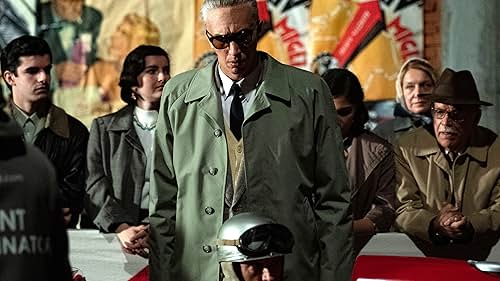
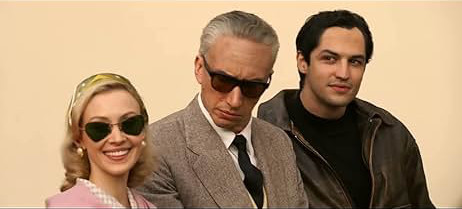
With Ferrari, Michael Mann falls afoul of one of the pitfalls of the bio-pic: by focusing too tightly on one brief period in the main character’s life, he creates an is that all there is? feeling. Although the real Enzo Ferrari was a larger-than-life individual, the movie, which focuses on events from 1957, provides only the briefest of glimpses into the life of one the 20th century’s icons, relying on dialogue to fill in some of the blanks. Although this approach is arguably preferable to an alternative – attempting to cram 50+ years into two hours – it results in viewers never really understanding Ferrari as a man. Despite a riveting portrayal by Adam Driver, he remains an inscrutable figure even after spending 130 minutes with him.

Ferrari drops us into Enzo’s life in early 1957, follows him through several months until just after the final Mille Miglia race (May 11-12), then exits with many plot threads left unresolved. It is therefore more of a snapshot than a full-fledged biography. The movie explores the business difficulties experienced by Ferrari (the company), which is drowning in red ink. Enzo, still emotionally rent by the death of his son, Dino (who died in June 1956), is involved in an increasingly difficult marriage with his wife of 34 years, Laura (Penelope Cruz), and is facing demands from his long-time mistress, Lina Lardi (Shailene Woodley), regarding his illegitimate son, Piero. While attempting to balance family issues, Enzo hires a new, hot shot driver, Alfonso De Portago (Gabriel Leone), and enters five cars into the 1000-mile cross-Italy Mille Miglia where a win would increase the company’s prestige sufficiently to allow Enzo to enter into a favorable partnership with a larger car manufacturer, such as Fiat or Ford.

Mann’s typical high-energy approach imbues Ferrari with intensity. The racing sequences generate tension and excitement (especially the Mille Miglia). The film is less certain when focused on more intimate interactions, such as Enzo’s dialogues with his wife and mistress. Mann’s zenith as a filmmaker was in the 1990s (when he made, in succession, The Last of the Mohicans, Heat, and The Insider). Since then, his films have been largely hit-and-miss affairs and he hasn’t made anything for eight years (2015’s Blackhat). Ferrari seems an odd choice for his return to the spotlight but, despite occasional moments of cinematic flair, one would never associate this with the man who spearheaded Miami Vice.

Ferrari is anchored by the strength of Driver’s performance. Partially obscured underneath effective aging makeup, he could easily be mistaken for Michael Imperioli. Driver’s portrayal presents Ferrari as a tragic figure trapped between a loveless marriage with a mentally unstable wife and an affair with the woman and child he wishes he could acknowledge. He is hyper-focused on business but not so consumed that he ignores the gravesite of his recently-deceased adult son, Dino. To the extent that we come to understand Ferrari, it’s more due to Driver’s performance than anything in the screenplay. He is ably supported by a vibrant Penelope Cruz, who enlivens the production whenever she’s on screen. The scene in which her character confronts Enzo with the truth behind her betrayal is riveting.

Ferrari may prove a difficult sale for distributors NEON and STX Entertainment. Despite Mann’s involvement, it doesn’t have the cache to be a prestige film and movies of this nature are typically finding greater interest on streaming sites than in theaters. Although Driver’s performance may earn some deserved Oscar buzz, that likely won’t be enough to push the needle and there probably aren’t enough sports car enthusiasts to juice the box office. As a well-acted standard-order bio-pic, Ferrari delivers but as something more, it falls short. (Berardinelli's rating: 3 stars out of 4)

Labels: action, auto-racing, biography, drama, Ferrari, history, romance, sport, tragedy
IMDb 64/100
MetaCritic (critics=73, viewers=65)
RottenTomatoes (critics=73, viewers=73)
Blu-ray
Netflix
Berardinelli's original review (3 out of 4 stars) 

Blogger's comment: While I appreciate Berardinelli's perspective, I believe this period in time was a defining moment in Ferrari's life and I appreciate the historical accuracy. The 1957 Mille Miglia was marred by the tragic death of Ferrari driver Alfonso de Portago, his navigator and nine roadside spectators, including five children, in the village of Guidizzolo when his car hit an object on the road, blew a tire, spun out and became airborne. As a result, the Italian government forever banned all racing on public roads, permanently ending the thousand mile road race.

If you are a fan of auto-racing, and you appreciate films like Grand Prix (1966), RUSH (2013), Ford v Ferrari (2019) and F1: The Movie (2025), I predict you will enjoy Ferrari.


Barefoot in the Park (1967) [G] ****

 An uncredited review published in Time magazine, June 9, 1967

Barefoot in the Park is one of the few plays to be reincarnated on-screen while playing on the Broadway stage. Happily, it loses little in transition.

Essentially, author Neil Simon has taken a plot as bland as a potato, sliced it into thin bits—and made it as hard to resist as potato chips. Two spoiled young honeymooners (Robert Redford and Jane Fonda) settle into a six-flight walk-up apartment in Greenwich Village. In Ogden Nash's phrase, a little incompatibility is the spice of life, particularly if he has income and she is pattable. And so it proves in Barefoot. The puny pad she has chosen has no heat, no bathtub, and a hole in the skylight.

When Redford remonstrates, Fonda starts sniping - only to agree to a cease-fire when her middle-class mother (Mildred Natwick) arrives. Before long, they are joined by a randy reprobate of a neighbor (Charles Boyer) known as the Bluebeard of Tenth Street. Bluebeard leads the way to an Albanian hash house that serves such delicacies as black salad and ouzo. The foursome eventually wend their way home, whereupon Fonda and Redford drunkenly declare all-out war.

She is a nut, he declares, whose idea of fun is walking barefoot in the park in 17-degree weather. Your laundry arrived, she simpers. They stuffed your shirts beautifully. But if the couple's happiness seems as short as their tempers, their misery is just as temporary. By the final reel they are neck and neck in a race for the bed, and even Natwick and Boyer have found something in common - stomach trouble.

The film is not an original-cast production. Sly substitutions have been made, notably Fonda for Broadway's Elizabeth Ashley. Jane's performance is the best of her career: a clever caricature of a sex kitten who can purr or scratch with equal intensity. Among the tastiest leftovers from the stage are Redford as the harassed husband and Mildred Natwick, skittering on the edge of hysteria as she articulates the film's philosophy to her daughter: Make him feel important. If you do that, you'll have a happy and wonderful marriage, like two out of every ten couples.

Labels: comedy, Robert Redford, romance
IMDb 70/100
MetaCritic (critics=55, viewers=68)
RottenTomatoes (critics=81, viewers=79)
Blu-ray

Blogger's comments: Barefoot in the Park is notable for another reason. When Redford asks something like: We're going to be doing this for the next fifty years? and Fonda replies: We're only going to be married for fifty years? it reminded me that exactly half a century later they would star together in Our Souls at Night (2017) and she would say in an interview that she had fallen in love with him so deeply that she would look into his eyes and forget her lines. And I can see that passion in the intensity of her performance. 

And there's something else that most viewers will not see. The opening scene of the film is at the Plaza Hotel in New York City, where they get out of their horse-drawn carriage and enter the hotel to begin their week-long honeymoon. The same Plaza Hotel setting is used six years later in the final scene of the Redford - Streisand film The Way We Were (1973).

Arriving at the Plaza Hotel, Barefoot in the Park


Final Scene from The Way We Were


Wednesday, March 11, 2026

The Quiet American (2002) [R] ****

A film review by James Berardinelli for ReelViews.net in 2003.


No movie exists in a vacuum, and nowhere is that more apparent than in the case of Phillip Noyce's version of The Quiet American. Filmed prior to September 11, 2001, and scheduled to open weeks after that pivotal date, the movie ended up sitting on a shelf for more than a year because its U.S. Distributor, Miramax, worried that the story line might seem anti-American. In fact, the so-called controversy surrounding The Quiet American seems blown out of proportion. The movie is critical of U.S. foreign policy regarding Vietnam in the 1950s, but, considering how things turned out, can one argue that the criticism is unjustified? Americans are not demonized, and the allegorical aspects of the story are no more damning than the ones found in the text. Ironically, considering recent (2003) current events – including the hunt for Osama Bin Laden and the buildup towards war with Iraq – one could argue that The Quiet American has far more relevance now than Noyce could have envisioned when he was constructing it.

It's 1952 Saigon, and British journalist Thomas Fowler (Michael Caine) is about to find his comfortable life upset by the arrival of a fresh-faced, self-effacing American medical aid worker. Alden Pyle (Brendan Fraser) at first seems to be nothing more than an idealistic young doctor, but his activities cause Thomas to wonder whether he has an alternate agenda. Meanwhile, Alden falls for Thomas' beautiful young Vietnamese mistress, Phuong (Do Thi Hai Yen). Because Alden is unattached, while Thomas is married to a woman in London who will not give him a divorce, Alden can offer Phuong one thing that Thomas cannot: a wedding ring.

At the time when the movie takes place, Vietnam is being torn being torn apart by the rival Communists and French, who still considered Indo-China to be their colony. Into this mix comes a third faction – that of General Thé (Quang Hai), a egotistical megalomaniac who is revered by a segment of the population and backed by an invisible financial institution with deep pockets. Thé organizes terrorist actions against Vietnamese citizen, then blames the Communists in order to curry international sympathy for his side. As the story unfolds, Thomas recognizes that Alden has unexpected influence where Thé is concerned.

The screenplay, by Christopher Hampton and Robert Schenkkan, downplays the heavy allegorical aspects of Graham Greene's source novel in favor of the romantic triangle. The Quiet American is primarily a tragic love story set against the backdrop of the beginnings of the turbulent conflict that would devastate much of the small Asian country. We see the roots of the Vietnam War, and have no trouble understanding that the United States' rabid win-at-all-costs struggle against the Devil of Communism led to bad alliances and shortsighted determinations.

The acting, especially by the male leads, is superlative. Michael Caine, who is being mentioned as a possible Oscar nominee, brings a sad, world-weariness to his portrayal of Thomas. The aging newspaper writer wants nothing more than to spend the rest of his days going through the comfortable routine of his daily life spent in the company of the one woman he truly loves. If I lost her, he comments, it would be the beginning of death. Meanwhile, Fraser trades in on his reputation for playing affable, somewhat innocent characters, to trick us into thinking that Alden is more straightforward than he actually is.

From a dramatic standpoint, I have a quibble with The Quiet American's structure. The movie begins at the end, telling most of the story in flashback. Unfortunately, this means that we know from the start how the love triangle is going to be resolved, and which character will die. While this approach heightens the movie's allegorical elements, it diminishes the dramatic and romantic tension. Director Phillip Noyce obviously felt comfortable about the trade-off, but I'm not sure it works in the film's favor. However, all things considered, Noyce has wrought an often-compelling tale of life, love, and jealousy played out under the gathering storm clouds of war. (Berardinelli's rating: 3 stars out of 4)

Labels: drama, period, romance, thriller, tragedy, war
IMDb 70/100
MetaCritic (critics=84, viewers=70)
RottenTomatoes (critics=87, viewers=72)
Blu-ray
Berardinelli's original review


Monday, February 2, 2026

Downhill Racer (1969) [M] ****

A film review by Roger Ebert for Chicago Sun-Times on Dec 22, 1969.


Some of the best moments in Downhill Racer are moments during which nothing special seems to be happening. They’re moments devoted to capturing the angle of a glance, the curve of a smile, an embarrassed silence. Together they form a portrait of a man that is so complete, and so tragic, that Downhill Racer becomes the best movie ever made about sports — without really being about sports at all.

The champions in any field have got to be, to some degree, fanatics. To be the world’s best skier, or swimmer, or chess player, you’ve got to overdevelop that area of your ability while ignoring almost everything else. This is the point we miss when we persist in describing champions as regular, all-round Joes. If they were, they wouldn’t be champions.

This is the kind of man that Downhill Racer is about: David Chappellet, a member of the U.S. skiing team, who fully experiences his humanity only in the exhilaration of winning. The rest of the time, he’s a strangely cut-off person, incapable of feeling anything very deeply, incapable of communicating with anyone, incapable of love, incapable (even) of being very interesting.

Robert Redford plays this person very well, even though it must have been difficult for Redford to contain his own personality within such a limited character. He plays a man who does nothing well except ski downhill — and does that better than anyone.

But this isn’t one of those rags-to-riches collections of sports clichés, about the kid who fights his way up to champion. It’s closer in tone to the stories of the real champions of our time: Sandy Koufax, Muhammad Ali, Joe Namath, who were the best and knew they were the best and made no effort to mask their arrogance. There is no humility at all in the racer’s character: Not that there should be. At one point, he’s accused by a fellow American of not being a good team man. Another skier replies: Well, this isn’t exactly a team sport.

It isn’t; downhill racing is an intensely individual sport, and we feel that through some remarkable color photography. More often than not, races are shot from the racer’s point of view, and there are long takes that nearly produce vertigo as we hurtle down a mountain. Without bothering to explain much of the technical aspect of skiing, Downhill Racer tells us more about the sport than we imagined a movie could.

The joy of these action sequences is counterpointed by the daily life of the ski amateur. There are the anonymous hotel rooms, one after another, and the deadening continual contact with the team members, and the efforts of the coach (Gene Hackman in a superb performance) to hold the team together and placate its financial backers in New York.

And there is Chappellet’s casual affair with Carole Stahl (Camilla Sparv), who seems to be a sort of ski groupie. She wants to make love to him, and does, but he is so limited, so incapable of understanding her or anything beyond his own image, that she drops him. He never does quite understand why.

The movie balances nicely between this level, and the exuberance of its outdoor location photography. And it does a skillful job of involving us in the competition without really being a movie about competition. In the end, Downhill Racer succeeds so well that instead of wondering whether the hero will win the Olympic race, we want to see what will happen to him if he does. [Ebert's rating:4 stars out of 4]

Blogger's note: When you watch the film you will notice that in German ski racing, in the starting countdown (... three, two, one) the term zwo is used, instead of zwei, for the number two, as in drei, zwo, eins. This is a specific safety measure, designed to insure that zwei (two) is not misheard as drei (three).

Labels: drama, Robert Redford, romance, sport
IMDb 63/100
MetaCritic (critics=89, viewers=74)
RottenTomatoes (critics=85, viewers=57)
Blu-ray
Roger Ebert's original review


Bridgerton (Season 4 - 2026) [TV-MA] ****


Lady Violet Bridgerton (Ruth Gemmell) is hosting the first ball of the season, and it is a masquerade. Her second son, Benedict (Luke Thompson) attends, meets and falls for a lovely young woman, but she leaves before the midnight unmasking, and refuses to give him her name. So, in Cinderella and the Prince fashion, he begins to search the kingdom for her, having only her glove to identify her.

It turns out that the young woman is Sophie Baek (Yerin Ha), a maid in the household of her stepmother and her two daughters. When her stepmother discovers that Sophie has attended the ball uninvited and in her gown and slippers, she is thrown out of the house.

By coincidence Benedict finds her working at the Cavender estate, rescues her, and eventually brings her to the Bridgerton London home where he prevails upon his mother to hire her, still not realizing she is the young woman he fell for at the masked ball.

The chemistry between Luke Thompson and Yerin Ha is palpable, and of course there are the obligatory twists and turns, but there is a positive ending to this love match. In fact I would rank season four with Benedict and Sophie as engaging and as satisfying as season two with Anthony (Jonathan Bailey) and Kathani (Simone Ashley).  

Tuesday, January 27, 2026

Flashdance (1983) [R] ***

A film review by Roger Ebert for rogerebert.com on April 19, 1983.


I have a friend who has a simple test for a movie: Is this movie as interesting as the same things would be, happening in real life? A lot of movies aren’t, and Flashdance sure isn’t. If this movie had spent just a little more effort getting to know the heroine of its story, and a little less time trying to rip off Saturday Night Fever, it might have been a much better film.

My friend’s simple test applies to this movie in another way: The movie is not as interesting as the real-life story of Jennifer Beals, the young Chicago actress who stars in it. Beals graduated a year ago from Francis Parker School. She already had launched a career as a model (covers on Town & Country and Vogue), after being discovered by Chicago super-photographer Victor Skrebneski. She enrolled in Yale, took some acting classes in New York, went to an audition, and won this role

The irony is that her story, simply and directly told, might have been a lot more interesting than the story of Flashdance, which is so loaded down with artificial screenplay contrivances and flashy production numbers that it’s waterlogged. This is one of those movies that goes for a slice of life and ends up with three pies.

Jennifer Beals plays Alex, an 18-year-old who is a welder by day, and a go-go dancer by night, and dreams of being a ballet star, and falls in love with the Porsche-driving boss of the construction company, played by Michael Nouri.

These are a lot of character details even if she didn’t also have a saintly old woman (Lilia Skala) as a mentor, a big slobbering dog as a friend, a bicycle she rides all over Pittsburgh, a loft the size of a sweatshop, a friend who ice skates (Sunny Johnson), and the ability to take off her bra without removing her sweatshirt. This poor kid is so busy performing the pieces of business supplied to her by the manic screenwriters that she never gets a chance to develop a character.

Meanwhile, the movie has a disconcerting way of getting sidetracked with big dance scenes. The heroine works in the most improbable working-class bar ever put on film, a joint named Mawby’s that has a clientele out of the Miller’s TV ads, stage lighting reminiscent of Vegas, go-go dancers who change their expensive costumes every night and put on punk rock extravaganzas and never take off all their clothes and never get shouted at by the customers for not doing so.

Flashdance is like a movie that won a free 90-minute shopping spree in the Hollywood supermarket. The director, Adrian Lyne, and his collaborators race crazily down the aisles, grabbing a piece of Saturday Night Fever, a slice of Urban Cowboy, a quart of Marty and a box of Archie Bunker’s Place. The result is great sound and flashdance, signifying nothing. But Jennifer Beals shouldn’t feel bad. She is a natural talent, she is fresh and engaging here, and only needs to find an agent with a natural talent for turning down scripts. [Ebert's rating: 1.5 stars out of 4 =37.5%]

Labels: drama, music, romance
IMDb 62/100
MetaCritic (critics=39, viewers=67)
RottenTomatoes (critics=37, viewers=61)
Blu-ray


Friday, January 23, 2026

Alfie (2004) [R] ***

A film review by James Berardinelli for ReelViews.net


For me, there's a litmus test for remakes: are they sufficiently different and/or interesting in their own right that their existence is easily defended? Admittedly, it's a lot easier to argue the case for a new version of Alfie (to today's audiences, the 1966 original could be considered obscure) than Psycho, but somehow the film doesn't work as well as it should. The problem is one of context. Although director/screenwriter Charles Shyer changes the setting from '60s London to '00s New York, he otherwise stays relatively faithful to the approach (if not the specific text) of Lewis Gilbert's version. The first Alfie occurred during the birth pains of the sexual revolution, when one-night stands were the expected norm for virile young men. Applying that mindset to the AIDS era, when one-night stands can become games of Russian roulette, doesn't work. Cosmetic updates to the title character can't change the fact that Alfie is a relic lifted from one era and dropped into another one.

Scooting aroundHaving said that, however, it is necessary to point out that Jude Law does a solid job, although he's essaying a person who generates limited audience sympathy. Law does not attempt to ape Michael Caine, but makes the character his own. (Along with The Ipcress File, Alfie is the film that cemented Caine's reputation. It's odd that he doesn't have a cameo in this remake - maybe he learned a lesson from Get Carter.) Like Caine, Law seems comfortable breaking the fourth wall and addressing the audience directly. When Gilbert used the device some 40 years ago, it was fresh, but, by 2004, it is clichéd. Not to mention that it emphasizes Alfie's smugness and narcissism, making him less likable.

Shyer has never found a remake he didn't like. His recent resume is dotted with re-dos. He was involved in new versions of Father of the Bride, Father's Little Dividend (called Father of the Bride Part II so as to not confuse audiences), Once Upon a Crime..., and The Parent Trap. None of these films showed remarkable qualities, so anyone with a degree of familiarity with Shyer's career should have known about what to expect from Alfie. The original Alfie came out at precisely the right time. The remake is 40 years too late.

The storyline is one of simple karma. Throughout the first half of the film, Alfie plays the perfect womanizer, a fashion whore who goes after every pretty FBB (face, boobs, bum) he sees, without concern for the consequences. These include Dorie (Jane Krakowski), a lonely wife whose husband hasn't touched her in five months; Lonette (Nia Long), his best friend's girl; Julie (Marisa Tomei), his quasi-girlfriend who has a son Alfie adores; Nikki (Sienna Miller), who makes a convenient companion on the second loneliest night of the year (Christmas Eve); and Liz (Susan Sarandon), a confident older woman who knows what she likes. Shortly after the midpoint, the tables are turned, and Alfie discovers some hard truths about how he has been treating the opposite sex. By the end of the movie, he hasn't found happiness, but he has discovered humility. During the closing scenes, one can imagine that Charles Chaplin's Smile was written for this character (Smile, though your heart is breaking…).

What's it all about? Cleavage.Aside from Law, there aren't any standout performances. None of the women have large roles, and even the best of them (Sarandon, Miller) struggle to escape the stereotype confines in which the script pigeonholes them. As Marlon, Alfie's best/only friend, Omar Epps doesn't fare any better. Epps has one memorable moment, and it's more his facial expression than his words that make it work. Tomei is surprisingly subdued, and wears a hairdo that one could argue is paying homage to the era in which the original Alfie debuted.

Having expressed some negative thoughts about the film, however, I have to admit that Alfie grew on me. Once we get past all the smart-aleck asides offered up by the title character, and begin to get to know the real Alfie, the movie becomes more engaging. Certain individual scenes are surprisingly effective, such as Alfie's bathroom chat with an older gentlemen (who advises: Find someone to love and live every day as if it was your last), his farewell to Nikki, and the result when he finally brings flowers to a woman. Alfie shouldn't have a happy ending, and it doesn't. Thankfully, Shyer doesn't force something into the film that wouldn't fit.

Alfie has the requisite moments of pathos and humor that allow the movie to be enjoyed on some level, even if the main character occasionally feels like a walking, talking anachronism. Those who demand a sympathetic character to appreciate a film may not have a favorable feeling. I'm more open to ambiguous protagonists and anti-heroes, so this aspect didn't bother me. Still, this is a mixed bag - passable entertainment made palatable largely by Law, but the question of Why? more than What's it all about? still lingers where this remake is concerned. [Berardinelli's rating: 2.5 out of 4 stars = 62%]

Blogger's observation: Alfie's self-assessment in the final scene goes like this:

I used to think I had the best end of the deal. What have I got? Really? Some money in my pocket. Some nice threads. Fancy car at my disposal. And I'm single. Yeah. Unattached. Free as a bird. I don't depend on nobody. Nobody depends on me. My life's my own. But I don't have peace of mind. And if you don't have that, you've got nothing.

Labels: comedy, drama, romance
IMDb 62/100
MetaCritic (critics=49, viewers=59)
RottenTomatoes (critics=48, viewers=51)
DVD


Love Again (2023) [PG-13] ***

 A film review by Brian Orndorf for Blu-ray.com on May 5, 2023.


Writer/director Jim Strouse made a positive impression with his last two features, guiding 2015’s People Places Things and 2017’s The Incredible Jessica James to big hearts and sizable laughs, positioning him as a helmer to watch, especially with smaller, more human tales of love and confusion. However, indie film work has its professional limitations, with Strouse trying on a studio project for size with Love Again, which is a remake of a 2016 German picture, detailing the experiences of two strangers who find each other through text-based confessions, leading to a romance that’s built on a big issue of trust. Love Again isn’t an event movie, but it does have some scale thanks to a supporting turn from Celine Dion, and the material plays to Strouse’s strengths with its presentation of wounded souls. Typical romantic comedy shallowness isn’t completely avoided, but the material makes a serviceable attempt to highlight human concerns, and chemistry with leads Priyanka Chopra Jonas and Sam Heughan is pleasant enough to lift the endeavor up when it needs it.

Mira (Priyanka Chopra Jonas) is a children’s book author struggling to come up with an idea for her latest project, still lost in the grieving process two years after the death of her boyfriend, John (Arinze Kene). She lives with her sister, Suzy (Sofia Barclay), still reminded of the man she loved, trying to work through her thoughts by texting his number, sharing her feelings with the void. Rob (Sam Heughan) is a newspaper music critic struggling to get over being dumped by his longtime girlfriend, fighting to focus on an assignment to interview Celine Dion. He receives a new phone from his boss, with the number transferred from John’s old account, allowing Rob to receive Mira’s intimate messages of sadness. Rob eventually meets Mira at the opera, sparking an immediate attraction to the woman, and their dates turn into a relationship, though the writer can’t bear to tell his love about the messages, complicating their union.


While Rob’s heartbreak isn’t immediately detailed, Mira’s sudden loss serves as the introductory scene of Love Again, with John looking to win his girlfriend over with a personal visit before work, gifting her a bag of Skittles as a token of his affection (there’s a sizable amount of product placement in the feature). They soon separate, with John killed by a drunk driver right in front of Mira, which understandably sends her into a downward spiral of grief. The story picks up two years later, with the woman unable to break free of her sadness, still clinging to John’s belongings as a way to stay in contact with his smell, finally coaxed out of the shadows by Suzy. Love Again examines Mira’s return to life, forced to perform as a writer by her publisher, while a possible return to the dating scene is considered, though she doesn’t want anything to do with dating apps, striking out with a handsy suitor (Nick Jonas).


Mira purges her feelings into texts for John’s number, confessing her fears and sadness, unaware that these messages are being received by Rob, who’s also managing heartbreak, but more pressing professional matters are found with his mission to chat with Dion, who appears in the film as a Yoda-type figure wise in the ways of love and loss. Love Again settles into sitcom-y territory with the mix-up, but Strouse fights plasticized plotting as much as possible, giving the feature over to the leads, who manage to create semi-real people in the face of ridiculousness. There’s some degree of warmth in Love Again, but it’s challenged by formula, with Rob assigned two pals at work to act as his guide into technology and human contact, giving the picture a few stabs at humor it doesn’t really need.


Rob can’t believe what’s happening with Mira, with the pair growing closer, sharing protected parts of their lives and bits of basketball-themed philosophy. He’s in possession of knowledge that will surely destroy his new relationship, and Love Again lines up with the usual in nonsense communication issues, but Strouse handles it all to the best of his ability. He has to make something accessible and familiar for fans of the subgenre, which isn’t welcome, but Love Again carries initial care for profound situations of pain, finding ways to address the reality of the mourning process without completely losing itself to cliché. [Orndorf's rating: 3 stars out of 5]

Labels: comedy, drama, romance
IMDb 5.9/10
MetaCritic (critics=32, viewers=53)
RottenTomatoes (critics=30, viewers=91)
Blu-ray
Brian Orndorf's original review
Blu-ray review by Kenneth Brown (3/5 stars)


Saturday, December 13, 2025

Indecent Proposal (1993) [R] ***

A film review by James Berardinelli for reelviews.net 


David and Diana Murphy (Woody Harrelson and Demi Moore) are the ideal young couple. They have everything -- love, affection, companionship -- except money. Their combined meager income is just enough to keep them afloat, but when the recession hits and David loses his job, they go under. Needing fifty thousand dollars to satisfy their creditors, but possessing only five, they go to Las Vegas to get the rest at the tables. There they meet John Gage (Robert Redford), a billionaire businessman who throws around millions like pocket change. Gage is instantly attracted to Diana, and, in an attempt to lure her away from her husband, makes a proposal: he will give them one million dollars for one night with her.

Director Adrian Lyne, best known for bringing Fatal Attraction to the screen, is at the helm for Indecent Proposal. One of the key elements of the 1987 Glenn Close/Michael Douglas thriller -- obsession -- is also present here, albeit without the tension and violence that gave Fatal Attraction its spark. Here, a similar situation is examined from another perspective. Gage goes after Diana not with knives and threats, but with kind words, generous gifts, and moving tales of his youth.

The story is divided into three parts: the setup, the act, and the aftermath. Despite a somewhat confused sense of time early in the film, aspects of the first part work. We get a real sense of character, and the relationship between Diana and David comes across as genuine. Once the setup is over, however, Indecent Proposal starts to fall apart, with the implausibilities and contrivances getting worse with every passing minute.

I suppose the theme is that money can't buy love, but that message gets so muddled during the second half of the film that we're not sure what to believe by the end. Indecent Proposal ends with an audible thud as screenwriter Amy Holden Jones resorts to a hard-to-believe quick fix to conclude things.

From the voice-over narration to the incessant, unnecessary commentary, everything is overexplained. Any time there could be a misinterpretation, someone will say something to clarify matters. For a movie that is supposed to be a thinking romance, this one doesn't have a high opinion of who's supposed to be doing the thinking.

Demi Moore has a certain appeal as the beautiful woman caught between two men, and Robert Redford, no longer the sex symbol he once was, is effective the jaded, lonely billionaire striving for love -- the one thing that has eluded him for his entire life. However, while these two hold their own, Woody Harrelson has trouble once his role requires more than smiles, kisses, and tender stroking. He goes through all the motions, but the force of emotion necessary for us to empathize with David is absent.

The need to mold Indecent Proposal into a recognizable Hollywood type hurts its chances of saying, or being, anything meaningful. There are undercurrents of an intriguing story in Indecent Proposal, but they never reach the surface. Director Adrian Lyne may not be remaking Fatal Attraction, but the same audience-pleasing mentality is evident in this stagnant motion picture. [Berardinelli's rating: 2 stars out of 4]


From Celebrity News on Facebook:

When Robert Redford agreed to play billionaire John Gage in Indecent Proposal (1993), it caught many by surprise. Throughout his career, Redford had built a legacy portraying idealists and heroes — the Sundance Kid (Butch Cassidy and the Sundance Kid), Hubbell Gardiner (The Way We Were), Norman Sonny Steele (The Electric Horseman), Roy Hobbs (The Natural), Denys Finch-Hatton (Out of Africa), Tom Booker (The Horse Whisperer). Here, he was stepping into morally gray territory: a powerful man offering a struggling couple one million dollars for a night with the wife.

What many don’t know is that Redford was initially reluctant to take the part. He feared that Gage would come off as a sleazy villain, lacking depth or humanity. To ease his concerns, director Adrian Lyne revised the script with Redford’s input. Redford didn’t want Gage to be a caricature of wealth and manipulation — he wanted him to be charming, intelligent, even alluring. The story, he believed, would resonate more if audiences found themselves truly conflicted. The real power, he said, is in making people ask: Would I take the deal?

One memorable moment during the Las Vegas shoot underscored Redford’s quiet charisma. Between takes in a real casino, extras and even hotel staff began approaching him — not as an actor, but as if he really were a billionaire. Photos, autographs, flirtations — Redford’s aura blurred the line between fiction and reality. Demi Moore later joked, If Robert Redford asked you to dance, you wouldn’t say no — million dollars or not.

The film stirred cultural debate upon release, with many divided over its central premise. Redford, however, defended it as a story not about money or lust, but about the fragility of love, the boundaries of trust, and the ethical discomfort of choices no one wants to make. For him, John Gage wasn’t the villain — he was the question. And Redford, ever the thoughtful performer, made sure we didn’t walk away with easy answers.

Labels: drama, Robert Redford, romance
IMDb 6.0/10
MetaCritic (critics=45, viewers=56)
RottenTomatoes (critics=34, viewers=47)
Blu-ray
Suite from Indecent Proposal by John Barry


Love is a Many-Splendored Thing (1955) [PG] ****

A film review by Jeffrey Kauffman for blu-ray.com on July 17, 2013


The recent verdict in the George Zimmerman – Trayvon Martin case has ignited a whole new round in the seemingly never ending debate about race relations in our country, but here's the thing: race relations are not exclusive to the United States nor are they they solely focused on interactions between blacks and whites. Americans sometimes tend to forget this since so much of our history is wrapped up in the horrible legacy of slavery and the resultant ripples which resulted from that abhorrent practice, ripples which continue to inform our own time. And the Civil Rights Era, roughly from the mid 1950s on, only continued to make many Americans think of their country as the lone nation dealing with issues, issues almost exclusively thought to be about African Americans and Caucasians. Any number of other ethnic minorities can no doubt point to their own less than welcoming experiences in attempting to assimilate and join the so-called American melting pot, but unfortunately prejudice seems to be a universal trait in Mankind, one certainly not limited to those living in the United States. Love is a Many-Splendored Thing was released in 1955, just a few months before Rosa Parks made her famous stand (or perhaps more appropriately, sit) aboard a Montgomery, Alabama bus. The film is set in Hong Kong in 1949, a time and place swirling with the after-effects of both World War II and the roiling atmosphere of the long simmering Chinese Civil War, but it is not ostensibly a politically-centered piece. Instead this lovely, heartbreaking outing is an intimate portrayal of two would-be lovers whose brief grasp at happiness is interrupted by prejudices brought to bear by several different groups due to the fact that the male is an American and the female is a mixed race foreigner. (Rather interestingly, the film's time frame of 1949 is itself the year that Rodgers and Hammerstein's South Pacific first debuted on Broadway. Though many seem not to realize it any longer, this musical actually was rather prescient in its day for dealing with much the same kinds of prejudice as this film does in its depictions of two star-crossed love affairs. In fact, the children of lead character Emile DeBeque would have probably been defined as Eurasian, the same category that Love is a Many-Splendored Thing's main feminine character is stuffed into, whether or not she wants to be.)


Eurasian, for those not familiar with this now kind of unused term, used to refer to those of mixed parentage, with one Asian parent and one European (meaning Caucasian) parent. Dr. Han Suyin was a real-life Eurasian who on top of being a well-regarded physician also had a rather successful writing career, penning a number of novels as well as autobiographical pieces, many of which contained fascinating nuggets of information about China in the first several decades of the twentieth century. A Many-Splendoured Thing (Han used British spelling tropes) was a 1952 novel which nonetheless was only a slightly fictionalized account of her own romantic interlude with a British journalist. The book was a best seller and Fox soon scooped up the film rights, rights that Han sold in order to facilitate health care for her sickly adopted daughter (a supporting character in the film version). Since Fox obviously wanted a domestic American connection for the film, the male character had his nationality changed, and William Holden was cast to play American reporter Mark Elliott. The oddly exotic looking Jennifer Jones required little if any make-up to inhabit the role of Han Suyin herself (Han is her surname and Suyin is her given name).

Love is a Many-Splendored Thing is at its throbbing heart nothing other than a star-crossed romance, but it's infused with a rather tart subtext of prejudice and class structure. Mark and Suyin know they're in for trouble from the get-go, and not just due to race differences. Mark is married, albeit separated, something that also makes eyes roll in the upper-crust British-Chinese society in which the two find themselves in post-World War II Hong Kong (remember, Hong Kong was still a British crown colony of sorts in that era). But it's not just the British who cast disparaging glances toward the couple. The Chinese themselves are conflicted, not just about the relationship between the two, but also about Suyin's mixed race background. The fact that this springs out of what was then the fairly recent epoch of a global battle which had a racial purity aspect from both the Germans and the Japanese makes Love is a Many- Splendored Thing's points unusually relevant, albeit not necessarily pointed directly at the geopolitical issues that informed World War II.

The film is a beautifully heartfelt piece which is perhaps surprisingly frank about the racial issues it explores. Part of what makes the film so extraordinary is its exotic setting, something that is used rather artfully with lots of second unit location photography by a sadly uncredited Charles G. Clarke, combined with the Oscar-nominated cinematography of Leon Shamroy in the studio sequences. Jones and Holden, who evidently disliked each other intensely, bring wonderfully nuanced interpretations to their roles and both deliver underplayed, very winning, performances. The supporting cast is filled to the brim with the sort of expert character actors and actresses who seem to be a dying breed nowadays. And supporting it all is the gorgeously evocative Academy Award winning music of Alfred Newman, masterfully interweaving the Oscar winning theme song (by Sammy Fain and Paul Francis Webster) with his own original compositions. This is mid-fifties' film craft of the highest order. (Kauffman's rating: 4.5 out of 5 stars)

Labels: biography, drama, romance, war, WWII, tragedy
IMDb 64/100
RottenTomatoes (critics=53, viewers=56)
Blu-ray
Kauffman's original review

Blogger's comment: Her birthname was Rosalie Mathilda Kuanghu Chou and she was also known as Elizabeth Comber, after her second husband. Han Suyin was the pen name she chose for her acclaimed autobiography, A Many-Splendoured Thing, upon which the film is based. She chose Han to honor the majority Han Chinese people. Suyin means plain-sounding.


Tuesday, December 2, 2025

Champagne Problems (2025) [TV-14] ***/****

A film review by Brian Orndorf for blu-ray.com on Nov. 19, 2025.


Once the director of Daredevil and Ghost Rider, Mark Steven Johnson is on a different career path these days. He’s in the business of making romantic comedies for streaming services, trying his luck with Hallmark Channel-style offerings of mild drama and feels that provide viewers with a sense of escapism as beautiful performers work with a screenplay of no particular emotional emphasis. It’s vanilla stuff, but Johnson locates a degree of charm in Champagne Problems, hitting all the highlights of fantasy as the main character faces a crisis of the heart and business ties during a holiday work trip to France. Johnson (who is also the writer) has no love for originality, but he finds some help from the actors, who maintain mild warmth and a sense of humor while the feature strives to conjure as much coziness as possible.

Sydney (Minka Kelly) is an employee at The Roth Group, working on acquisitions for the corporation, often competing with colleague Ryan (Xavier Samuel). Impressing her boss with her diligence, Sydney is sent to Paris to help negotiate a deal with Chateau Cassell, a champagne house looking to sell to a prepared buyer. Only in the country for a few days, Sydney is encouraged by her sister (Maeve Courtier-Lilley) to experience a little French magic, inspiring her to visit a bookstore, where she meets Henri (Tom Wozniczka), who’s happy to show the American a different side of Paris. Flirtations turn into a night of passion, but Sydney has a job to do, meeting Chateau Cassell owner Hugo (Thibault De Montalembert), and facing competition from business rivals Roberto (Sean Amsing), Otto (Flula Borg), and Brigitte (Astrid Whettnall). Prepared to make her best impression, endeavoring to win over Hugo and his demands for his business, Sydney is hit with a dose of reality when she learns Henri is actually Hugo’s son, and he has no patience for corporate predators.

Sydney isn’t an office terminator. She’s attempting to impress her boss and carefully handle acquisitions for the company, keeping her an approachable character. She’s also a supportive sister and continues to mourn the loss of her mother, who had her share of unrealized dreams. Kelly is particularly good at projecting warmth, and offers steady, reasonably sensitive work in Champagne Problems, which soon sends Sydney to France to prove her negotiation abilities, though she’s entering a country where she doesn’t even speak the language. The central meet cute in Champagne Problems occurs in a quaint bookstore, finding Sydney and Henri sparking immediate attraction, which turns into a night on the town, fueled by cups of hot wine and bonding over deceased mothers. Talk evolves into sex, but Johnson is sticking with his rom-com playbook, quickly disrupting post-coital bliss with business reality, sending Sydney to the glorious Chateau Cassell, where she’s forced to figure out what’s coming for her in terms of competition.

Comedic support is provided by other business reps, finding Roberto a fun-loving, flamboyant man who loves to drink and connect with others. Brigitte is serious about the mission, locating a bond with Hugo she tries to turn into a deal. And Otto is a nervous German sharing tales from his dark childhood, which gives Borg, a gifted comedian, chances to shine, especially when the character shares the legend of Krampus with the group. Champagne Problems sets up conflict between Sydney and Henri, who can’t trust the American once he learns who she is, and a challenge is supplied in presentations, putting the buyers in pitch positions that bring great stress to them. High jinks are minimal, extending to Brigitte pushing a cheese dinner on Sydney, who’s lactose intolerant. Winery challenges are more enjoyable, watching the gang compete in games of vine pruning and riddling, and there’s a debate about Die Hard to really sell the holiday spirit of the picture.

There’s a romance to sell in Champagne Problems, and Kelly and Wozniczka have decent chemistry, generating tenderness that’s challenged by outside interests. Johnson also works in father and son issues between Henri and Hugo, which helps to expand gentleness and concern. There’s seasonal immersion as well, following the characters as they visit Christmas markets and devour treats. Champagne Problems is easy on the senses and nicely acted, but Johnson can’t resist formulaic happenings, dragging the feature to a close with the same old moves seen in hundreds, if not thousands of these pictures. He goes for plasticized fantasy instead of trusting the moderate intimacy and light humor that’s worked for the first two acts of the movie. [Orndorf's rating: 6 stars out of 10]

Blogger's comment: A "champagne problem" describes a minor, trivial issue arising from affluence, privilege, or good fortune, like choosing between luxury cars or too many vacation options, contrasting with significant "real world problems". It's a problem where all choices are positive or desirable, often an annoyance of abundance rather than a genuine hardship, though sometimes these problems can feel more significant to the person experiencing them, as highlighted in Taylor Swift's song 'Champagne Problems'.

Labels: Christmas, comedy, Paris, romance
IMDb 60/100
MetaCritic (critics=50, viewers=tbd) 
RottenTomatoes (critics=72, viewers=65)
Orndorf's original review with pictures


Friday, November 28, 2025

Inside Daisy Clover (1965) [PG] ***

A film review by Randy Miller III for blu-ray.com on July 4, 2020.

Movies about Hollywood's dark underbelly were nothing new by 1965, but Inside Daisy Clover explores the subject through a young woman who's quite literally pulled off the streets to be the next big thing. Former child star Natalie Wood portrays Daisy Clover, who lives with her mom near the Santa Monica Pier and may just be the least convincing 15-year-old ever portrayed on film. She ekes out a living selling fake autographs but loves singing, and is surprised to learn that the head of a major studio, Raymond Swan (Christopher Plummer), is interested in a demo record she sent. After a limo ride to Swan Studios, the young tomboy is caught off guard by his cold and uncaring demeanor: Raymond tears her down while promising to deliver Hollywood's new rising star to the unsuspecting masses. She's charmed by fellow studio actor Wade Lewis (Robert Redford) and they develop a whirlwind romance, which ends up doubling as a microcosm of her brief time in the spotlight: it's very exciting, a little scary, and doesn't end well.


It sounds compelling enough on paper, but Inside Daisy Clover is a clear case of a film whose execution doesn't quite measure up to its ambition. Very little seems wrong at first glance: Wood acquits herself nicely (except for that age discrepancy -- though still youthful, she was close to thirty during production), there are a number of genuine twists and turns, and the supporting performances by Plummer and Redford are great. Other small parts, such as Raymond's wife Melora (Katharine Bard) and Daisy's soon-to-be-estranged mother Lucile (Ruth Gordon) are filled out nicely too. The biggest problems lie with Inside Daisy Clover's structure and a lack of ability to sell its own material: Wood's character is never all that convincing as the next big thing, nor is her rise to fame ever shown from a public perspective. The extremely insular nature of her journey ends up working against it, keeping outsiders at arm's length while never making a believable sales pitch. Even Daisy's trademark song, which is repeated ad nauseum, is forgettable... and to make matters worse, all of Wood's original vocals were re-recorded by singer Jackie Robin Ward.

Of course, that's not to say that Inside Daisy Clover is without merit... even aside from a few highlights mentioned above, most of which are related to the lead and supporting performances. Any and all scenes between Wood and Redford are easily among the film's best, as they seem to best capture that perfect balance of excitement mixed with a little bit of uneasiness. André Previn's original score and Charles Lang's cinematography are both excellent, often working double duty to capture the atmosphere of 1930s Santa Monica and the surrounding area. For these reasons, the film also serves as an invaluable time capsule: even though many parts are made up to reflect that earlier decade in which Inside Daisy Clover takes place, there's an undeniable charm to the signage, store fronts, and much quieter atmosphere that seem to evoke the 1960s as well. Those with Californian roots may enjoy the film for that reason alone. But aside from die-hard fans of the cast and setting, this one's tough to recommend sight unseen.


Labels: drama, music, Robert Redford, romance
IMDb 61/100
RottenTomatoes (critics=31, viewers=50)
Blu-ray


Saturday, November 15, 2025

A Man and a Woman ( Un homme et une femme) (1966) [NR] ****/*****


On the 2003 DVD release of A Man and a Woman, there is an interview with writer / director Claude Lelouch 37 Years Later with Claude Lelouch, in which he looks back and talks about how the film came to be.

He had just finished making Les Grands Moments and could not show the film because he did not have a distributor. He was broke and his film company was close to bankruptcy. So he did what he often did, which was to get in his car and drive to the beach - from Paris to Deauville on the Normandy coast. He arrived around 2 am, slept in his car and awoke around 6:30 am to see a woman walking on the beach with a child and a dog.

In that moment he had the inspiration for the film A Man and a Woman. Over the next four weeks he wrote the screenplay, having in mind Jean-Louis Trintignant to play Jean-Louis Duroc. When he showed the screenplay to Jean-Louis, he said yes immediately. Then Lelouch said that he had both Romy Schneider and Anouk Aimee (Anouk Aimée) in mind to play Anne Gauthier, and he asked Jean-Louis who his dream woman would be. Jean-Louis said he knew Anouk very well and Claude should just call her up. At first there was a little difficulty because Anouk did not like boats, so she did not want to do the boat scenes, but she finally gave in.

Lelouch shot the film over a period of four weeks, using a rented hand-held camera, and edited it in three weeks. He had intended to shoot it all in black and white because he could not afford color, but an American distributor bought the rights in the U.S. so Lelouch was able to shoot the exteriors in color and the interiors in black and white.

There are some interesting aspects to Lelouch's filmmaking style, particularly A Man and a Woman. He had a screenplay but did not let the actors read the dialogue. He described the scene beforehand, and if there was a particular sentence he wanted said, he would mention that, but, other than that, he let the actors improvise. Also, what he told Jean-Louis was not the same thing he told Anouk. He never rehearsed because he believed that after the first or second take, the spontaneity would be gone. Also, Lelouch did all the filming himself because it eliminated the natural time delay in telling the cinematographer what he wanted.

Sometimes he would play Francis Lai's score for the actors before the scene, especially if he couldn't find the right words to say to direct them. Also, after the scene was finished he would play the dialogue back for the actors so they could all get a feeling for how it was going.

Lelouch said that he was fascinated by people, that the human interraction was the important thing, and that was why he tried to shoot the film in real time, without rehearsals and very few takes. At some point the actors were living the story, which made the film as close to the truth as possible.

Interestingly, the rented camera was not soundproofed, so they would wrap it in a blanket for close-ups, but relied a lot on distance shots using a telephoto lens. This is why the film has the look that it does.

So, what about the story? Anne was a film script girl who met and married her husband Pierre (Pierre Barouh) on a project in which he was working as a stunt man. They had a child, a little girl named 
Françoise, and then Pierre was killed while filming a battlefield scene in a WWII film. To be able to continue working, Anne enrolled her little girl in a boarding school in Deauville.

Jean-Louis was a race car test driver for Ford, testing the new GT40 LeMans car and the Ford Formula 1 car. In a flashback we see him racing at LeMans, being involved in a horrific accident, undergoing a three-hour operation and then having his grief-stricken wife Valerie (Valerie Lagrange) take her own life at the hospital. And so, after that, Jean-Louis put his young son Antoine in the same Deauville boarding school. And Anne and Jean-Louis eventually meet at the boarding school when she misses her train back to Paris and the school headmistress (Simone Paris) introduces them.

It really is a very simple love story, the main complication being that Anne was very much in love with her husband Pierre, and, even though he had died, he was still alive for her. So she could not be present while she and Jean-Louis were making love in their Deauville hotel room, and even at the end of the film, we are not sure if she will be able to move forward.

In an interesting footnote, the film was shot between November, 1965 and January, 1966. Anouk Aimee and Pierre Barouh fell in love during filming, married three months later, on April 20, 1966, and divorced three years later, on March 17, 1969. 

For myself, this is almost a coming-of-age film. I was born in 1942, spent time in Paris in the summer of 1965, just before this was filmed, and appreciate the honesty and integrity with which the film was made.  

Labels: drama, romance, Paris, Sixties
IMDb 75/100
RottenTomatoes (critics=76, viewers=87)
DVD