Pages

Showing posts with label sci-fi. Show all posts

Sunday, March 13, 2022

The Adam Project (2022) [PG-13] ****

 A film review by James Berardinelli for reelviews.net on Mar. 10, 2022.

The Adam Project has much in common with last year’s Shawn Levy / Ryan Reynolds collaboration, Free Guy (notably the somewhat questionable science content in the sci-fi tapestry and well as some dubious plot points), but this film has a more serious tone and, as a result, gives Reynolds an opportunity to do some real acting (rather than simply mugging for the camera). The film is entertaining in the moment but leaves no lasting impression. There’s also a sense that the overall story deserves a larger canvas (such as might be found in a multi-part streaming series). There’s too little world-building for the movie to have the desired heft and a reference to The Terminator only italicizes how inferior this narrative is (both occupy similar sci-fi corridors: time travel being used to alter an apocalyptic future).

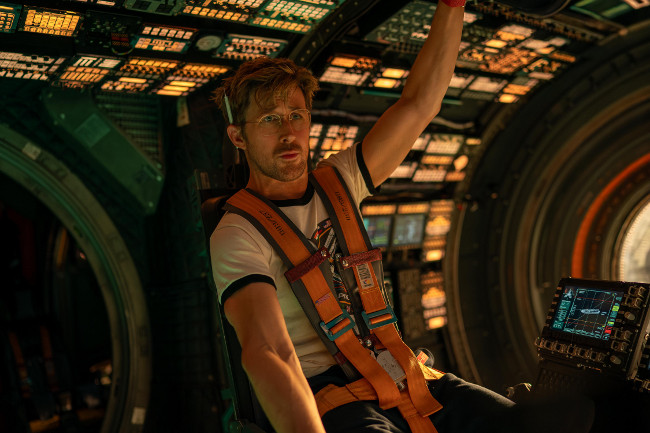
Old Adam (Reynolds) is a resistance pilot from 2050 who uses time travel in an attempt to return to the past and correct something that will have a profoundly negative impact on human life should it be allowed to stand. As he jumps into the wormhole, his ship is damaged by a pursuing space cruiser commanded by Maya Sorian (Catherine Keener), who has a vested interest in maintaining the status quo. Adam’s intended destination is 2018 – the year he determined to be critical – but haste and ship damage result in a 2022 landing. A series of contrivances forces him to seek out his pre-teen self (Walker Scobell), whose life consists mainly of coping with the recent death of his father, Louis (Mark Ruffalo), directing snarky remarks at his still-grieving mother, Ellie (Jennifer Garner), and getting beaten up by bullies after school. Old Adam’s arrival changes things. Pursued by Sorian and her underlings, the two Adams locate Adam’s lost wife, Laura (Zoe Saldana), then travel back in time to connect with Louis, who holds the solution to Old Adam’s quest.

The key to enjoying The Adam Project is to not think deeply about things. Not only does the screenplay refuse to get bogged down in details, it prefers to ignore them altogether. As time paradoxes go, the ones explored by the film are on the hokey side and the filmmakers don’t spend a lot of time thinking through the rules. It’s fine on a pure popcorn level, however. The action sequences, although not high-octane, are competently choreographed and executed, and there are some nice buddy scenes between the two Adams. The supporting actors – Jennifer Garner, Mark Ruffalo, Zoe Saldana, and Catherine Keener – are all underused, emphasizing the argument that this might have worked better as a long-form project. Keener’s Sorian in particular needs more development. There’s a sense that the character has depth but time limits force her into a caricature’s mold with bad CGI de-aging.


The Terminator comparison is apt, and not only because The Adam Project explicitly references it. If one does a point-by-point contrast, The Adam Project rarely comes out on top. Time travel is always tricky for writers to handle. Some take the easy route – such as in the TV show Doctor Who or the movie Time Cop. Others at least try to build a model of consistency based on rules and paradigms. The Adam Project uses time travel as a plot device and doesn’t bother to consider some of the implications of its implementation.

The production gives Reynolds a welcome opportunity to break from the snarky, fatuous style that has informed a majority of his performances over the past half-dozen years. Although Reynolds has always preferred lighter roles to those involving heavy lifting, The Adam Project gives him a chance to emote in a believable fashion. As his younger alter-ego, Walker Scobell has studied Reynolds carefully as he incorporates many of the older actor’s mannerisms (both physical and vocal) into his performance.

Overall, The Adam Project suffers from many of the same flaws that have characterized a lot of Netflix’s recent high-profile projects: plenty of sizzle but little in the way of substance. The premise is intriguing and the cast is top-notch but, taken as a whole, The Adam Project comes up short. As a way to fill an unpretentious couple of hours, it’s fine (especially as part of a bigger streaming package), but as a destination film, it’s a disappointment. [Berardinelli’s rating: 2.5 stars out of 4].

Labels: action, adventure, comedy, sci-fi, space-time
IMDb 69/100

MetaScore (critics=54, viewers=67)
RottenTomatoes Averages (critics=62, viewers=80)


Berardinelli’s review


Monday, December 27, 2021

Don’t Look Up (2021) [R] ****

An edited film review by Vince Mancini for UPROXX on Dec. 18, 2021.

Don’t Look Up, from Vice / The Big Short director Adam McKay, is a well-intended satire, about how American politicians and tech titans wouldn’t be able to stop being venal and self-interested long enough to save themselves, even if there was a comet heading straight for Earth. Think Armageddon in the style of Veep.

While McKay, who began his career as a director of goofy comedies, like The Other Guys and Stepbrothers, still knows how to structure a joke, his sensibility often feels too dated for a cutting satire of modern media. Don’t Look Up is a strong idea (with story credit to McKay and journalist David Sirota), and lots of the individual jokes work, but at times it gets so caught up trying to make fun of so many different things that it seems to lack an internal logic. Satire in and of itself isn’t quite a story.


Jennifer Lawrence plays Kate Dibiasky, a doctoral student with severe art bangs who discovers a massive comet (a planet killer, as it’s described later) late one night while singing along to Wu-Tang during her shift manning the Subaru telescope. Dibiasky, who feels very much like a middle-aged white man’s idea of cool hipster, eventually alerts her Michigan State Univ. doctoral thesis advisor, Dr. Randall Mindy, played by Leonardo DiCaprio in a dowdy beard and enjoyably dorky Midwestern accent. Together they make the rounds, trying first to inform the government, then the public, all in an attempt to get someone to do something about it.

Their tour takes them first to Dr. Teddy Oglethorpe, head of NASA’s Planetary Defense Coordination Office, which a title card informs us is a real office that actually exists. Rob Morgan plays Oglethorpe, an enjoyably idiosyncratic character who probably deserved more screen time than he gets.

McKay pulled this same sort of fourth-wall-breaking shtick in Vice and The Big Short, and I do enjoy it, within reason. It makes sense to be clear that the Planetary Defense Coordination Office is a real thing, because it sounds like something this kind of movie would invent (the Subaru Telescope is apparently real too, maybe that could’ve used a title card). The bigger issue in Don’t Look Up is that there’s a kind of dissonance between its extremely on-the-nose elements (aping the font and color schemes of MAGA hats and posters) and its unnecessarily fictionalized ones. In a scene in which a social media consultant discusses the engagement Mindy and Dibiasky received during a morning show segment, real social media platforms are all bowdlerized as VroomVroom, Friendlink, Rabble, and Diddly, in a way that feels almost deferentially courtly. Why not just say Facebook and Twitter? McKay doesn’t seem like a guy afraid of offending Mark Zuckerberg.

And again, those site names don’t really land as jokes, partly because they feel like parodies of sites from five or 10 years ago, not ones five or 10 years from now. For a director who clearly loves shooting montages of memes and tweets, McKay doesn’t seem to have that solid a grasp of what makes a great tweet or meme (in fairness he does do clickbait headline parody quite well).

By contrast, the hosts of the morning show on which Dr. Mindy and Dibiasky appear are played enjoyably, by Tyler Perry, who for all his corniness as a writer/director is still a pretty damned solid comedic actor, and Cate Blanchett, in a set of unnaturally white veneers and over-the-top TV makeup that somehow still make her look hot. She plays a sort of fake-dumb-blonde, cosmopolitan rich girl getting her bag on TV, as a satire of
Laura Ingraham, Greta Van Susteren, Megyn Kelly, Stacey Dash, Martha MacCallum or Kayleigh McEnany.

Meryl Streep is similarly great as President Orlean (a callback to her playing Susan Orlean in Adaptation?), a sort of careerist hybrid Trump/Kamala more worried about the midterm elections than she is about the impending apocalypse. Her chief of staff is her dopey son, played wonderfully by Jonah Hill in what feels like a combination of his Inside SoCal character from SNL (Dad, it’s just a kicker) and his own clean and rad and powerful emails.

Just when it seems like Dibiasky and Dr. Mindy have finally gotten the president to act, she gets sidetracked by Peter Isherwell, a robotic tech tycoon played by Mark Rylance in another solid turn, as a character who’s clearly a riff on Jeff Bezos, with shades of Mark Zuckerberg and Jack Dorsey. The whole story turns on this shift, from the president’s decision to go with Isherwell’s pie-in-the-sky plan to not just deflect the comet but get rich from it, rather than follow the recommendations of scientists. It’s the defining shift of the movie, and also kind of where it falls apart.

President Orlean becomes not just a careerist, but a pseudo-climate denier, with her new slogan, Don’t Look Up urging supporters to ignore the reality of the killer comet. It’s easy to see what point McKay is trying to say here, about leaders putting profits ahead of saving the planet and treating a global crisis as just another geopolitical game, but plot-wise it doesn’t quite track. Ariana Grande, playing a fictionalized version of herself, has a come-to-Jesus moment and tries to help get the public to care, releasing a song about how she wishes she’d listened to the scientists. Aside from her character being vaguely sketched, science is real feels like the kind of yard sign liberalism McKay is normally above. More broadly, individual characters’ motivations and story arcs get short shrift in favor of trying to lampoon as many things as possible.

The classic Hollywood idea was that a global crisis would force an end to our petty squabbling, as seen in movies like Armageddon and Independence Day. This was probably based on the general cultural takeaway from World War II, that when the chips were down, we’d eventually come together and kill the fascists. (the Fourth of July will no longer be known as an American holiday, but as the day the world declared in one voice: ‘We will not go quietly into the night!')

Now that we’ve seen plenty of crises that seem to have the opposite effect, factionalizing the populace, polarizing our experience of objective reality and seemingly driving everyone insane, it has manifested in our fiction. Children of Men and The Leftovers saw its characters slide into magical thinking, hostility, and cultism in response to societal upheaval, borne out in real life with things like QAnon and people getting really into crystals.


Don’t Look Up clearly wants to be the comedic, more overtly satirical The Leftovers, but its satire is too backward looking. And whereas The Leftovers was always character-first, Don’t Look Up feels more like a series of sketches. Lots of those sketches are reasonably funny, but they don’t always maintain a consistent logic. [Mancini’s rating: 2.5 stars out of 4]

Blogger's comment: While Meryl Streep did a reasonably good job as President Orlean, I would have cast Alec Baldwin doing his famous blonde comb-over and gotten Brooklyn Decker or Alice Eve to play his well-endowed blonde daughter. But that's just me.

Labels: comedy, drama, satire, sci-fi, tragedy
IMDb 73/100

MetaScore (critics=50, viewers=57)
RottenTomatoes Averages (critics=62, viewers=80)


Wednesday, June 17, 2020

Ad Astra (2019) [PG-13] ****

A film review by James Berardinelli for ReelViews.net on Sept. 20, 2019.

The autumn movie season has a history of hosting impressive, thought-based science fiction movies. To a list that includes GravityInterstellarArrival, and The Martian, add Ad Astra, a film that uses space exploration as a means to look inward at the essence of humanity. This isn’t the sort of motion picture that will energize those who associate sci-fi with space battles, phaser blasts, and alien invasions. It demands patience and attention. One can sense an attempt by filmmaker James Gray to tap into the vein mined by Stanley Kubrick in his classic 2001: A Space Odyssey. Of recent films, Christopher Nolan’s Interstellar is the best comparison. Ad Astra isn’t quite as strong but it’s in the same ballpark.

Brad Pitt, fresh off his turn in Once Upon a Time… in Hollywood, joins Matthew McConaughey, George Clooney, and Matt Damon as matinee idols-turned-space farers. Pitt’s capabilities as an actor have never been in doubt and, given a project of this nature that relies strongly on his performance (none of the supporting actors, including Tommy Lee JonesDonald Sutherland and Ruth Negga, has more than a handful of scenes), he provides viewers with another reason to remember that he’s more than a pretty face.

Ad Astra (the title is Latin for to the stars) opts for a quasi-realistic, near-future depiction of space travel. Humanity has only begun reaching beyond the planet. Communities exist on the moon (there are commercial flights available and all the comforts of home, including a Subway fast food joint) and bases on Mars. Beyond that, exploration has been spotty. The farthest solar system exploration has been to Neptune – a doomed mission called The Lima Project led by legendary astronaut H. Clifford McBride (Tommy Lee Jones) some three decades ago. Communication was lost, along with the spacecraft, many years earlier, with all aboard assumed dead and the ship destroyed. In the current time frame, however, there is reason to doubt those assumptions.

The mystery at the heart of Ad Astra asks what happened to The Lima Project and whether it is related to a series of powerful energy surges that endanger not only all life on earth but the stability of the solar system. Indications are that the surges could be caused by the antimatter The Lima Project employed as part of the propulsion system. Military officials wonder whether McBride might have survived and, if so, could be responsible for the surges. In an attempt to uncover the truth and put an end to the danger, they recruit McBride’s son, Roy (Brad Pitt), an elite astronaut whose heart rate never exceeds 80 bpm, to spearhead the effort to establish communication with the lost expedition, if any of its members are still alive. Roy’s job is to travel to the moon then to Mars, where attempts at the contact will be made.

It’s not hard to guess how this would unfold in a traditional Hollywood movie, but Ad Astra is neither traditional nor the product of a script-by-numbers approach. The film develops at its own pace and the resolution, although logical, may not be what some viewers will anticipate. Although Ad Astra contains thriller elements and a few action-oriented scenes, it has the soul of an art film and therein lies its box office challenge. Even at the dawn of Oscar season, ideas-based movies sometimes struggle, especially when trailers seem to promise something other than what the production delivers.

Gray uses special effects but doesn’t rely on them. CGI is what it was designed to be – a tool. It’s not a crutch to distract from a thin screenplay. The opening sequence with Roy working outside on a space antenna when a surge hits, is pure big budget spectacle but it serves a purpose beyond getting the viewer hooked. Later scenes, such as a response to a mayday from a Norwegian science ship and a rendezvous farther out in the solar system, are visually impeccable but the focus is never just on pretty images. Characters and ideas are more vivid than the backgrounds. Hoyte Van Hoytema’s cinematography echoes his work on Interstellar, making him a go-to DP when it comes to making movies set away from the comfortable confines of our little planet. His photography, especially the way he focuses on Pitt’s face, captures the importance of the individual in the vastness of space.

Like many of the more intimate, less ostentatious science fiction films, Ad Astra never loses sight of either the wonder of venturing beyond Earth and the danger inherent in doing so. This isn’t the first time Gray has taken a hero on a journey into the unknown. His previous feature, The Lost City of Z, feels a little like an Earth-based dress rehearsal for Ad Astra. The new movie is superior in every way except perhaps highlighting the color green. The film’s geography takes us on a cross-solar system journey but the real trajectory is deep into the human experience – finding meaning in life and coming to grips with being left behind. The ultimate message is arguably presented a little too explicitly in a line of dialogue late in the film but it’s an easily forgiven indulgence since the odyssey of getting there is so mesmerizing. [Berardinelli’s rating: 3.5 out of 4 stars = 87.5%]

Blogger’s comment: My favorite futuristic, sci-fi, adventure, fantasy films of recent years are The MartianOblivion and Passengers. I would rank Ad Astra in the second tier along with ArrivalInterstellar and Gravity – good films but I don’t need to see them again.

Labels: adventure, Brad Pitt, drama, mystery, sci-fi, thriller

Tuesday, June 16, 2020

The Space Between Us (2017) [PG-13] **/***

A film review by James Berardinelli for ReelViews.net on Feb. 2, 2017.

The Space Between Us is what it looks like when a promising premise is betrayed by a dumbed-down, hackneyed screenplay. Instead of developing this movie as a coming-of-age story of the first Earth-conceived child born on another planet, the narrative focuses on a generic road trip between opposites whose initial wariness blossoms into love as they rumble around the western United States (circa 2034) in a variety of stolen cars. The Space Between Us misses countless opportunities to investigate interesting avenues, instead preferring to remain on a young-adult-influenced track that becomes increasingly artificial as it careens toward its conclusion.

Although the early parts of the movie recall The Martian (and fail on almost every point of comparison), the eventual story hews closer to teen cancer movies like Me and Earl and the Dying Girl (and fail on almost every point of comparison). The Space Between Us can’t seem to figure out what it wants to be. The movie speeds through the fertile territory of extraterrestrial exploration and what it means for Gardiner Elliot (Asa Butterfield) to be a Mars-born orphan growing up amongst scientists and astronauts. Why is Gardiner alone? His mother, Sarah (Janet Montgomery), was the mission commander of the first Mars colonization mission. Two months into the interplanetary trip, she discovers she’s pregnant. She gives birth shortly after reaching Mars then dies. This leaves Gardiner alone with a robot as his best friend and a scientist named Kendra (Carla Gugino) as his surrogate mom.

The bulk of the movie transpires in 2034; teenage Gardiner wants to visit Earth. Beyond a natural curiosity about the planet of everyone else’s birth, he has two concrete reasons for wanting to make the trip: he has a burning desire to locate his father and he craves the opportunity for a face-to-face meeting with his video conference-pal Tulsa (Britt Robertson), a tough, savvy loner. Doctors are divided about whether Gardiner can survive on Earth with its different atmosphere and gravity. Mission director Nathaniel Shepherd (Gary Oldman) is against the boy making the trip but he is overruled and, following an operation to strengthen his bones, Gardiner makes his first visit to Earth.

Most of The Space Between Us focuses on Gardiner and Tulsa’s relationship as they take a trip to locate Gardiner’s father. Since Gardiner has escaped from his handlers, they are on the run. Short on cash, they are forced to trade and steal. They fall for each other rather quickly (although one can assume their long video-chatting history contributes to this) and, when Gardiner’s health begins to fail, Tulsa becomes committed to helping him complete his quest regardless of the consequences.

Speaking of those video conferences… this is one of The Space Between Us’ biggest science-related gaffes. It’s not the only one but it is the most egregious and it’s made all the more obvious because the issue of Earth-to-Mars communication was a significant plot point in The Martian. Radio waves travel at the speed of light, so the travel time between Earth and Mars varies from about 4 minutes to 24 minutes (depending on the relative positions of the planets). Communication cannot be instantaneous; in fact, two-way interaction would at minimum require an eight minute delay between sending and receiving. This transforms every conversation between NASA and the astronauts (not to mention Gardiner and Tulsa) as represented in The Space Between Us into pure fantasy. This is either an example of screenwriters who are ignorant of science or too lazy to incorporate reality into the script.

The movie contains its share of small charms but they are too few and far between. There are fish-out-of-water elements (presented in a way that echoes the long-forgotten 1999 film, Blast from the Past) and a romance. Although these are presented competently, they can’t distract from how little the movie has built on its foundation. Road trips and teen cancer movies are a dime a dozen. Stories about Martian orphans are not.

The performances of leads Asa Butterfield and Britt Robertson are solid; both actors find the cores of their characters and convey them. Their chemistry is fitful with time constraints interfering with the movie’s ability to make us believe in the sincerity and depth of their romance. Love stories like this need time as much as dedication and The Space Between Us has too many things going on for it do any of them well. If there’s a disappointment in the cast, it’s Gary Oldman, who starts out fine but resorts to histrionics and scenery-chewing toward the end.

I could see The Space Between Us working as a mini-series or a novel (provided the time delay issue is addressed rather than being ignored), but there are too many ingredients for this to bake into something palatable in two hours. The film is more likely to cause frustration than satisfaction because, although it offers something for everyone, there’s not nearly enough of anything for anyone. [Berardinelli’s rating: 2 out of 4 stars]

Blogger’s comment: I completely agree with James Berardinelli’s review. Ignoring the communication time delay between Earth and Mars is an unforgivable sin. For me there’s a larger issue that is being ignored by the spate of Mars colonization films and TV documentaries, as well as the current scientific and political fascination with Mars colonization. And that is simply that our current environmental, geopolitical and sociological problems are human problems. They are not going to go away simply because we start to colonize Mars. What we need to do is solve them here on Earth, and a start would be (a) figuring out how we are going to live on the planet without destroying it, and (b) figuring out how to cut our population down to somewhere between 1 and 2 billion, rather than the 7+ billion we have now.

Labels: adventure, drama, fantasy, romance, sci-fi
Blu-ray 


Downsizing (2017) [R] ***

A film review by James Berardinelli for ReelViews.net on Dec. 22, 2017.

For a movie about small people, Downsizing certainly thinks big… too big, perhaps. Director/co-writer Alexander Payne has done such a good job of world-building that there are far too many ideas, subplots, and opportunities for one two-hour film to contain and the sense of truncation becomes constraining. (A TV/streaming mini-series à la Westworld might have been perfect.) Unfortunately, the primary story Downsizing elects to follow turns out to be rather unremarkable. The character arc of Paul Safranek (Matt Damon) lacks verve and, although some will appreciate the low-key denouement, the film as a whole exudes unfulfilled potential and the ending provokes little more than a shrug of the shoulders. I cared less about the resolution of Paul’s story than was needed for the movie to succeed.

The movie opens at an unspecified future date. Scientists in Norway, having determined that overpopulation is the greatest threat facing humankind, devise a way to miniaturize living creatures. Five years later, a pioneer team, led by Dr. Jorgen Asbjornsen (Rolf Lassgard), have set up a commune for small people. It becomes a major news story and, when we first meet Paul at an Omaha bar, he is amazed. Ten years into the future, downsizing, as the process has become known, is an increasingly popular option for cash-strapped middle-class citizens seeking to stretch their money. Although scientists initially envisioned downsizing as an environmentally friendly lifestyle (a five-inch person has a vastly smaller carbon footprint than a full-sized individual), one dollar in the big world is worth orders of magnitude more in the small one. So many people are transitioning in order to lead a life of luxury.

Paul and his wife, Audrey (Kristen Wiig), decided to make a plunge when their mortgage application is rejected due to a poor earnings-to-debt ratio. They learn that their assets – all $150K of them – will be worth more than $12M in Leisureland. So they take the leap but, when Paul awakens, he learns that everything didn’t go as expected. Instead of living in the lap of luxury, he’s forced to rent an apartment living beneath the obnoxious Dusan Mirkovic (Christoph Waltz) and take a job for a cleaning service run by Vietnam refugee Ngoc Lan Tran (Hong Chau), who was forced by her government to undergo the downsizing process.

It would be easy enough to dismiss Downsizing as an adult version of Honey, I Shrunk the Kids, but that would be unfair. The only elements the films share is the shrinking aspect. Downsizing isn’t an adventure film – it’s a serious movie dealing with serious issues. Environmental irresponsibility and climate change are both on Payne’s mind. He also has an ax to grind about the current culture of consumerism. Downsizing, like many sci-fi/fantasy movies, is political.

The movie’s most obvious flaw – and it’s a huge one – is that, after establishing everything and introducing the characters, it doesn’t seem to know what to do with the vast canvas. So it paints a small picture, using only a fraction of the available real estate, and doesn’t do enough to engage the audience. The first 45 minutes of Downsizing are brilliant. The final 90 minutes are mediocre at best and there are times when things sputter and seem not to have a clear direction. Eventually, we figure out that Downsizing is about Paul’s existential journey, but he’s not the most dynamic of characters. The only thing that works is his relationship with Ngoc Lan Tran, and that’s in part because (despite caricature elements like her broken English) she’s a more interesting person than he is. The movie is already spinning its wheels when Payne decides to toss in an end of the world scenario. It’s either poorly thought-out or poorly explained (difficult to ascertain which is the case) and introduces a lot of head-scratching questions. The ending is muted and anti-climactic.

For Payne, whose precise, incisive efforts have included Sideways and NebraskaDownsizing may be his most serious movie to date – and his least effective. Although it doesn’t abandon satire altogether (there are biting cameos by Neil Patrick Harris and Laura Dern), most of Paul’s journey is presented without tongue in cheek. There are occasions when Payne remembers to inject a little comedy into the dialogue (one example being when two characters banter about which of the nine kinds of American fuck they had) but the initially playful tone turns dour and the preaching grows louder. This is partly intentional – the more we learn about the world of the downsized downtrodden, the more apparent it becomes that the process hasn’t wiped away class struggles and income inequality – but it’s also a result of the lack of narrative momentum.

As Downsizing progressed, I realized that I wanted to learn more about just about every character in the film except Paul. Damon’s earnestness, which was an asset in The Martian, does nothing here. He and actress Hong Chau exhibit chemistry but it’s not enough to keep Downsizing from capsizing. The fundamental miscalculation is thinking that Paul’s story is sufficiently interesting to captivate a viewer. There are some fantastic things happening in Downsizing. It’s a movie of big concepts and bigger aspirations. Unfortunately, the central character is as small figuratively as he is literally, and that limits the movie’s capacity to enthrall and engage. [Berardinelli’s rating: 2.5 out of 4 stars]

Blogger’s comment: This is an example of a good concept being turned into a mediocre screenplay. So much of this was poorly thought out. For example, what about the non-human creatures that are going to see downsized humans as prey? And while the downsized goods and services will have a reduced need for raw materials and energy, the labor input will be the same, and might arguably be higher. This was not factored into the economic equation.

Labels: comedy, drama, Matt Damon, satire, sci-fi


Monday, June 15, 2020

Arrival (2016) [PG-13] ****/*****

A film review by James Berardinelli for ReelViews.net on November 9, 2016.

The scenario presented in Arrival isn’t new - motion pictures have been dramatizing an event of this sort almost since moving images first flickered on a big screen. We wonder about it, dream about it, imagine it, and write about it. Popular television series have been devoted to it. The mythology of one locale in Nevada has been built up around it. I’m referring to extraterrestrial contact. There are those who would argue that it has already happened but, whether their claims are to be taken seriously or not, there has never been an undeniable encounter when humankind has come face-to-face with incontrovertible evidence that, as Steven Spielberg put it, we are not alone.

Of course, Hollywood being Hollywood, the majority of first contact stories involve danger, invasion, battle, and destruction. Even a classic like The Day the Earth Stood Still (1951) is about the threat of annihilation. More recent film additions into the genre include Independence Day (1996), Spielberg’s War of the Worlds (2005), Transformers (2007), The Day the Earth Stood Still (2008), Oblivion (2013), Edge of Tomorrow (2014) and Independence Day: Resurgence (2016), to name just a few. It’s a rarity for a first contact movie to have a thoughtful, measured tone and to be concerned with realistically exploring how such a scenario might play out and what it might mean for the human race if the visitors were so different from us that communication and comprehension were significant barriers to interaction. Arrival is a great experience not only because it thoughtfully and intelligently dramatizes such a situation but because it assumes that audience members are thinking and paying attention as they watch it. That’s a welcome change-of-pace for a mainstream film and, if Arrival succeeds at the box office, it will shine as a beacon in favor of not dumbing down every production to appease the distracted and disinterested masses.

The aliens arrive not long after the movie begins - huge, oblong ships that hover just above the ground at twelve seemingly random locations around the globe. No one knows whether they come in peace because communication thus far isn’t possible. Although they permit people to board their ships and allow humans to see their seven-legged forms, the language of each species is unknown to the other. So, although the aliens show no hostile inclinations, a race as naturally suspicious and warlike as ours can’t help but plan for the worst.

Dr. Louise Banks (Amy Adams) is a world-renowned professor of linguistics with a tragic past. As she wanders around her beautiful house overlooking a lake, she remembers the beloved teenage daughter she lost to cancer. This experience has shaped her life, making her reserved, taciturn, and a little sad. The government, in the person of Colonel Weber (Forest Whitaker), comes calling, needing her help. They invite her to join a first contact team and, paired with physicist Ian Donnelly (Jeremy Renner), she boards the alien ship and begins the laborious process of deciphering the basics of the alien language.

There’s more to Arrival than this but to write at any length about where the movie goes and what revelations occur would be to spoil the viewer’s journey. Although communication may be at the heart of the film, the narrative segues beyond that. And human/alien exchanges aren’t the only kind of communication Arrival investigates. There’s also intra-species communication as nationalistic and xenophobic impulses create fractures in information-sharing.

The source material for ArrivalTed Chiang’s Nebula Award-winning 1998 short story, The Story of Your Life, might not seem filmable at first, but director Denis Villeneuve and screenwriter Eric Heisserer have found a way to do it. The essential themes about time, determinism, and language remain intact. The movie examines the intricacies and differences between spoken and written language in a manner that is not only lucid but interesting.

During a career that has spanned 17 years and garnered five Oscar nominations, Amy Adams has played a variety of quirky and serious roles, but perhaps only her character in Doubt has rivaled Louise for psychological complexity. Villeneuve intentionally deceives us about a few salient facts where Louise is concerned and Adams is complicit in this deception. It’s brilliantly conceived and executed and Adams’ performance is critical. Louise is no icon. She’s strong and independent but her hands tremble and her breathing comes in heaving gasps as the moment of truth approaches. Jeremy Renner and Forest Whitaker provide solid support but this is Amy Adams’ movie.

I can think of only four other movies made in the last 40 years that have a similar level of sophistication and intelligence in their approach to connecting with the unknown: Close Encounters of the Third Kind (1977), The Abyss (Director’s Cut, 1989), Contact (1997), and Interstellar (2014) Spielberg, Cameron, Zemeckis, and Nolan - not bad company for French Canadian-born director Denis Villeneuve, for whom Arrival represents a distinct change-of-pace from his previous outings, Prisoners, Enemy, and Sicario. In its own way, this is just as challenging although not as grim. There’s hope in the answer to a very simple question that lies at Arrival’s core. The movie is so perfectly assembled and expertly paced that it’s impossible not to imagine Villeneuve getting an Oscar nomination. Based on the strength of his resume, and Arrival in particular, there’s every reason to be excited about his next project: Blade Runner 2049.

We don’t see serious science fiction like this nearly enough. The movie’s opening presents a credible scenario for first contact, not only in the way the aliens approach but in the way the world reacts to them. The international cooperation might at first seem refreshing but it’s littered with mistrust and parochial interests. Communication with the aliens provides a puzzle that needs solving but, as she gets closer to the truth, Louise is forced to look deep into her own soul. Why are the heptapods here? What do they want? The mysteries in Arrival run deeper than is initially apparent. Add to that a paranoid group of fanatics determined to thwart all the progress Louise makes and there’s a lot going on here.

The movie doesn’t end with Bill Pullman giving a rousing speech and a makeshift air force attacking alien ships (Independence Day). This resolution is more sublime and satisfying. Although Arrival is about first contact with extraterrestrials, it says more about the human experience than the creatures from another world. This is a singularly powerful movie, without question one of 2016’s best. [Berardinelli’s rating: 4 out of 4 stars]

Labels: drama, mystery, sci-fi, space-time, thriller
Blu-ray 
Arrival plot and movie ending explained (CONTAINS SPOILERS)


Passengers (2016) [PG-13] ***

A film review by James Berardinelli for ReelViews.net on December 21, 2016.

Passengers is an art-house science fiction movie that somehow got made by a major studio with A-list stars. The film owes more to castaway stories than traditional spacefaring tales and, at least during the first half, it’s ripe with existential angst. Passengers isn’t afraid to venture into dark territory; a choice made by the main character could charitably be considered morally dubious. Nevertheless, as questionable as his actions may be, they are entirely human and are handled with tact by director Morten Tyldum (The Imitation Game, for which he was Oscar-nominated). The movie’s failings come during its final act when contrivances and an adherence to big budget conventions transform Passengers into a less compelling experience than what it starts out as.

This review will contain spoilers. It’s impossible to write intelligently about the film without giving a few things away. The action transpires sometime in the distant future. No date is given but, based on the level of technology, it’s closer to Star Trek than modern day. On board the Homestead II spaceship, 5000 passengers and 258 crew members are in cryogenic sleep for a 120-year voyage to a distant colony. The ship, which is like a Titanic in space (unsinkable), encounters difficulties when it collides with an asteroid. One sleep pod malfunctions and mechanic Jim Preston (Chris Pratt) finds himself alone and awake 90 years before the ship reaches its destination. He spends one year trying to find a way to improve his situation but learns there’s no way for him to go back to sleep. He will die of old age before the ship reaches the planet or anyone else awakens. If he wants to salve his loneliness, he will have to wake someone else up.

Initially, Jim resists the impulse. But he is drawn to one woman, writer Aurora Lane (Jennifer Lawrence), and begins a form of stalking. He watches videos she has made and reads everything she has written. As the months go by, Jim becomes increasingly unstable, even considering suicide. Finally, he takes the decisive action to awaken Aurora, thereby condemning her to the same limbo existence he is enduring. He pretends it’s an accident. For a while, she believes him.

Jim is deeply flawed but the script goes to great lengths to present his actions sympathetically. Passengers doesn’t ask viewers to agree with what he does but it allows us to understand the state of desperation that leads him to act. In his situation, can any of us say with certainty we would ignore the constant temptation of companionship and live out our remaining 50 or 60 years in isolation, with only a bartender android named Arthur (Michael Sheen) as a companion?

Once Aurora is conscious, the movie plays out like a romance. These two mismatched souls are understandably drawn together. Once she acknowledges that her hopes and dreams have been shattered, she allows herself to fall in love with Jim. For his part, he basks in the glow of her presence but guilt gnaws at him. The secret eventually comes out (although the manner of its revelation is one of several facile screenwriting shortcuts that diminish Passengers) and the results are predictably devastating.

It almost feels like the final 40 minutes were written by someone other than the man who penned the first 75. They are clumsy and the character-based focus of the early sequences is swapped out for clichéd save the ship action-oriented scenes. A deck officer (played by Laurence Fishburne) briefly appears to move the narrative in a specific direction and provide an exposition dump. Sadly, much of what Passengers accomplishes using sound and fury could have been achieved through less ostentatious, more satisfying means.

Chris Pratt and Jennifer Lawrence make a strong couple. They have good chemistry and Lawrence is able to plumb the conflicting emotions that drive Aurora. Imagine waking up and realizing your life as you envisioned it is gone and the only other person you’ll ever know is this rugged stranger? Then, after having accepted things and fallen hopelessly in love him, you learn of his betrayal? Pratt, for his part, is much better when working with another actor. His alone scenes lack the depth of emotion and introspection we have seen from performers like Sam Rockwell (Moon), Tom Hanks (Cast Away), or Matt Damon (The Martian).

Part of the marketing problem for Passengers is that it’s difficult to classify. It is science fiction but lacks the Star Wars-flavored action audiences have come to expect. It’s a romance but the love story is at times uncomfortable. Early on, the film’s pace is slow (an asset, in my opinion, but some will find it boring) but aspects of the final act seem as rushed as they are unlikely. Passengers is an odd movie but its central questions and dilemmas are compelling and there’s enough here of substance for the impressions to linger. Problems aside, it’s a journey worth taking. [Berardinelli’s rating: 3 out of 4 stars]

Blogger’s comments: Passengers is the classic drama of the marooned man or woman, how he/she survives and yearns for a companion, and how that yearning is satisfied. In that sense Passengers can trace its roots back to Daniel Defoe's classic Robinson Crusoe (1719)More recently, we can find elements of this drama in films like Cast Away (2000), Gravity (2013), Oblivion (2013) and The Martian (2015), so if you liked any of those films, you’re really going to like Passengers.

I feel that the story is incomplete and would have included one more scene. After the crew, led by the captain (Andy Garcia), comes out of hibernation and emerges from their crew quarters, the ending would have been more poignant had they been greeted by a man and woman in their mid-eighties, the children of Jim and Aurora.

Labels: adventure, drama, romance, rom-drama-faves, sci-fi


Sunday, June 14, 2020

The Martian (2015) [PG-13] *****

A film review by James Berardinelli for ReelViews.net on Oct. 2, 2015.

The Martian is the latest in a series of realistic science fiction films - movies that eschew the space opera elements of the genre and concentrate instead on believable aspects. Following in the wake of Christopher Nolan's Interstellar (and featuring two of the same cast members), The Martian speculates about how a near-future manned Mars mission might evolve. With the exception of a slightly over-the-top ending, the film mostly avoids the Hollywood-isms that sometimes degrade science fiction into futuristic fantasy. This is neither an action-oriented motion picture nor a special effects extravaganza. It's an introspective story about what it might be like to be the sole inhabitant of a distant world and knowing that instant communication isn't possible and a rescue is at best a year away. It's also an examination of how necessity truly can be the mother of invention - not only for the survivor but for those on Earth seeking to find a way to save him.

The events of The Martian transpire in the near future, although an exact date isn't given. As the movie opens, the six-person crew of the Ares 3 mission are on the planet's surface conducting experiments and gathering samples. In addition to astronaut Mark Watney (Matt Damon) and mission Captain Melissa Lewis (Jessica Chastain), the crew includes pilot Rick Martinez (Michael Pena), chemist Alex Vogel (Aksel Hennie), and specialists Beth Johanssen (Kate Mara) and Chris Beck (Sebastian Stan). The approach of a major storm - one that has the potential of tearing apart the fragile artificial habitat and, literally, tipping over their escape rocket - forces Lewis to order an emergency evacuation. In the race to the escape craft, Watney is struck by a piece of flying debris, lost, and presumed dead. He is reluctantly left behind by his fellows. When NASA receives the news, director Teddy Sanders (Jeff Daniels) and Mars mission controller Vincent Kapoor (Chiwetel Ejiofor) make the news of the death public.

Watney isn't dead, however. Although injured, he is able to use an emergency medical kit to close a wound and, after coming to terms with the enormity of his situation, he assesses what he will have to do to survive. Within a month, NASA has become aware of his survival and, not long after, rudimentary communications are possible. The film then becomes a race against time to save Watney before his provisions run out.

Most movies about Mars (and there have been a lot of them) are hybrid science fiction-horror or science fiction-thriller productions with little emphasis on the science fiction part of the equation. Since The Martian isn't interested in the exploitation aspect, that makes it an outlier in the Mars canon. Instead, it's a close cousin to sci-fi stories like Moon, Gravity, and Interstellar and deals with some of the same themes and ideas as Cast Away and Touching the VoidThe Martian's drama evolves from showing how the character copes with isolation. There are certainly physical challenges but the psychological difficulties are the most compelling ones.

Although the concept of a modern day Robinson Crusoe marooned on Mars might sound like a depressing proposition, the film's tone never ventures into dark and downbeat territory. Without detracting from the seriousness of the situation, director Ridley Scott infuses the production with moments of low-key, appropriate comedy. Watney's introspective video journals illustrate not only his practicality and innovation but his wry (sometimes gallows) sense of humor. Likewise, some of the Earth-based scenes, while not openly comedic, are played with a lighthearted sensibility.

For Matt Damon, this is a rare opportunity to show his range. Neither action hero nor supporting character nor George Clooney sidekick, he gives a performance to rival The Departed as the best of his career.  One key difference: here, he isn't surrounded by the likes of Leonardo DiCaprio, Jack Nicholson, and Martin Sheen. This is Damon's movie and it's hard to find a flaw in the way he brings Watney to life. The fear, the anguish, the loneliness, the desperation, and the joy… they're all there. Only once does Watney give into despair and, on that occasion, it doesn't last long. The secondary cast is impressive, with names like Jessica Chastain, Kristin Wiig, Chiwetel Ejiofor, and Sean Bean lending their talents, but their roles aren't large. They support and never threaten to take the spotlight away from Damon. (Considering that he also played a stranded astronaut in Interstellar, one wonders whether he has become Hollywood's go-to guy for this kind of character.)

As a director, Ridley Scott is by no means a can't-miss proposition.  Although one can rarely fault his ambition, the results have been mixed, especially in recent years. When it comes to science fiction, however, Scott's track record is solid: Alien, Blade Runner, Prometheus - two bona fide classics and one flawed but compelling odyssey. The Martian is a different kind of film from those but no less impressive. Scott uses special effects as a tool to enhance the experience rather than as the means to define it. Many of the effects in The Martian are of the practical variety with CGI used primarily to add an otherworldly flavor to the Martian landscape. The space sequences are nearly as good as those in Gravity. The 3D, although not as impressive as in Alfonso Cuaron's 2013 picture, feels neither gimmicky nor unnecessary. As uneven a director as Scott can be, he can do some amazing things when he's on; this is one such occasion.

The Martian is based on Andy Weir's novel of the same name and uses a similar science-based approach to many of its scenes. NASA was involved both at the script stage and during filming and, although there are instances in which The Martian takes liberties with the laws of physics, it presents one of the most accurate screen depictions of space travel to date. This authenticity is one of the factors that attracted Damon and Scott to the project and Weir's continued involvement brought NASA on board.

In releasing The Martian, 20th Century Fox has fired the first shot in the 2015 Oscar competition. Although the science fiction genre is more often associated with the escapist fare of summer than the serious offerings of the fall, The Martian is an exception. Those who crave nonstop action and seizure-promoting editing may find this film's pace too deliberate. They may be unable to appreciate its character focus and slow but undeniable build-up of tension. This is science fiction for sophisticated audiences and, as such, a fulfilling and satisfying experience. [Berardinelli’s rating: 3.5 out of 4 stars]

Labels: adventure, drama, Matt Damon, sci-fi
Gloria Gaynor - I Will Survive - The Martian version