Pages

Showing posts with label sport. Show all posts

Friday, May 8, 2026

Ferrari (2023) [R] ****

A film review by James Berardinelli for ReelViews.net on Dec. 23, 2023.


With Ferrari, Michael Mann falls afoul of one of the pitfalls of the bio-pic: by focusing too tightly on one brief period in the main character’s life, he creates an is that all there is? feeling. Although the real Enzo Ferrari was a larger-than-life individual, the movie, which focuses on events from 1957, provides only the briefest of glimpses into the life of one the 20th century’s icons, relying on dialogue to fill in some of the blanks. Although this approach is arguably preferable to an alternative – attempting to cram 50+ years into two hours – it results in viewers never really understanding Ferrari as a man. Despite a riveting portrayal by Adam Driver, he remains an inscrutable figure even after spending 130 minutes with him.

Ferrari drops us into Enzo’s life in early 1957, follows him through several months until just after the final Mille Miglia race (May 11-12), then exits with many plot threads left unresolved. It is therefore more of a snapshot than a full-fledged biography. The movie explores the business difficulties experienced by Ferrari (the company), which is drowning in red ink. Enzo, still emotionally rent by the death of his son, Dino (who died in June 1956), is involved in an increasingly difficult marriage with his wife of 34 years, Laura (Penelope Cruz), and is facing demands from his long-time mistress, Lina Lardi (Shailene Woodley), regarding his illegitimate son, Piero. While attempting to balance family issues, Enzo hires a new, hot shot driver, Alfonso De Portago (Gabriel Leone), and enters five cars into the 1000-mile cross-Italy Mille Miglia where a win would increase the company’s prestige sufficiently to allow Enzo to enter into a favorable partnership with a larger car manufacturer, such as Fiat or Ford.
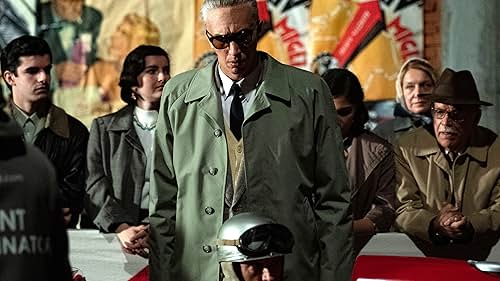
Mann’s typical high-energy approach imbues Ferrari with intensity. The racing sequences generate tension and excitement (especially the Mille Miglia). The film is less certain when focused on more intimate interactions, such as Enzo’s dialogues with his wife and mistress. Mann’s zenith as a filmmaker was in the 1990s (when he made, in succession, The Last of the Mohicans, Heat, and The Insider). Since then, his films have been largely hit-and-miss affairs and he hasn’t made anything for eight years (2015’s Blackhat). Ferrari seems an odd choice for his return to the spotlight but, despite occasional moments of cinematic flair, one would never associate this with the man who spearheaded Miami Vice.

Ferrari is anchored by the strength of Driver’s performance. Partially obscured underneath effective aging makeup, he could easily be mistaken for Michael Imperioli. Driver’s portrayal presents Ferrari as a tragic figure trapped between a loveless marriage with a mentally unstable wife and an affair with the woman and child he wishes he could acknowledge. He is hyper-focused on business but not so consumed that he ignores the gravesite of his recently-deceased adult son, Dino. To the extent that we come to understand Ferrari, it’s more due to Driver’s performance than anything in the screenplay. He is ably supported by a vibrant Penelope Cruz, who enlivens the production whenever she’s on screen. The scene in which her character confronts Enzo with the truth behind her betrayal is riveting.
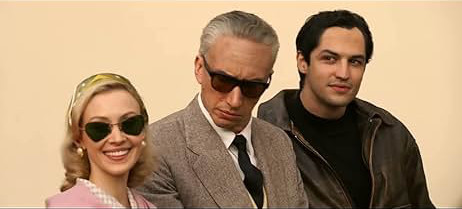
Ferrari may prove a difficult sale for distributors NEON and STX Entertainment. Despite Mann’s involvement, it doesn’t have the cache to be a prestige film and movies of this nature are typically finding greater interest on streaming sites than in theaters. Although Driver’s performance may earn some deserved Oscar buzz, that likely won’t be enough to push the needle and there probably aren’t enough sports car enthusiasts to juice the box office. As a well-acted standard-order bio-pic, Ferrari delivers but as something more, it falls short. (Berardinelli's rating: 3 stars out of 4)

Labels: action, auto-racing, biography, drama, Ferrari, history, romance, sport, tragedy
IMDb 64/100
MetaCritic (critics=73, viewers=65)
RottenTomatoes (critics=73, viewers=73)
Blu-ray
Netflix
Berardinelli's original review (3 out of 4 stars) 

Blogger's comment: While I appreciate Berardinelli's perspective, I believe this period in time was a defining moment in Ferrari's life and I appreciate the historical accuracy. The 1957 Mille Miglia was marred by the tragic death of Ferrari driver Alfonso de Portago, his navigator and nine roadside spectators, including five children, in the village of Guidizzolo when his car hit an object on the road, blew a tire, spun out and became airborne. As a result, the Italian government forever banned all racing on public roads, permanently ending the thousand mile road race.

If you are a fan of auto-racing, and you appreciate films like Grand Prix (1966), RUSH (2013), Ford v Ferrari (2019) and F1: The Movie (2025), I predict you will enjoy Ferrari.


Wednesday, March 11, 2026

F1: The Movie (2025) [PG-13] ****/*****

A film review by James Berardinelli for ReelViews.net, June 26, 2025.


When it comes to the nuts and bolts of car racing movies, there’s a tendency to follow the trends and tropes of the wider sports film genre in which they form a sub-category. The difference is that when Robert Redford steps to the plate or Sylvester Stallone delivers a punch, the stakes tend to be more personal than permanent. Golfers, basketball players, and sluggers generally don’t have to worry about being carted away in a body-bag; the specter of the Grim Reaper is one thing that differentiates F1:The Movie and all its car-racing contemporaries from most sports films. Sometimes in car racing, it’s not so much about crossing the finish line first but living to race another day.

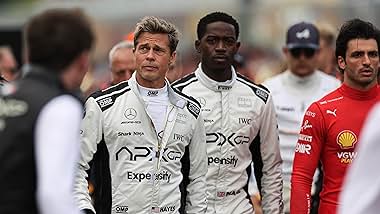
There’s a lot of dramatic potential inherent in this kind of movie but F1 is less interested in developing new tracks than in doing the best it can with existing ones. Ehren Kruger’s by-the-numbers screenplay could have been churned out using AI – the film’s human element aspects are perfunctory and familiar and the narrative rarely veers from the expected trajectory. Those who see F1 shouldn’t expect any surprises or twists and the collaborative involvement of the FIA (the sports’ governing body) takes a lot of possibilities off the table. All that being said, director Joseph Kosinski delivers an experience on par with his earlier mega-hit, Top Gun: Maverick, without the benefit of nostalgia or Tom Cruise. The Grim Reaper’s hovering presence helps with the tension but F1 mostly delivers because of the easygoing charm of Brad Pitt, the energetic camerawork of Claudio Miranda, and the loud, intense score by Hans Zimmer. The movie often pushes the viewer to the point of sensory overload, and that’s where its strength lies. Good luck replicating that at home.


To the extent there’s a non-technical anchor grounding the story, it’s the antagonistic relationship between the two drivers who represent the ne’er-do-well Apex Grand Prix team (APXGP): over-the-hill veteran Sonny Hayes (Pitt) and up-and-coming Joshua Pearce (Damson Idris). Both could use Sinatra’s rendition of My Way as their theme song. Hayes is recruited by his old buddy, Ruben Cervantes (Javier Bardem), the current owner of APXGP, to come out of retirement and give Formula 1 racing one more chance. After initially demurring, Sonny has a change of heart and shows up with his megawatt smile, self-deprecating attitude, and cocky sense of self-assurance – all things that irritate Pearce, the team’s #1 driver. A rivalry develops, fueled by Sonny’s initial track failures. As board member Peter Banning (the always-oily Tobias Menzies) hovers like a vulture, Ruben begins doubting the sanity of his Hail Mary. Sonny might have been a potential star before a near-fatal accident, but that was 30 years ago. Meanwhile, as Sonny tries to build a rapport with the pit crew and other behind-the-scenes members of the team, his flirtations with the chief engineer, Kate McKenna (Kerry Condon), heat up.

It’s a credit to both Pitt and Damson Idris that the fractious relationship between Sonny and Joshua has the force and immediacy it does given the hackneyed nature of the material. Their chemistry transcends the thinness of what’s on the written page. Likewise, there’s an easygoing camaraderie between Sonny and Ruben and genuine sparks between the will-they-or-won’t-they pair of Sonny and Kate. I appreciated that the movie keeps the romantic elements mostly in the background. It adds a dash of flavor without interfering.


Unsurprisingly, F1 shines during the action sequences. As is often the case with racing movies, the events themselves aren’t cinematic (given the length associated with races) but the crashes are. Kosinski’s approach is to home in on big moments, using a variety of camera angles and expert editing techniques to keep the viewer engaged. He also leans heavily on Zimmer’s score, which is suitably overblown for the material, helping to top off the film’s adrenaline-and-testosterone cocktail.

In terms of recent racing movies, I’d put this one a slight notch below James Mangold’s 2019 Ford v. Ferrari, but at least on par with some of the other high-profile efforts like Ron Howard’s 2013 Rush. The effectiveness of the film’s overall aesthetic cannot be understated: what F1 lacks in narrative development it more than compensates for with its thrill-ride aspects. Watching the film, you may not believe you’re in a racing car but you will feel like you’re doing more than passively sitting in a theater seat. [Berardinelli's rating: 3 stars out of 4]

Labels: action, auto-racing, Brad Pitt, drama, sport
IMDb 76/100
MetaCritic (critics=68, viewers=75)
RottenTomatoes (critics=82, viewers=97)
Blu-ray
James Berardinelli's original review

Comment by FB Friend Miki Tokola:

While I agree it was an entertaining movie with lots of dramatic F1 racing, it was not an accurate depiction of current-day F1 racing. The production prioritized hero moments over the strict regulatory environment of the FIA, F1’s ruling body. Three examples are: diving into the inside of a corner from a significant distance back, weaving under braking, and off-track overtaking. All of these are violations of the rules and would result in penalties or disqualification. Another unrealistic element was showing the cars dancing around each other rather than staying on the ideal racing line around the apex of the corner.

I also enjoyed the movie and appreciated the efforts the production team went to include real racing drivers and locations into the movie. It’s important to remember it’s dramatic, exciting fiction and not representative of the driving one would see if you watched a real F1 race.


Monday, February 2, 2026

Downhill Racer (1969) [M] ****

A film review by Roger Ebert for Chicago Sun-Times on Dec 22, 1969.


Some of the best moments in Downhill Racer are moments during which nothing special seems to be happening. They’re moments devoted to capturing the angle of a glance, the curve of a smile, an embarrassed silence. Together they form a portrait of a man that is so complete, and so tragic, that Downhill Racer becomes the best movie ever made about sports — without really being about sports at all.

The champions in any field have got to be, to some degree, fanatics. To be the world’s best skier, or swimmer, or chess player, you’ve got to overdevelop that area of your ability while ignoring almost everything else. This is the point we miss when we persist in describing champions as regular, all-round Joes. If they were, they wouldn’t be champions.

This is the kind of man that Downhill Racer is about: David Chappellet, a member of the U.S. skiing team, who fully experiences his humanity only in the exhilaration of winning. The rest of the time, he’s a strangely cut-off person, incapable of feeling anything very deeply, incapable of communicating with anyone, incapable of love, incapable (even) of being very interesting.

Robert Redford plays this person very well, even though it must have been difficult for Redford to contain his own personality within such a limited character. He plays a man who does nothing well except ski downhill — and does that better than anyone.

But this isn’t one of those rags-to-riches collections of sports clichés, about the kid who fights his way up to champion. It’s closer in tone to the stories of the real champions of our time: Sandy Koufax, Muhammad Ali, Joe Namath, who were the best and knew they were the best and made no effort to mask their arrogance. There is no humility at all in the racer’s character: Not that there should be. At one point, he’s accused by a fellow American of not being a good team man. Another skier replies: Well, this isn’t exactly a team sport.

It isn’t; downhill racing is an intensely individual sport, and we feel that through some remarkable color photography. More often than not, races are shot from the racer’s point of view, and there are long takes that nearly produce vertigo as we hurtle down a mountain. Without bothering to explain much of the technical aspect of skiing, Downhill Racer tells us more about the sport than we imagined a movie could.

The joy of these action sequences is counterpointed by the daily life of the ski amateur. There are the anonymous hotel rooms, one after another, and the deadening continual contact with the team members, and the efforts of the coach (Gene Hackman in a superb performance) to hold the team together and placate its financial backers in New York.

And there is Chappellet’s casual affair with Carole Stahl (Camilla Sparv), who seems to be a sort of ski groupie. She wants to make love to him, and does, but he is so limited, so incapable of understanding her or anything beyond his own image, that she drops him. He never does quite understand why.

The movie balances nicely between this level, and the exuberance of its outdoor location photography. And it does a skillful job of involving us in the competition without really being a movie about competition. In the end, Downhill Racer succeeds so well that instead of wondering whether the hero will win the Olympic race, we want to see what will happen to him if he does. [Ebert's rating:4 stars out of 4]

Blogger's note: When you watch the film you will notice that in German ski racing, in the starting countdown (... three, two, one) the term zwo is used, instead of zwei, for the number two, as in drei, zwo, eins. This is a specific safety measure, designed to insure that zwei (two) is not misheard as drei (three).

Labels: drama, Robert Redford, romance, sport
IMDb 63/100
MetaCritic (critics=89, viewers=74)
RottenTomatoes (critics=85, viewers=57)
Blu-ray
Roger Ebert's original review


Saturday, July 27, 2024

The Boys in the Boat (2023) [PG13] ****

A film review by James Berardinelli for ReelViews.net on December 26, 2023.


The Boys in the Boat is an old-fashioned, uplifting story about the triumph of underdogs. The film radiates the same level of classiness often associated with its director, George Clooney. Sentimental without being saccharine, this based-on-history account of the victory of the U.S. rowing team at the 1936 Berlin Olympics offers likeable characters in a well-structured narrative that never becomes bogged down by extraneous elements.

Mark L. Smith
’s screenplay relies heavily on the source material, Daniel James Brown’s 2013 account of how an unsung University of Washington J.V. rowing team ascended to the upper echelon of the sport, winning a gold medal with Adolf Hitler in attendance. Because those Olympics are remembered primarily for the images crafted by Leni Riefenstahl in Olympia and the triumphs of Jesse Owens, the victory of the rowing team was for many years regarded as a footnote. That changed with the success of Brown’s book, which ascended to #1 on the New York Times Bestseller list. Although the movie rights were quickly optioned (with Kenneth Branagh attached as director), it took a decade for a film to reach movie theaters.

The book
The Boys in the Boat offers a two-pronged approach to the climactic Olympic contest that took place from August 12-14, 1936. To streamline the film’s narrative, the backstory related to the Nazi preparation for the games has been elided, resulting in a focus on the University of Washington’s team as seen primarily through the eyes of one of the rowers, Joe Rantz (Callum Turner). Although several of the other eight boys in the boat are given moments to help differentiate them from one another, Rantz is the lone rower with a fully developed character. The only other three-dimensional individual is Coach Al Ulbrickson (Joel Edgerton). Aside from Joyce Simdars (Hadley Robinson) and Hazel Ulbrickson (Courtney Henggeler) – token roles as Joe’s girlfriend and Al’s wife, respectively – there are no women to speak of.

The curtain rises on 1935 Seattle, with the world mired in the depths of the Great Depression. Joe Rantz, a student at the University of Washington, is facing expulsion from college due to an unpaid tuition bill. Unable to find a job and with day work at a premium, he decides to try out for the school’s rowing team after learning that participants are given paid part-time positions. Of the hundreds of would-be rowers, only eight are selected following a grueling series of try-outs. Joe is one of them. With his economic issues at least temporarily resolved, he settles into bonding with the eight other young men in the Junior Varsity boat as they develop into what would become, in the coach’s words, the best team he has ever seen.

The movie’s sports elements are impeccably recreated; even those who know the ending (as a matter of the historical record) will find an element of suspense in the way Clooney frames them. He does this not by fast-cutting or overly relying on editing but by clean, clear shots both at the boat level and from above. Winning becomes important because we are invested in Joe, who at one point states that being on the team is all he has.

Although
The Boys in the Boat doesn’t have a political agenda, it makes a point of acknowledging Jesse Owens’ importance to the Olympics. Owens doesn’t have a large role in the film – to give him one would unbalance the narrative and take the focus away from the main characters – but he notes that he’s in Berlin not so much to thumb his nose at the Germans but to prove something to everyone back home who doubted him.

Tonally,
The Boys in the Boat is a relatively low-key affair, lacking the overt melodrama that characterizes many sports movies. Nevertheless, in part because of a strong lead performance by Callum Turner, solid supporting work from Joel Edgerton and Peter Guinness (as George Pocock, the boat-builder), and a well-honed screenplay, the film engages viewers on its intended level. The period detail is evocative but not overbearing and there are no forced allegories. Offering inspiration in both the truth of its basis and the way in which it is presented, The Boys in the Boat is an antidote to the pervasive cynicism of the modern era. [Beradinelli’s rating: 3 stars out of 4 = 75%]

Labels: biography, drama, history, sport
IMDb 70/100 
MetaCritic (critics=54, viewers=66) 
RottenTomatoes (critics=57, viewers=96) 
Blu-ray 
Berardinelli’s review 


Wednesday, June 17, 2020

Ford v Ferrari (2019) [PG-13] *****

A film review by James Berardinelli for ReelViews.net on Nov. 14, 2019.

It’s said that the sports movie format works best when telling a true story. Director James Mangold, after having spent some time in the X-Men universe (he helmed both The Wolverine and Logan), has returned to the real world to direct two A-list stars, Matt Damon and Christian Bale, in a story of a different kind of heroism. When it comes to sports movies, race car driving is an underrepresented field, primarily because the act of sitting in a car careening around a track for lap after lap after lap isn’t inherently cinematic. Recognizing this, Mangold limits the racing sequences in Ford v Ferrari to the minimum necessary to ensure audience involvement and divides the focus equally between the sports elements and those faced by the characters when developing and building the cars.

The movie is loosely based on the true story of how Henry Ford II (Tracy Letts) entered into a racing rivalry with Enzo Ferrari (Remo Girone) that culminated in showdowns at the 1965 and 1966 Le Mans. Various factual events have been changed to enhance the drama. Faced with the enormous undertaking of competing against perennial winner Ferrari, Ford tasks executives Lee Iacocca (Jon Bernthal) and Leo Beebe (Josh Lucas) to hire former Le Mans winner Carroll Shelby (Matt Damon) to design a race car. (Note: This is same Lee Iacocca who would revive Chrysler’s fortunes during the 1980s and become a household name by doing so.) When he is given a blank check for the work, Shelby agrees. His team includes Roy Lunn (JJ Field), Phil Remington (Ray McKinnon), and the brilliant but difficult British driver, Ken Miles (Christian Bale). Miles’ irascibility and perceived anti-team attitude earn him Beebe’s ire and he persuades Ford to limit Miles’ involvement to development and test driving. Of course, this being a sports movie, we know that’s not how things are going to end.

Mangold takes Ford v Ferrari out of the simple realm of the genre without entirely losing the vibe. We still have the buildup/training scenes in which the participants prepare for the big contest. We still have a preliminary bout in which the central figure shows his worth. And we still have the showdown. But, although the climax satisfies, it does so in an unconventional fashion. And, in the end, one can make a compelling argument that the true villain isn’t Ferrari or the driver of car #21 but Henry Ford II or his gutless corporate shill, Beebe.

The chemistry between Damon and Bale is solid – an effective meshing of oil and vinegar. Damon is suave, smart, and easy-going. Bale is angry and intense. The best scene featuring the two of them occurs when they engage in a fist-fight outside Miles’ home while his unconcerned wife, Mollie (Caitriona Balfe), pulls up a lawn chair to spectate. It’s one of a number of comedy-tinged scenes. Although Mangold culls the expected tension from the racing scenes, he’s not above going for the funny bone. Witness what happens when Shelby takes Mr. Ford for a little ride. Tracy Letts’ reaction is priceless.

Ford v Ferrari has a pacing issue. While gearheads, racing fans, and some engineers may disagree, the movie goes too deep into the nuts & bolts. There’s too much about the minutia of designing and building the cars. Although the racing scenes are bracing, with just enough first-person, through-the-dashboard shots to give the audience a you are there perspective, there are dead spots in between. This isn’t the first time in 2019 that I’ve felt a movie could have been improved by some judicious cutting. We have reached a point in film evolution where the Extended DVD Director’s Cut has become the theatrical release.

I admire the ways in which Mangold has broadened the sports movie without sacrificing the integrity of its essential elements. There’s a lot more in this production than what one often uncovers in the genre with its elements of corporate greed and the buddy film sideshow. Don’t be put off by the lackluster title. This is solid, middle-of-the-road entertainment. Slow patches aside, it finishes strong and, although it probably won’t win the box office race, it may generate some Oscar interest (because Bale is almost always good enough to warrant that sort of attention). [Berardinelli’s rating: 3 out of 4 stars = 75%]

Blogger’s comment: Ford v Ferrari won Oscars for Best Film Editing and Best Sound Editing.

Labels: action, auto-racing, biography, drama, Ferrari, history, Matt Damon, Sixties, sport


Monday, June 15, 2020

Battle of the Sexes (2017) [PG-13] ****

A film review by James Berardinelli for ReelViews.net on Sept. 29, 2017.

About halfway through Battle of the Sexes, I found myself wishing I was watching a documentary rather than a feature film. Some of the issues raised by the movie - mainly related to a culture that marginalizes women and the struggles of those in the Women’s Liberation Movement to fight against the status quo - are interesting, but the way in which directors Jonathan Dayton & Valerie Faris (Little Miss Sunshine) and writer Simon Beaufoy (The Full Monty) frame them are not. Battle of the Sexes isn’t really about the so-called Battle of the Sexes - a 1973 made-for-TV exhibition tennis match between Bobby Riggs (Steve Carell) and Billie Jean King (Emma Stone). Instead, it’s a surprisingly flat bio-pic of King’s life in 1972-73, with little attempt to make Riggs into anything more than a two-dimensional caricature/foil.

One can make a case that Billie Jean King’s life is sufficiently interesting to warrant a biography. She was, after all, one of the foremost athletes fighting the gender equality wars during the 1970s and one of the first gay tennis players to come out of the closet. Large swaths of Battle of the Sexes are devoted to King’s struggles with her sexuality, but those scenes are flat and obligatory. Her first lesbian relationship, with a hair stylist named Marilyn Barnett (Andrea Riseborough), lacks anything resembling heat, romance, or sensuality. It’s simply a plot point.

As portrayed by Emma Stone in a bit of questionable casting (Stone’s physical resemblance to King is poor under the best of conditions), King is more of an icon than a person. The movie’s treatment of Riggs is even worse. The filmmakers are largely uninterested in him. Riggs is depicted as a caricature, as if his true personality was reflected by the clown he showed to the public. The perfunctory glimpses we are afforded into his life do little to flesh him out. Steve Carell’s performance, however, is an excellent example of mimicry. Not only does he look eerily like Riggs but everything about the way he moves, talks, and acts is evocative of how the champion-turned-hustler presented himself in public.

Two supporting characters are given odd (and historically inaccurate) portrayals. The first, Jack Kramer (Bill Pullman), is rendered as a living representation of male chauvinism - the kind of man who likes women in the bedroom and the kitchen but doesn’t have much use for them elsewhere. For Riggs, sexism is a marketing tool; for Kramer, it’s a sacred birthright. The over-the-top portrayal feels more like a parody than a genuine portrait of a 1970s caveman. Then there’s tennis star Margaret Court (Jessie McNamee) who, despite having an impressive record, is treated as something of a second-rate player.

The central match is poorly staged with no sense of how to draw on the natural momentum and drama of even the hokiest sporting event. This one seems slapped together, with random points being shown before the action jumps forward to another stage in the match. Howard Cosell’s original commentary has been retained, once again emphasizing that this material might have been served as a documentary.

Battle of the Sexes overemphasizes the cultural impact of the Riggs/King match. The filmmakers would have us believe this was an important touchstone and turning point in the war for women’s equality. It was nothing of the kind. Yes, King’s victory gave a boost to women’s tennis (especially in the wake of Court’s unceremonious defeat at Riggs’ hands months earlier), but the match was never viewed as more than a publicity stunt by the millions who watched it on TV. Riggs’ hucksterism stirred the pot and made it must-see TV, but that’s all it was. It wasn’t a referendum on equal rights or a manifesto for Women’s Lib. It was a carnival and a sideshow - things the movie acknowledges in passing but doesn’t fully accept because it would weaken the thesis. Battle of the Sexes is disappointingly shallow and superficial, recreating people and events from an earlier era as the Hollywood of today would like them to be remembered not as they necessarily were. [Berardinelli’s rating: 2 out of 4 stars]

Blogger’s comment: While the average of the five numbers in the links below is 69, the middle of the 4-star range, I totally agree with James Berardinelli’s professional reviews. This is a three-star film on a 5-scale.

Labels: biography, comedy, drama, lesbian, sport


Ferrari: Race to Immortality (2017) [NR] ****


An film review [edited] by Raquel Stecher for Quelle Movies on July 17, 2018.

In the 1950s, auto races at venues like Le Mans and the Nürburgring thrilled spectators and made racers celebrities. It was an exciting and dangerous time in the history of auto racing. This was a gentleman’s sport with much respect for the cars and adoration for the drivers. A first place win guaranteed immortality. During this time the sport wasn’t quite new but was still suffering from growing pains. Technological advancements ensured faster and more efficient vehicles, and racers were beating track speed records year after year. However the sport was still incredibly dangerous. From 1950 to 1960, 39 drivers were killed on the racetrack, an alarmingly high mortality rate.

Was the risk worth the glory? Enzo Ferrari thought so.

In director Daryl Goodrich’s documentary, Ferrari: Race to Immortality he explores the pivotal years of 1955-1958, when Ferrari’s Formula One team was celebrated as one of the most successful teams in racing history. Told through stunning archival footage and audio and interviews with historians, biographers, former racers and those closest to the drivers, we learn about these drivers who lived for the thrill even when death stared them in the face. Key figures in the documentary include Mike HawthornPeter CollinsLuigi MussoEugenio CastelottiMarquis Alonso de PortagoJuan Manuel Fangio and Sir Stirling Moss.

The film also offers background on the figure behind the team and the brand, Enzo Ferrari. He had a very complicated relationship with his business and his drivers. Driven by unwavering ambition, he worked tirelessly to bring prestige to the Ferrari brand. It paid off because Ferrari is still known as one of the most important luxury car brands in the world. He felt little emotion for this team members, with the exception of Peter Collins who had a bond with Enzo’s terminally ill son, Dino.

A key takeaway from the documentary is how death was perceived by the drivers, team members, their significant others and by society as a whole. Today we can look back at this time and be both horrified at what happened and relieved that the sport is much safer now. But in the 1950s, society embraced death in a way we wouldn’t understand today. In the 1955 Le Mans disaster that killed one driver plus over 80 spectators, the race continued and Mike Hawthorn won. Whenever a fellow competitor died on the track, the wins were tempered with sadness but there was also a resilience to keep on. This is a reminder of what people would do for glory and immortality.

This documentary fully immerses you in the world of 1950s racing. Instead of seeing the talking heads, we hear narration over all of the archival footage. The faces of the interview subjects are only revealed in the last ten minutes. This was an interesting filmmaking technique. The footage keeps you in their world, and breaking away to footage of interviews would have just taken the viewer out of it. Also there was a build-up of curiosity about the interview subjects. There was some added some emotional resonance at the end when we finally get to see their faces.

Labels: action, auto-racing, biography, documentary, drama, Ferrari, history, sport, tragedy


Formula 1: Drive to Survive (2019-2020) [TV-MA] *****

A film review by Greg Wheeler for thereviewgeek.com


2018 Season review
2019 Season review 

Labels: action, auto-racing, documentary, sport, tragedy
IMDb 86/100 
RottenTomatoes Averages (critics=NA, viewers=84) 

The Natural: The Best There Ever Was (2016) [NR] ***

Released in 2016, this is a 30th Anniversary Documentary for the 1984 film The Natural. Participating in the documentary which was done in a casual format are the following: 

Barry Levinson            Director / Self
Mark Johnson              Producer / Self
Ellen Chenoweth          Casting Director / Self
Caleb Deschanel          Cinematographer / Self
Randy Newman           Composer / Self
Sherrie Bradshaw        Accounting Asst / Self
Roger Towne               Writer / Self

Kim Basinger               Memo Paris / Self
Wilford Brimley           Pop Fisher / Self
Barbara Hershey         Harriet Bird / Self
Barry Kivel                  Pat McGee / Self
Michael Madsen           Bartholomew Bump Bailey / Self
Robert Redford            Roy Hobbs / Self
Robert Rich III            Ted Hobbs / Self
Mike Starr                    Boone / Self
Jon Van Ness               John Ollie Olsen / Self

Conspicuous by their absence are Glenn Close (Iris Gaines) and Robert Duvall (Max Mercy).

Labels: baseball, documentary, Robert Redford, sport

The Legend of Bagger Vance (2000) [PG-13] ***/****

A film review by James Berardinelli for ReelViews.net.


With
The Legend of Bagger Vance, director Robert Redford has attempted, with only limited success, to do for golf what movies like The Natural and Field of Dreams did for baseball. There are three elements at work in this film. The first is the use of the game as a metaphor for life. The second is a plunge deep into the lore of the sport, throwing away the unsavory modern trappings that have become associated with it and getting back to the purity of the game. Finally, there's the traditional sports movie storyline that culminates in a big game scenario pitting the underdog against a stronger, more experienced champion. Stirring these ingredients together as called for by the recipe should result in an engaging motion picture. Strangely, however, The Legend of Bagger Vance comes across as incomplete and uninvolving. In his zeal to get the period details right and craft a reverent, almost mystical atmosphere, Redford committed a key blunder: he lost sight of the characters' humanity. The men and women inhabiting this motion pictures are types, ciphers, and mouthpieces for slogans, not individuals we can believe in and care for.

With the exception of a framing story that transpires in modern day (and features an uncredited cameo by
Jack Lemmon as the narrator), the majority of The Legend of Bagger Vance takes place in 1928 in Savannah, Georgia. Adele Invergordon (Charlize Theron), the inheritor of her late father's golf resort, has decided to erase her debts by staging a celebrity golf exhibition with a $10,000 prize. There are to be three participants: Bobby Jones (Joel Gretsch), Walter Hagen (Bruce McGill), and a local hero, Rannulph Junuh (Matt Damon), who was once considered to be one of the country's top prospects on the links. But that was before the war, from which he returned damaged and with Post-traumatic Stress Disorder (PTSD). Now, Adele, who was once the love of his life, who still loves him and doesn’t understand why he has spent a decade lost and alone, must convince him to give up his drinking and start swinging the clubs again. It would be an impossible task if not for the aid of a local boy, Hardy Greaves (J. Michael Moncrief), who idolizes Junuh, and the mysterious Bagger Vance (Will Smith), who wanders into Junuh's life one night with a proposal to be his caddy for a guaranteed $5. In the process, he offers all the wisdom he possesses about golf and life.

Despite relying on several tried-and-true sports clichés,
The Legend of Bagger Vance often comes across as pretentious. Redford hammers home the connection between golf and life with a host of half-baked lines that sound like bad dialogue from a self-help book: The rhythm of the game is like the rhythm of life, Inside each and every one of us is one true authentic swing, and The golf course lives and breathes just like us. The capper is that, like life, golf is a game that can't be won, only played. All of these lessons, and many more, come out of the mouth of Bagger Vance, who is like Obi-Wan Kenobi to Junuh's Luke Skywalker. He doles out sage advice, transforming his pupil from a burnt-out drunk into a self-assured man who can face the future.

Not one of these characters has an iota of personality that wasn't clearly manufactured on a screenwriter's word processor. Other than his slogans and sunny smile, there's nothing to Bagger. For all we know, he could be an angel on vacation. We learn plenty about Junuh, but too many of his characteristics are telegraphed, and his background is pieced together via a narrative voiceover accompanied by flashbacks. In the end, he seems more like a construct than a character, and it's difficult to muster much sympathy for him. Adele is a stereotypical tough Southern woman and is used primarily for comic relief and a little romantic tension. The only one who seems remotely real is Hardy, who at least behaves in a way that is consistent with someone his age.

In his best films (such as
The Horse Whisperer and A River Runs Through It), Redford has the ability to draw an audience into the story, building invisible bonds between viewers and characters while filling the screen with sumptuous images. The Legend of Bagger Vance only gets half of the equation right. The movie consistently looks great - there are some twilight and sunset shots that are nothing short of stunning. But the character empathy simply isn't there. We don't care much about what happens to Junuh. His story may be interesting, but he isn't.

One of the questions many people have been asking is whether Will Smith, who is best known for action and comedy roles, can convincingly pull off a low-key, dramatic role (much as he did 7 years ago in
Six Degrees of Separation). The Legend of Bagger Vance does not provide an answer, since Smith is given so little to do that almost any actor (excepting the likes of a Schwarzenegger or Stallone) could have convincingly pulled it off. Likewise, neither Matt Damon nor Charlize Theron has anything to be ashamed of, but Jeremy Leven's screenplay (based on the novel by Steven Pressfield) doesn't give them enough to work with. If there's an acting standout, it's the underrated character actor Bruce McGill, who puts gusto into his portrayal of real-life golfing legend Walter Hagen. McGill's performance brings life to a movie that is too often bogged down in its attempts to raise aspects of golf to an almost-religious level (choral music is even used at one point).

Impeccably crafted movies by respected directors and starring talented young actors don't always work, and
The Legend of Bagger Vance is a case in point. For a film that runs a little over two hours, not a lot happens. One might logically anticipate that golfers will get more out of the film than those who shun the sport, but I don't think that's an accurate assumption. Redford has gone out of his way to make The Legend of Bagger Vance inclusive (that's the reason the game/life parallels are spelled out so blatantly). Despite its length, the movie isn't dull, but, once the end credits start rolling, it's unlikely to provoke a stronger reaction than a shrug. And, for a sports film that is striving for Olympian heights, such a lackluster response falls considerably short of what Redford was hoping to achieve. © 2000 James Berardinelli [Berardinelli’s rating: 2.5 stars out of 4 = 62.5%]

Labels: drama, fantasy, Matt Damon, reunion, Robert Redford, sport
IMDb 67/100 
MetaCritic (critics=47, viewers=78) 
RottenTomatoes (critics=43, viewers=65) 
Blu-ray


Sunday, June 14, 2020

Winning: The Racing Life of Paul Newman (2015) [NR] ****/*****

A film review by Brian Orndorf for blu-ray.com on May 21, 2015.

As an actor, Paul Newman tried to lead a normal life, finding the big spotlight of fame uncomfortable when it couldn’t be used to his advantage. Building an iconic career in film and television, Newman had difficulty finding balance to his life, with soulful clarity found in a most unlikely place: car racing. Winning: The Racing Life of Paul Newman is a highly informative and loving tribute to the star’s secret life, striving to identify a thirst for competition and speed that drove him to seek pleasure on the race track, where his marquee name couldn’t provide an advantage when strapped in behind a wheel.

Winning: The Racing Life of Paul Newman marks the documentary debut for director Adam Carolla, who shares credit with Nate Adams. A car enthusiast and Newman aficionado, Carolla takes special care of the subject, striving to generate a reverent tone for the feature while also digging into the particulars of what came to be a second career for the actor. Of course, as with any story, Winning starts at the beginning, with sibling Arthur Newman describing just what kind of man Paul was during their Ohio upbringing, discussing a level of loyalty that would carry on for the rest of his life, in marriage (Joanne Woodward is only seen in news clips), movies, and racing.

Quickly jumping to Newman’s star-making years, Carolla focuses on the 1969 feature Winning, which provided the actor with his first taste of speed, sharing elation with co-star Robert Wagner as a hobby was born. Guided by driving instructor Bob Bondurant, Newman developed an understanding of racing fundamentals, slowly shaping himself into a competitor, with this dedication to practice and trials putting a strain on his big screen career. After all, the threat of injury was great, leaving studio executives nervous about Newman’s possibly reckless ways, failing to understand the discipline and endurance of racing, finding the actor gradually building a name for himself. Newman was a slow learner, but he was piecing together skill one lap at a time, aided by pal and racing partner Jim “Fitzy” Fitzgerald.

Winning investigates the curse of Newman’s fame, where spectators filled bleachers to watch him race, while press remained pushy, slowing his assimilation into the sport. A man who prided himself on privacy, attention was unwanted, with Newman enjoying the limited exposure racing provided him. There’s also an understanding of Newman’s competitive nature (born from his early years as a failed jock), with racing, unlike acting, providing a clear definition of performance. Instead of articulating art, Newman could prove his mettle in a physical manner, defining position on the track. We also learn of his compassionate side, with Newman’s support of black driver Willy T. Ribbs resulting in a champion who broke the color barrier.

Carolla shellacs Winning in racing lingo and insider knowledge, making the documentary a little difficult to understand for those new to the sport. Clearly, the subject is important to Carolla, with respect for Newman’s achievements flowing throughout the feature, while interviewees such as Robert Redford and Mario Andretti share thoughts on their friend, with everyone coming to the conclusion that Paul Newman was an honorable man who liked to act but loved to race. To break up the any repetition, Winning includes a segment exploring Newman’s fondness for pranks, frequently using his impish sense of humor to entertain his inner circle.

Darkness is also included in Winning, though Carolla has a funny way with transitions, moving from a sobering inspection of Newman’s vulnerability on the track, where crashes were common, to a study of his salad dressing empire and the birth of his charity work. It’s a jarring cut, perhaps identifying Carolla’s hunger to fit everything into the picture (which runs 80 minutes). Tonality is sacrificed, but a fulfilling sense of Newman’s years are captured, watching victories and losses shape his autumnal years, while a friendship with Tom Cruise provided the driver with a famous protégée, bringing additional publicity to the sport.

Winning achieves its goal of illumination, providing appreciation for the actor’s journey into racing, threading through his life’s achievements. Instead of simply identifying a hobby, Carolla has delved entirely into the nuances of the sport and its influence on Newman, adding dimension to the actor that may even surprise longtime fans. [Orndorf’s rating: 7 out of 10 stars]

Labels: action, auto-racing, biography, documentary, Robert Redford, sport