Pages

Showing posts with label satire. Show all posts

Thursday, October 1, 2026

The Devil Wears Prada 2 (2026) [PG-13] ****

A film review by James Berardinelli for reelviews.net on May 1, 2026.


It is a truth universally acknowledged that a single movie in possession of a good box office fortune must be in want of a sequel. (With apologies to Jane Austen.) 

There can be little other explanation why, some twenty years after the release of the moderately enjoyable but by no means extraordinary The Devil Wears Prada, a creatively bankrupt follow-up has been foisted upon the film-going community. This probably sounds unfairly negative - the original is widely beloved and brought in a tidy $125M domestic in 2006 dollars - but this is certainly among the more extreme examples of nostalgia-mining. It is the kind of movie you attend simply to catch up with the characters, hear a few barbed one-liners from Meryl Streep, and ignore the turgid, mostly pointless storyline. It is, in many ways, the fashion world's equivalent of Star Trek: The Motion Picture.

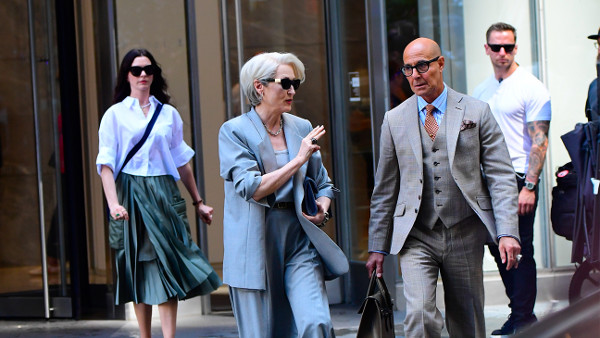
The jaunty trailer for The Devil Wears Prada 2 promises something the movie fails to deliver: a revival of the snarky banter and edgy interactions that made the first two-thirds of the original so much fun. Sadly, all the good stuff is packed into that three-minute piece of marketing genius. The remaining 110 minutes of the actual film operate at a considerably lower level. All the primary players have returned: director David Frankel, screenwriter Aline Brosh McKenna, and stars Anne Hathaway, Meryl Streep, Emily Blunt, and Stanley Tucci. I am quite certain there were many commas and zeros on those paychecks.

The film reprises nearly everything that was mediocre about the first installment while discarding far too much of what was effective. To quote my review from twenty years ago: Its trite message…rings false, and the cloying ending feels like it was written for another film then tacked onto the end of this one. Those words are even more applicable to the sequel. It offers plenty of messages - writ large so they cannot be missed - but no true depth. It is a collage of happily-ever-after endings that feel unearned, populated by subplots and characters that take up space without justifying their existence. As for the satirical zingers and acerbic one-liners? You must hunt diligently to find them and be very generous if you want to laugh.

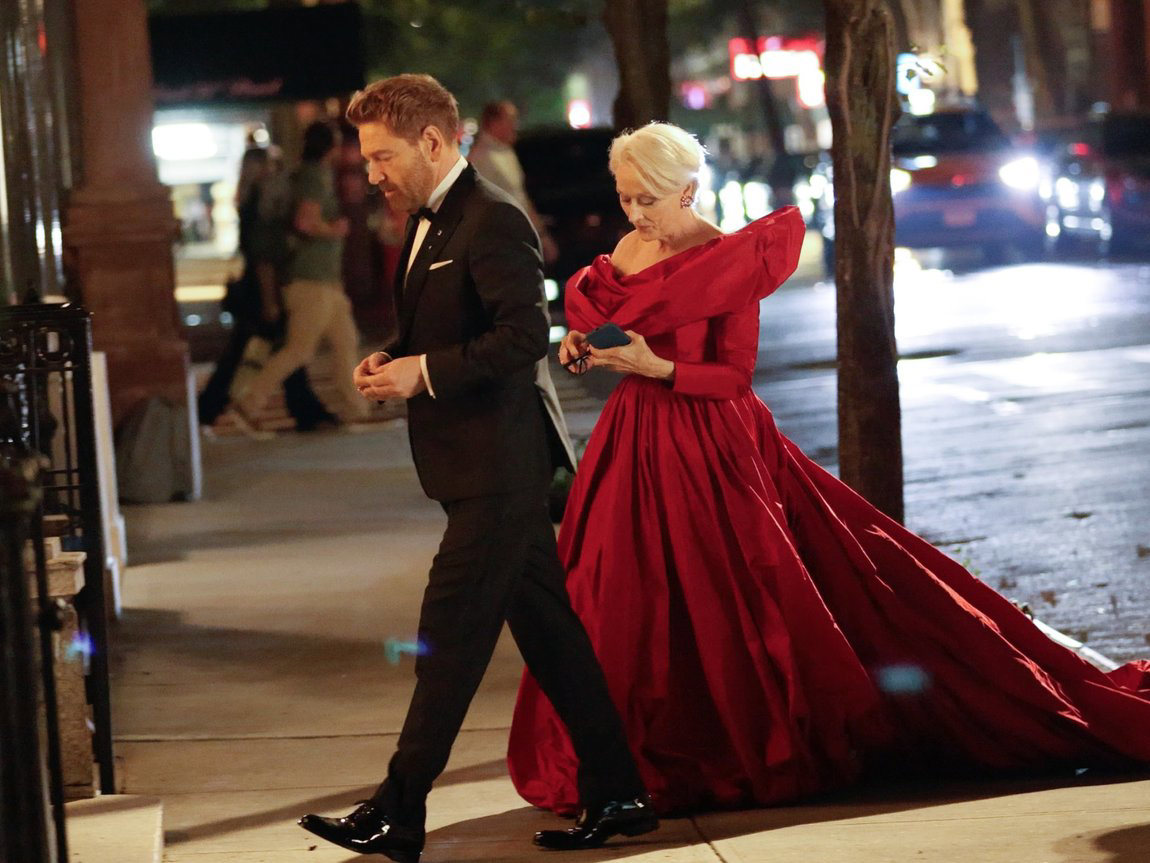
In terms of narrative focus, the movie is equally confused. I suppose the bottom line is a tardy acknowledgment that print journalism is dying and that AI and uncaring billionaires are poised to gut the cultural core of the artistic community. The plot mechanics contrive to bring former personal assistant Andy Sachs (Anne Hathaway), now an award-winning features writer, back into the orbit of her former boss, Miranda Priestly (Meryl Streep). It seems a whiff of scandal has descended upon Runway magazine, and Miranda’s septuagenarian boss thinks Andy - with her sterling reputation and solid writing chops - is the ideal person to clean up the mess. Along the way, Andy crosses paths with Nigel Kipling (Stanley Tucci) and Emily Charlton (Emily Blunt), finds new love with the man who renovated her apartment, and discovers Kenneth Branagh wandering around Miranda’s house, seemingly waiting for his next outing as Poirot. (I may have invented that last bit. Or perhaps not.)

The biggest disappointment, despite the sloppiness of McKenna’s cobbled-together screenplay, is the presentation of Miranda two decades after her first screen appearance. Streep has returned, but her performance is strangely subdued. Miranda seems old and tired. Her put-downs, once capable of making even the most stalwart underling cringe, have a stale, obligatory taste. When she first encounters Andy, she seemingly fails to recognize her former assistant. While this is intended to underscore Miranda’s cold-bloodedness - where every relationship is transitory and transactional - it made me immediately wonder about the onset of dementia.

As sequels go, this is far from the worst. It delivers on core expectations without ever expending the energy to do anything truly creative. There are a few entertaining sequences along the way (keep an eye out for a famous singer), a handful of cameos from people I did not recognize, and the occasional castrating barb from Miranda that hits home. And, if Streep and Blunt are a little disappointing, Stanley Tucci is in fine form. Fifteen minutes into the film, I was desperately wishing they had made the story about Nigel.

So, like so many sequels, fans will likely be satisfied while non-believers will give it a pass. This is not destination cinema. The Devil Wears Prada 2 is harmless enough, although it exists more as an afterthought than a legitimate continuation of a story that was fully told twenty years ago after the first 105 minutes. [Berardinelli's rating: 2 stars out of 4]

Labels: comedy, drama, Emily Blunt, satire
IMDb 63/100 
MetaCritic (critics=63, viewers=59) 
RottenTomatoes Averages (critics=66, viewers=86)
Blu-ray
Berardinelli's review (2 out of 4 stars) 


Friday, January 21, 2022

Bridgerton (Season 1 - 2021) [TV-MA] ****

 A film review by Roxana Hadadi for rogerebert.com on Dec. 24, 2020.

Bridgerton is a scintillating, but somewhat shallow, Regency fantasy

As a genre, romance is frequently described with the kind of dismissive words that suggest a certain inherent, and often sexist, bias. Bodice-ripper isn’t so bad, but trashy is, and the latter comes up quite often in critical analysis of projects that dare to imagine their protagonists happy, in love, and having a lot of sex. This point isn’t to suggest that all romance films are actually good - rest assured that the Fifty Shades of Grey trilogy will not be defended here - but to note that, like the romantic comedy, the romance genre tends to be targeted toward female fans, and also tends to be broadly derided. Is there some kind of connection there? Absolutely. And that’s what makes assessing a project like Netflix’s Bridgerton, with its varying pleasures and failures, so tricky.

On the one hand, the show’s juicier elements - the acrobatic sex, the whispered gossip, the fights and backstabbing - populate some of the series’ most exciting scenes. The ensemble cast tears into the witty one-liners and cutting insults of creator Chris Van Dusen’s adaptation of Julia Quinn’s Bridgerton novels. The production and costume designers amp up the world of privilege these characters occupy with sprawling estates and opulent gardens, extravagant outfits of satin, tulle, and velvet, and elaborate ball after elaborate ball, during which anachronistic choices like Ariana Grande’s Thank U, Next and Billie Eilish’s Bad Guy are performed by the Vitamin String Quartet. From both an aesthetic and erotic perspective, Bridgerton delivers. But where the show falters is in carving paths forward for its characters that feel in any way unique or singular. Instead, some of the storylines stretch out far longer than their natural evolution, while others are hastily introduced and resolved in a fraction of the time. The result is an inconsistently paced effort that ultimately reveals itself as an entirely predictable Pride and Prejudice retread. Bridgerton is amusing enough and will scratch a certain thirsty itch, but its themes about love, marriage, and class aren’t quite as progressive as it would like to think.

Van Dusen’s series transports us to a version of Regency-era England in 1813 that is far more ethnically diverse than history actually allowed. In Bridgerton, the Queen Charlotte (Golda Rosheuvel) with whom the king fell in love is a Black woman, and his adoration of her paved the way for the inclusion of other races other than only white people in proper British society. But few families of any ethnic background can rival the powerful, prestigious Bridgertons, whose eldest daughter Daphne (Phoebe Dynevor) is set to make her society debut. She is everything a desirable young woman should be - delicate, pretty, and slim; clever in conversation and demure otherwise; kind to household staff, commoners, and other elites alike; determined to be a good wife and mother - and the Bridgertons have high hopes that she’ll do well during the upcoming season of balls, parties, dinners, teas, and other events that allow for young men and women to catch each other’s eyes, and their parents to work out the details of their engagements. Although the Queen describing Daphne as flawless in her debut is a triumphant moment, younger Bridgerton sister Eloise (Claudia Jessie) correctly observes that the other 200 or so young women who also came out to society that year now have a collective adversary. What men will be left for them if they’re all off courting Daphne?

But things don’t go quite according to plan. The first issue is the arrival of the beautiful and mysterious Marina Thompson (Ruby Barker), a distant cousin of the tasteless, tactless Featherington family, who are frenemies of the Bridgertons. At the first ball of the season, Marina charms and enchants, while Daphne stumbles - literally. Her bumping into the eligible bachelor Simon, Duke of Hastings (Rege-Jean Page), and their terse conversation afterward, causes a stir. Mothers eager to get a member of the landed gentry interested in their daughters are constantly watching, and any misstep of Daphne’s could damage her marriage prospects. When Daphne realizes that her overprotective older brother Anthony (Jonathan Bailey), now the viscount of the house after her father’s death, is going to scare away any suitors whom he doesn’t consider promising, and when she learns that Simon is utterly disinterested in marriage and wants to get everyone off his back, the two of them hatch a plan. If Simon and Daphne pretend to be courting, Daphne’s unavailability will renew male interest in her, while Simon’s suggested affection for Daphne will dissuade female interest in him. They can’t stand each other (she calls him a rake; he calls her desperate), but each of them gets what they want - as long as the secretive Lady Whistledown, who serves as the series’ narrator (voiced by Julie Andrews), doesn’t find out about the scheme and spill the dirt in her rabidly consumed scandal sheet.

Of course, if you’ve read any Jane Austen novel, or seen any romantic comedy from the last 30 or so years (from Pretty Woman through Easy A), you can guess where this is going. Frustratingly, however, Bridgerton takes its sweet time getting there. About half the season is devoted to characters dancing around each other rather than proclaiming what they want, and after relationships are finally established, major obstacles are then inserted into the lovers’ paths, only to be hastily resolved. The inconsistent pacing makes for early episodes that drag and latter installments that seem too rushed, in particular a subplot about whether the purpose of marriage is love for its own sake, or children and familial legacy.

Those are major questions that Bridgerton tidily wraps up in about one episode’s time, sometimes with characters’ decision making taking place entirely off-screen, and the result is that certain arcs end up shortchanged. What causes a young woman to break up with one of the Bridgerton brothers after their prolonged, passionate affair? What inspires the individual who is eventually revealed as Lady Whistledown? What effect does the death of a patriarch have on a certain family? Bridgerton wants a little morsel of story for nearly everyone (except for the household staff members, maids, housekeepers, cooks, and servants, who are universally devoted, loyal, and perfectly happy serving all these rich people), which is admirable. But some characters get such scraps that it almost seems like a disservice to have made the attempt at all. And some of the series’ greatest shortcomings are how inconsistently it addresses the model minority pressure placed upon the characters who were elevated upward as a result of Charlotte marrying into the royal family, and how little attention it pays to Charlotte herself as a Black woman attempting to rule a country alone, rather than just serving as the ailing king’s wife.

Still, the cast is game for pretty much anything, and their willingness to throw themselves into numerous outsized declarations of love and a staggering array of energetic sex scenes (which last longer than you would expect, and are appreciably egalitarian in their focus on both male and female pleasure) sells a lot of this. Dynevor and Page have solid chemistry, and they convey the transforming feelings of the central couple. Their pivot into increasingly sexual flirtation, including a conversation about masturbation, is abrupt, but pays off with a callback later on. Also wonderful are Nicola Coughlan as the brainy Featherington daughter Penelope, whose close friendship with Eloise has been forged over years of rolling their eyes at their families’ antics, and Adjoa Andoh as Lady Danbury, a mother figure for Simon who can pull strings with the best of them. The flashbacks focusing on her tutelage of a young Simon allow the actress to display both steeliness and tenderness; Andoh’s performance is the most multifaceted performance of the whole show. Austenites will rejoice at scenes where one character gently pulls off another’s gloves or undoes the many tiny buttons of her undergarments, and when a declaration of love is given during a thunderstorm. And some of the series’ funniest moments arise from a self-aware cheekiness at the absurdity of this world: Anthony’s steward diverting his horse’s gaze from Anthony having sex with a woman up against a tree; one of the Featherington daughters fainting before Queen Charlotte because of a too-tight corset; Portia Featherington (Polly Walker) snapping at her daughter Penelope to put down a book lest it confuse your thoughts, and her husband, Lord Featherington (Ben Miller) for gambling away their wealth. More of that irreverence would have served Bridgerton well, instead of three separate episodes during which Daphne and Eloise struggle to understand what sex is and how women become pregnant. That thematic bludgeoning isn’t the show’s strong suit.

The primary issue, though, is that Bridgerton is most interested in maintaining a specific heterosexual woman’s fantasy, and will shuffle past legitimate concerns raised by its very narrative to maintain that dream. There is a formula for joy in Bridgerton, and the show never really strays from those beats: buck tradition and find a love match instead of an arranged marriage; be relieved to find that the man in question is fabulously wealthy; have immediately perfect and flawlessly exceptional sex; step up as a protective matriarch while maintaining your attractiveness and sexual desirability; live happily ever after. That soothing familiarity makes for pleasant viewing, but boring viewing, too. I am going to be a princess! Daphne exclaims at one point, her pouty proclamation complete with a foot stomp. Bridgerton is best when it services the scintillating elements of this story rather than the self-satisfied part.

Blogger’s comments: I must admit that I enjoyed Season 1 of Bridgertonas a delicious satire. The lily-white Court of St. James, from Queen Elizabeth on down, must be as horrified as Harry and Meghan are amused.


Labels: drama, period, romance, satire
IMDb 73/100

MetaScore (critics=73, viewers=54)
RottenTomatoes Averages (critics=87, viewers=72)

Netflix
Roxana Hadadi’s published review

Lady Whistledown's guide to Bridgerton


Monday, December 27, 2021

Don’t Look Up (2021) [R] ****

An edited film review by Vince Mancini for UPROXX on Dec. 18, 2021.

Don’t Look Up, from Vice / The Big Short director Adam McKay, is a well-intended satire, about how American politicians and tech titans wouldn’t be able to stop being venal and self-interested long enough to save themselves, even if there was a comet heading straight for Earth. Think Armageddon in the style of Veep.

While McKay, who began his career as a director of goofy comedies, like The Other Guys and Stepbrothers, still knows how to structure a joke, his sensibility often feels too dated for a cutting satire of modern media. Don’t Look Up is a strong idea (with story credit to McKay and journalist David Sirota), and lots of the individual jokes work, but at times it gets so caught up trying to make fun of so many different things that it seems to lack an internal logic. Satire in and of itself isn’t quite a story.


Jennifer Lawrence plays Kate Dibiasky, a doctoral student with severe art bangs who discovers a massive comet (a planet killer, as it’s described later) late one night while singing along to Wu-Tang during her shift manning the Subaru telescope. Dibiasky, who feels very much like a middle-aged white man’s idea of cool hipster, eventually alerts her Michigan State Univ. doctoral thesis advisor, Dr. Randall Mindy, played by Leonardo DiCaprio in a dowdy beard and enjoyably dorky Midwestern accent. Together they make the rounds, trying first to inform the government, then the public, all in an attempt to get someone to do something about it.

Their tour takes them first to Dr. Teddy Oglethorpe, head of NASA’s Planetary Defense Coordination Office, which a title card informs us is a real office that actually exists. Rob Morgan plays Oglethorpe, an enjoyably idiosyncratic character who probably deserved more screen time than he gets.

McKay pulled this same sort of fourth-wall-breaking shtick in Vice and The Big Short, and I do enjoy it, within reason. It makes sense to be clear that the Planetary Defense Coordination Office is a real thing, because it sounds like something this kind of movie would invent (the Subaru Telescope is apparently real too, maybe that could’ve used a title card). The bigger issue in Don’t Look Up is that there’s a kind of dissonance between its extremely on-the-nose elements (aping the font and color schemes of MAGA hats and posters) and its unnecessarily fictionalized ones. In a scene in which a social media consultant discusses the engagement Mindy and Dibiasky received during a morning show segment, real social media platforms are all bowdlerized as VroomVroom, Friendlink, Rabble, and Diddly, in a way that feels almost deferentially courtly. Why not just say Facebook and Twitter? McKay doesn’t seem like a guy afraid of offending Mark Zuckerberg.

And again, those site names don’t really land as jokes, partly because they feel like parodies of sites from five or 10 years ago, not ones five or 10 years from now. For a director who clearly loves shooting montages of memes and tweets, McKay doesn’t seem to have that solid a grasp of what makes a great tweet or meme (in fairness he does do clickbait headline parody quite well).

By contrast, the hosts of the morning show on which Dr. Mindy and Dibiasky appear are played enjoyably, by Tyler Perry, who for all his corniness as a writer/director is still a pretty damned solid comedic actor, and Cate Blanchett, in a set of unnaturally white veneers and over-the-top TV makeup that somehow still make her look hot. She plays a sort of fake-dumb-blonde, cosmopolitan rich girl getting her bag on TV, as a satire of
Laura Ingraham, Greta Van Susteren, Megyn Kelly, Stacey Dash, Martha MacCallum or Kayleigh McEnany.

Meryl Streep is similarly great as President Orlean (a callback to her playing Susan Orlean in Adaptation?), a sort of careerist hybrid Trump/Kamala more worried about the midterm elections than she is about the impending apocalypse. Her chief of staff is her dopey son, played wonderfully by Jonah Hill in what feels like a combination of his Inside SoCal character from SNL (Dad, it’s just a kicker) and his own clean and rad and powerful emails.

Just when it seems like Dibiasky and Dr. Mindy have finally gotten the president to act, she gets sidetracked by Peter Isherwell, a robotic tech tycoon played by Mark Rylance in another solid turn, as a character who’s clearly a riff on Jeff Bezos, with shades of Mark Zuckerberg and Jack Dorsey. The whole story turns on this shift, from the president’s decision to go with Isherwell’s pie-in-the-sky plan to not just deflect the comet but get rich from it, rather than follow the recommendations of scientists. It’s the defining shift of the movie, and also kind of where it falls apart.

President Orlean becomes not just a careerist, but a pseudo-climate denier, with her new slogan, Don’t Look Up urging supporters to ignore the reality of the killer comet. It’s easy to see what point McKay is trying to say here, about leaders putting profits ahead of saving the planet and treating a global crisis as just another geopolitical game, but plot-wise it doesn’t quite track. Ariana Grande, playing a fictionalized version of herself, has a come-to-Jesus moment and tries to help get the public to care, releasing a song about how she wishes she’d listened to the scientists. Aside from her character being vaguely sketched, science is real feels like the kind of yard sign liberalism McKay is normally above. More broadly, individual characters’ motivations and story arcs get short shrift in favor of trying to lampoon as many things as possible.

The classic Hollywood idea was that a global crisis would force an end to our petty squabbling, as seen in movies like Armageddon and Independence Day. This was probably based on the general cultural takeaway from World War II, that when the chips were down, we’d eventually come together and kill the fascists. (the Fourth of July will no longer be known as an American holiday, but as the day the world declared in one voice: ‘We will not go quietly into the night!')

Now that we’ve seen plenty of crises that seem to have the opposite effect, factionalizing the populace, polarizing our experience of objective reality and seemingly driving everyone insane, it has manifested in our fiction. Children of Men and The Leftovers saw its characters slide into magical thinking, hostility, and cultism in response to societal upheaval, borne out in real life with things like QAnon and people getting really into crystals.


Don’t Look Up clearly wants to be the comedic, more overtly satirical The Leftovers, but its satire is too backward looking. And whereas The Leftovers was always character-first, Don’t Look Up feels more like a series of sketches. Lots of those sketches are reasonably funny, but they don’t always maintain a consistent logic. [Mancini’s rating: 2.5 stars out of 4]

Blogger's comment: While Meryl Streep did a reasonably good job as President Orlean, I would have cast Alec Baldwin doing his famous blonde comb-over and gotten Brooklyn Decker or Alice Eve to play his well-endowed blonde daughter. But that's just me.

Labels: comedy, drama, satire, sci-fi, tragedy
IMDb 73/100

MetaScore (critics=50, viewers=57)
RottenTomatoes Averages (critics=62, viewers=80)


Tuesday, June 16, 2020

Downsizing (2017) [R] ***

A film review by James Berardinelli for ReelViews.net on Dec. 22, 2017.

For a movie about small people, Downsizing certainly thinks big… too big, perhaps. Director/co-writer Alexander Payne has done such a good job of world-building that there are far too many ideas, subplots, and opportunities for one two-hour film to contain and the sense of truncation becomes constraining. (A TV/streaming mini-series à la Westworld might have been perfect.) Unfortunately, the primary story Downsizing elects to follow turns out to be rather unremarkable. The character arc of Paul Safranek (Matt Damon) lacks verve and, although some will appreciate the low-key denouement, the film as a whole exudes unfulfilled potential and the ending provokes little more than a shrug of the shoulders. I cared less about the resolution of Paul’s story than was needed for the movie to succeed.

The movie opens at an unspecified future date. Scientists in Norway, having determined that overpopulation is the greatest threat facing humankind, devise a way to miniaturize living creatures. Five years later, a pioneer team, led by Dr. Jorgen Asbjornsen (Rolf Lassgard), have set up a commune for small people. It becomes a major news story and, when we first meet Paul at an Omaha bar, he is amazed. Ten years into the future, downsizing, as the process has become known, is an increasingly popular option for cash-strapped middle-class citizens seeking to stretch their money. Although scientists initially envisioned downsizing as an environmentally friendly lifestyle (a five-inch person has a vastly smaller carbon footprint than a full-sized individual), one dollar in the big world is worth orders of magnitude more in the small one. So many people are transitioning in order to lead a life of luxury.

Paul and his wife, Audrey (Kristen Wiig), decided to make a plunge when their mortgage application is rejected due to a poor earnings-to-debt ratio. They learn that their assets – all $150K of them – will be worth more than $12M in Leisureland. So they take the leap but, when Paul awakens, he learns that everything didn’t go as expected. Instead of living in the lap of luxury, he’s forced to rent an apartment living beneath the obnoxious Dusan Mirkovic (Christoph Waltz) and take a job for a cleaning service run by Vietnam refugee Ngoc Lan Tran (Hong Chau), who was forced by her government to undergo the downsizing process.

It would be easy enough to dismiss Downsizing as an adult version of Honey, I Shrunk the Kids, but that would be unfair. The only elements the films share is the shrinking aspect. Downsizing isn’t an adventure film – it’s a serious movie dealing with serious issues. Environmental irresponsibility and climate change are both on Payne’s mind. He also has an ax to grind about the current culture of consumerism. Downsizing, like many sci-fi/fantasy movies, is political.

The movie’s most obvious flaw – and it’s a huge one – is that, after establishing everything and introducing the characters, it doesn’t seem to know what to do with the vast canvas. So it paints a small picture, using only a fraction of the available real estate, and doesn’t do enough to engage the audience. The first 45 minutes of Downsizing are brilliant. The final 90 minutes are mediocre at best and there are times when things sputter and seem not to have a clear direction. Eventually, we figure out that Downsizing is about Paul’s existential journey, but he’s not the most dynamic of characters. The only thing that works is his relationship with Ngoc Lan Tran, and that’s in part because (despite caricature elements like her broken English) she’s a more interesting person than he is. The movie is already spinning its wheels when Payne decides to toss in an end of the world scenario. It’s either poorly thought-out or poorly explained (difficult to ascertain which is the case) and introduces a lot of head-scratching questions. The ending is muted and anti-climactic.

For Payne, whose precise, incisive efforts have included Sideways and Nebraska, Downsizing may be his most serious movie to date – and his least effective. Although it doesn’t abandon satire altogether (there are biting cameos by Neil Patrick Harris and Laura Dern), most of Paul’s journey is presented without tongue in cheek. There are occasions when Payne remembers to inject a little comedy into the dialogue (one example being when two characters banter about which of the nine kinds of American fuck they had) but the initially playful tone turns dour and the preaching grows louder. This is partly intentional – the more we learn about the world of the downsized downtrodden, the more apparent it becomes that the process hasn’t wiped away class struggles and income inequality – but it’s also a result of the lack of narrative momentum.

As Downsizing progressed, I realized that I wanted to learn more about just about every character in the film except Paul. Damon’s earnestness, which was an asset in The Martian, does nothing here. He and actress Hong Chau exhibit chemistry but it’s not enough to keep Downsizing from capsizing. The fundamental miscalculation is thinking that Paul’s story is sufficiently interesting to captivate a viewer. There are some fantastic things happening in Downsizing. It’s a movie of big concepts and bigger aspirations. Unfortunately, the central character is as small figuratively as he is literally, and that limits the movie’s capacity to enthrall and engage. [Berardinelli’s rating: 2.5 out of 4 stars]

Blogger’s comment: This is an example of a good concept being turned into a mediocre screenplay. So much of this was poorly thought out. For example, what about the non-human creatures that are going to see downsized humans as prey? And while the downsized goods and services will have a reduced need for raw materials and energy, the labor input will be the same, and might arguably be higher. This was not factored into the economic equation.

Labels: comedy, drama, Matt Damon, satire, sci-fi


Sunday, June 14, 2020

It’s a Disaster (2012) [R] ****

An edited film review by Peter Debruge for Variety.com on July 8, 2012.


A toxic device detonated in downtown Los Angeles ruins an otherwise routine couples’ brunch in the slow-to-start, fun-to-finish
It’s a Disaster, a smart, character-driven chamber play in which the cataclysmic off-screen event escalates the tensions between four already testy pairs.

Pete (
Blaise Miller) and Emma (Erinn Hayes) have been hosting Sunday brunch with their closest friends forever, but this weekend, they’re planning to drop a bomb on the group: After years of marriage, the seemingly perfect couple is splitting up. The news would no doubt dominate the gang’s weekly reunion if someone else — maybe terrorists, maybe aliens — hadn’t dropped a real bomb a few miles away.

A toxic cloud, either radiation from a dirty bomb, or VX nerve-gas, is slowly spreading toward them, and audiences have reason to be grateful, since it radically shifts the focus away from the superficial small-talk of the overlong first act. If such an incident can have a silver lining, it’s how radically the off-screen attack improves the drama of an otherwise insufferable get-together. Once the guests figure out the explanation for all the sirens and power outages, Emma’s vegan quiche suddenly doesn’t seem so important.

Since most of the brunch-goers have known each other for years, writer-director
Todd Berger introduces a well-meaning newcomer to serve as audience surrogate: David Cross, still in daffy Arrested Development mode, plays Glen, who arrives with Tracy (Julia Stiles), the one woman in the group who can’t seem to hold a boyfriend. By contrast, Buck (Kevin M. Brennan) and Lexi (Rachel Boston) have a bed-hopping open marriage, while Shane (Jeff Grace) and Hedy (America Ferrera) have been engaged longer than many marriages last.

As for Tracy, sooner or later, all of her boyfriends turn out to be crazy, which explains why she has chosen someone like Glen who
appears to be normal. Cross is ready-built for the kind of awkward comedy that ensues whenever he tries to connect with such a close-knit clique, as when the poor outsider is propositioned by Buck and Lexi looking for one last three-way.

Considering how shrill and obnoxious everyone seems when Glen and Tracy arrive on the scene, it’s uncanny how Berger manages to win over the audience. Still, by the film’s hilariously hopeless ending, many will be feeling a mild form of Stockholm syndrome, having been captivated in these desperate final hours by such a colorful group of clearly delineated characters.

Part of the fun is watching how such extreme circumstances change the various individuals’ personalities. Ferrera goes into shock, and Stiles, who plays a physician, gets pushed aside somewhat because Cross is needed to serve as a go-between with all the others. But Berger’s script does a fine job of giving each of the characters a reasonably juicy reaction to both the situation and the various unresolved issues in their relationships.

Writer-director Berger, who makes a cameo as Hal, a nutty neighbor wearing a hazmat suit and gas mask, doesn’t indulge in any especially wild or creative choices behind the camera. Rather, he shrewdly sticks to a screenplay that is more than dense enough with clever jokes and punchy conversation to carry the concept.

Whether serious (
Testament) or satiric (Zombieland), any film concerned with the fallout from a major disaster, whether radiation or nerve gas, depends heavily on character, and this is where all the attention paid to building a believable ensemble pays off. Audiences may not care about this group when the party starts, but once the real situation becomes clear to everyone, the group makes for pretty interesting and entertaining company. [Debruge's apparent rating: 3.5 stars out of 5 = 70%]

Labels: comedy, drama, Julia Stiles, satire
IMDb 64/100 
MetaScore (critics=57, viewers=67) 
RottenTomatoes Averages (critics=63, viewers=68) 
Blu-ray 
Wikipedia 
Variety review 


Friday, June 5, 2020

Birdman or (The Unexpected Virtue of Ignorance) (2014) [R] *****

A film review by James Berardinelli, for ReelViews.net on Oct. 17, 2014.

Birdman (subtitled Or the Unexpected Virtue of Ignorance) is an ensemble film about theater life that occasionally takes time away from its dramatic/comedic narrative to skewer the pop culture sensibilities that have given rise to the so-called modern blockbuster. Directed by Alejandro Gonzalez Inarritu, the film occasionally ventures into Spike Jonze territory, making the viewer uncertain whether certain bizarre interludes are depictions of the main character's mental instability or actual events. The movie is punctuated by comedy that at times verges on slapstick but there's an underlying anger in evidence - anger at the popular mindset that allows movies like Transformers to flourish while artistic endeavors fail.

At the focal point of Birdman is aging actor Riggan Thomson (Michael Keaton). Twenty years ago, he was a household name as the star of the mega-successful Birdman superhero franchise. After the second sequel, however, he turned his attention to other things, none of which were successful. Now, in an attempt to prove he can do something other than Birdman, he has adapted a Raymond Carver short story into a play that's in previews for a Broadway opening. In addition to being the writer, Riggan is also the director and star. As opening day approaches, he is understandably nervous. His cast consists of Mike Shiner (Edward Norton), a genuine talent with a deserved reputation for upstaging directors; his old friend Lesley (Naomi Watts), who is realizing a lifelong dream of appearing in a Broadway production; and his lover, Laura (Andrea Riseborough), who is disappointed about a false pregnancy. His daughter, Sam (Emma Stone), recently out of rehab, is hanging around backstage and his best friend/manager, Brandon (Zach Galifianakis), is trying to hold everything together. Meanwhile, the vultures - in the person of the influential New York Times theater critic (Lindsay Duncan) - are circling.

One of the most notable aspects of Birdman, for good or ill, is the manner in which Inarritu, a notoriously unconventional director whose previous endeavors include 21 Grams and Babel, has chosen to make the movie. With the aid of digital editing to erase the seams, Birdman appears to have been filmed in a single, unbroken take (excepting a short prologue and epilogue). This is partially illusion but the actors have spoken about having to recite page after page of dialogue while hitting their marks so the stylistic conceit has its roots in reality. Although this is a unique approach (especially in an era when long takes have become increasingly rare, replaced by rapid-fire ADD editing) and emphasizes the theatrical elements of the narrative, one could ask the legitimate question of whether it becomes a distraction. Does the style become so cumbersome that it detracts from the narrative? There are instances when I would argue that the answer is yes. Consider, for example, the visual contortions when the camera has to navigate corridors in order to follow a character or when there's a time lapse to indicate the passage of time.

Inarritu unquestionably has an ax to grind and he has honed the edge. By contrasting theater with cinema, he is able to posit that the former represents art while the latter is overcome by crass commercialism. He has a little fun with this concept - there's a scene in which he indulges himself by trying his hand at a little Michael Bay-style mayhem. (This, by the way, is the movie's most logistically challenging sequence - presenting an alien/monster attack without cutting.) He uses the fictional Birdman as a stand-for Batman, the role Michael Keaton played until 1992 (the year Riggan quit the Birdman franchise). And, in addition to Keaton, he employs two actors who have had major roles in superhero franchises (Edward Norton, who played the title role in The Incredible Hulk, and Emma Stone, Gwen Stacy in The Amazing Spider-Man and its sequel).

The performances are uniformly excellent. This is the best work Michael Keaton has done in years. Edward Norton is in fine form in a role that allows him to poke fun at his own reputation while simultaneously creating a new and memorable character. His portrayal of Mike Shiner is riveting. Emma Stone, Andrea Riseborough, and Naomi Watts all contribute. Lindsay Duncan has a small but memorable part as an acerbic theater critic - it's hard to decide based on this portrayal how Inarritu feels about the profession, although it's clear he believes critics wield too much influence for the effort they put forth. (This may have once been true but, especially in the internet era, could be disputed today.)

There are times when the dialogue in Birdman verges on the pretentious but the quality of acting covers some flaws and the overall storyline is so compelling that it's easy to forgive some of the movie's excesses. The film also includes its share of laugh-out-loud moments - Michael Keaton navigating Times Square in his underwear comes to mind. The girl/girl kiss seems gratuitous but I'm not going to complain. Overall, Birdman offers two hours of thought-provoking entertainment. For those who have grown weary of the multiplex blockbuster culture, it's refreshing to have a filmmaker join the choir. And, in an era when far too many directors play it safe, Inarritu's penchant for the quirky and outrageous offers a welcome change-of-pace, even if it doesn't always work. Birdman won't find many adherents among the Transformers-loving crowd but, for the rest of us, it says a lot of things worth hearing. [Berardinelli’s rating: 3 out of 4]

The supporting cast includes Amy Ryan (as Sylvia).

Labels: comedy, drama, satire


Love at the Top (Le mouton enragé) (1974) [R] ****

Nicolas Mallet (Jean-Louis Trintignant), a timid, middle-aged, bank clerk, sees Marie-Paule (Jane Birkin), a beautiful but lonely young girl, gazing out at the Seine. She smiles at him and he offers to buy her a drink. When she agrees, he assumes that his luck has finally changed. But when later on they rent a room in a cheap hotel, he discovers that she is a prostitute. Before they make love, he hits her out of frustration, and then forces her to tell him that she came to the hotel because she truly wanted him.

Feeling expansive after his tryst, Nicolas meets his old friend Claude Fabre (Jean-Pierre Cassel), a frustrated, second-rate novelist, in their favorite bistro and tells him about his experience with Marie-Paule. Intrigued and inspired by Nicolas' accomplishment, Claude decides to teach him how to manipulate wealthy, influential people within the Parisian socio-economic system of which he is presently just a victim, in order to transform him into a man whom women cannot resist and with whom wealthy, politically-connected men will want to do business. And then Claude will use Nicolas’ transformation as the basis for his next novel. It’s a brilliant idea but will have unforeseen consequences.

Claude begins by suggesting that Nicolas seduce Roberte (Romy Schneider), the sexually frustrated wife of an aging professor. For a while Claude allows the lovers to enjoy their affair, and even plan to marry and have a child together, but eventually he decides that Roberte is not necessary to his plan for Nicolas and suggests that they separate, which Nicolas resists. Under Claude’s influence, Nicholas quits his job at the bank and begins to meet a succession of increasingly politically and economically influential men and women. Over time Nicholas changes and evolves until he has become the wealthy publisher of a National Enquirer-like scandal sheet, lives in a mansion, drives a Lamborghini and seduces movie actresses. Unfortunately, there are tragic consequences to Claude’s suggestions and Nicolas’ actions, and by the end of the film corpses litter the landscape.


Michel Deville directed Love at the Top (in French: Le mouton enrage) nearly a half-century ago, but its visual style and very intelligent social commentary give it a strikingly contemporary feeling. Love at the Top blends cynicism and social awareness to expose the hypocrisy of a society in which everyone has a price. Trintignant is the star of the film, but Cassel, Birkin and Schneider are equally impressive.

Labels: comedy, drama, Paris, Romy Schneider, satire, tragedy
IMDb 71/100

RottenTomatoes Averages (critics=NA, viewers=72)
Blu-ray

Wikipedia Love at the Top (film)
Wikipedia Romy Schneider

NYTimes Archive


National Lampoon's Animal House (1978) [R] ****

A film review by Roger Ebert in 1978.

What we need right now, Otter tells his fraternity brothers, is a stupid, futile gesture on someone's part. And no fraternity on campus -- on any campus -- is better qualified to provide such a gesture than the Deltas. They have the title role in National Lampoon's Animal House, which remembers all the way back to 1962, when college was simpler, beer was cheaper, and girls were harder to seduce.

The movie is vulgar, raunchy, ribald, and occasionally scatological. It is also the funniest comedy since Mel Brooks made The Producers (1968). Animal House is funny for some of the same reasons the National Lampoon is funny (and Second City and Saturday Night Live are funny): Because it finds some kind of precarious balance between insanity and accuracy, between cheerfully wretched excess and an ability to reproduce the most revealing nuances of human behavior. In one sense there has never been a campus like this movie's Faber University, which was apparently founded by the lead pencil tycoon and has as its motto Knowledge is Good. In another sense, Faber University is a microcosm of ... I was going to say our society, but why get serious? Let someone else discuss the symbolism of Bluto's ability to crush a beer can against his forehead.

Bluto is, of course, the most animalistic of the Deltas. He's played by John Belushi, and the performance is all the more remarkable because Bluto has hardly any dialogue. He isn't a talker, he's an event. His best scenes are played in silence (as when he lasciviously scales a ladder to peek at a sorority pillow fight).

Bluto and his brothers are engaged in a holding action against civilization. They are in favor of beer, women, song, motorcycles, Playboy centerfolds, and making rude noises. They are opposed to studying, serious thought, the Dean, the regulations governing fraternities, and, most especially, the disgusting behavior of the Omegas -- a house so respectable it has even given an ROTC commander to the world.

The movie was written by National Lampoon contributors (including Harold Ramis, who was in Second City at the same time Belushi was), and was directed by John Landis. It's like an end run around Hollywood's traditional notions of comedy. It's anarchic, messy, and filled with energy. It assaults us. Part of the movie's impact comes from its sheer level of manic energy: When beer kegs and Hell's Angels come bursting through the windows of the Delta House, the anarchy is infectious. But the movie's better made (and better acted) than we might at first realize. It takes skill to create this sort of comic pitch, and the movie's filled with characters that are sketched a little more absorbingly than they had to be, and acted with perception.

For example: Tim Matheson, as Otter, the ladies' man, achieves a kind of grace in his obsession. John Vernon, as the Dean of Students, has a blue-eyed, rule-book hatefulness that's inspired. Verna Bloom as his dipsomaniacal wife, has just the right balance of cynicism and desperation. Donald Sutherland, a paranoic early sixties pothead, nods solemnly at sophomoric truisms and admits he's as bored by Milton as everyone else.

And stalking through everything is Bluto, almost a natural force: He lusts, he thirsts, he consumes cafeterias full of food, and he pours an entire fifth of Jack Daniel's into his mouth, belches, and observes, Thanks. I needed that. He has, as I suggested, little dialogue. But it is telling. When the Delta House is kicked off campus and the Deltas are thrown out of school, he makes, in a moment of silence, a philosophical observation: Seven years down the drain. What the situation requires, of course, is a stupid, futile gesture on someone's part.

Labels: college, comedy, satire, Sixties