Pages

Showing posts with label auto-racing. Show all posts

Friday, May 8, 2026

Ferrari (2023) [R] ****

A film review by James Berardinelli for ReelViews.net on Dec. 23, 2023.


With Ferrari, Michael Mann falls afoul of one of the pitfalls of the bio-pic: by focusing too tightly on one brief period in the main character’s life, he creates an is that all there is? feeling. Although the real Enzo Ferrari was a larger-than-life individual, the movie, which focuses on events from 1957, provides only the briefest of glimpses into the life of one the 20th century’s icons, relying on dialogue to fill in some of the blanks. Although this approach is arguably preferable to an alternative – attempting to cram 50+ years into two hours – it results in viewers never really understanding Ferrari as a man. Despite a riveting portrayal by Adam Driver, he remains an inscrutable figure even after spending 130 minutes with him.

Ferrari drops us into Enzo’s life in early 1957, follows him through several months until just after the final Mille Miglia race (May 11-12), then exits with many plot threads left unresolved. It is therefore more of a snapshot than a full-fledged biography. The movie explores the business difficulties experienced by Ferrari (the company), which is drowning in red ink. Enzo, still emotionally rent by the death of his son, Dino (who died in June 1956), is involved in an increasingly difficult marriage with his wife of 34 years, Laura (Penelope Cruz), and is facing demands from his long-time mistress, Lina Lardi (Shailene Woodley), regarding his illegitimate son, Piero. While attempting to balance family issues, Enzo hires a new, hot shot driver, Alfonso De Portago (Gabriel Leone), and enters five cars into the 1000-mile cross-Italy Mille Miglia where a win would increase the company’s prestige sufficiently to allow Enzo to enter into a favorable partnership with a larger car manufacturer, such as Fiat or Ford.
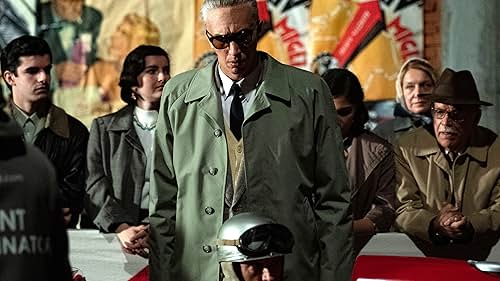
Mann’s typical high-energy approach imbues Ferrari with intensity. The racing sequences generate tension and excitement (especially the Mille Miglia). The film is less certain when focused on more intimate interactions, such as Enzo’s dialogues with his wife and mistress. Mann’s zenith as a filmmaker was in the 1990s (when he made, in succession, The Last of the Mohicans, Heat, and The Insider). Since then, his films have been largely hit-and-miss affairs and he hasn’t made anything for eight years (2015’s Blackhat). Ferrari seems an odd choice for his return to the spotlight but, despite occasional moments of cinematic flair, one would never associate this with the man who spearheaded Miami Vice.

Ferrari is anchored by the strength of Driver’s performance. Partially obscured underneath effective aging makeup, he could easily be mistaken for Michael Imperioli. Driver’s portrayal presents Ferrari as a tragic figure trapped between a loveless marriage with a mentally unstable wife and an affair with the woman and child he wishes he could acknowledge. He is hyper-focused on business but not so consumed that he ignores the gravesite of his recently-deceased adult son, Dino. To the extent that we come to understand Ferrari, it’s more due to Driver’s performance than anything in the screenplay. He is ably supported by a vibrant Penelope Cruz, who enlivens the production whenever she’s on screen. The scene in which her character confronts Enzo with the truth behind her betrayal is riveting.
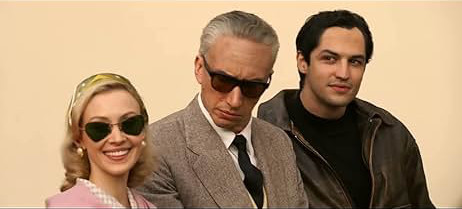
Ferrari may prove a difficult sale for distributors NEON and STX Entertainment. Despite Mann’s involvement, it doesn’t have the cache to be a prestige film and movies of this nature are typically finding greater interest on streaming sites than in theaters. Although Driver’s performance may earn some deserved Oscar buzz, that likely won’t be enough to push the needle and there probably aren’t enough sports car enthusiasts to juice the box office. As a well-acted standard-order bio-pic, Ferrari delivers but as something more, it falls short. (Berardinelli's rating: 3 stars out of 4)

Labels: action, auto-racing, biography, drama, Ferrari, history, romance, sport, tragedy
IMDb 64/100
MetaCritic (critics=73, viewers=65)
RottenTomatoes (critics=73, viewers=73)
Blu-ray
Netflix
Berardinelli's original review (3 out of 4 stars) 

Blogger's comment: While I appreciate Berardinelli's perspective, I believe this period in time was a defining moment in Ferrari's life and I appreciate the historical accuracy. The 1957 Mille Miglia was marred by the tragic death of Ferrari driver Alfonso de Portago, his navigator and nine roadside spectators, including five children, in the village of Guidizzolo when his car hit an object on the road, blew a tire, spun out and became airborne. As a result, the Italian government forever banned all racing on public roads, permanently ending the thousand mile road race.

If you are a fan of auto-racing, and you appreciate films like Grand Prix (1966), RUSH (2013), Ford v Ferrari (2019) and F1: The Movie (2025), I predict you will enjoy Ferrari.


Wednesday, March 11, 2026

F1: The Movie (2025) [PG-13] ****/*****

A film review by James Berardinelli for ReelViews.net, June 26, 2025.


When it comes to the nuts and bolts of car racing movies, there’s a tendency to follow the trends and tropes of the wider sports film genre in which they form a sub-category. The difference is that when Robert Redford steps to the plate or Sylvester Stallone delivers a punch, the stakes tend to be more personal than permanent. Golfers, basketball players, and sluggers generally don’t have to worry about being carted away in a body-bag; the specter of the Grim Reaper is one thing that differentiates F1:The Movie and all its car-racing contemporaries from most sports films. Sometimes in car racing, it’s not so much about crossing the finish line first but living to race another day.

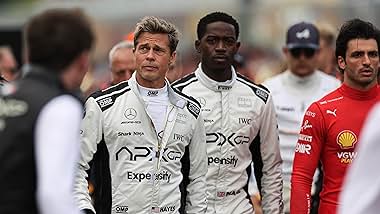
There’s a lot of dramatic potential inherent in this kind of movie but F1 is less interested in developing new tracks than in doing the best it can with existing ones. Ehren Kruger’s by-the-numbers screenplay could have been churned out using AI – the film’s human element aspects are perfunctory and familiar and the narrative rarely veers from the expected trajectory. Those who see F1 shouldn’t expect any surprises or twists and the collaborative involvement of the FIA (the sports’ governing body) takes a lot of possibilities off the table. All that being said, director Joseph Kosinski delivers an experience on par with his earlier mega-hit, Top Gun: Maverick, without the benefit of nostalgia or Tom Cruise. The Grim Reaper’s hovering presence helps with the tension but F1 mostly delivers because of the easygoing charm of Brad Pitt, the energetic camerawork of Claudio Miranda, and the loud, intense score by Hans Zimmer. The movie often pushes the viewer to the point of sensory overload, and that’s where its strength lies. Good luck replicating that at home.


To the extent there’s a non-technical anchor grounding the story, it’s the antagonistic relationship between the two drivers who represent the ne’er-do-well Apex Grand Prix team (APXGP): over-the-hill veteran Sonny Hayes (Pitt) and up-and-coming Joshua Pearce (Damson Idris). Both could use Sinatra’s rendition of My Way as their theme song. Hayes is recruited by his old buddy, Ruben Cervantes (Javier Bardem), the current owner of APXGP, to come out of retirement and give Formula 1 racing one more chance. After initially demurring, Sonny has a change of heart and shows up with his megawatt smile, self-deprecating attitude, and cocky sense of self-assurance – all things that irritate Pearce, the team’s #1 driver. A rivalry develops, fueled by Sonny’s initial track failures. As board member Peter Banning (the always-oily Tobias Menzies) hovers like a vulture, Ruben begins doubting the sanity of his Hail Mary. Sonny might have been a potential star before a near-fatal accident, but that was 30 years ago. Meanwhile, as Sonny tries to build a rapport with the pit crew and other behind-the-scenes members of the team, his flirtations with the chief engineer, Kate McKenna (Kerry Condon), heat up.

It’s a credit to both Pitt and Damson Idris that the fractious relationship between Sonny and Joshua has the force and immediacy it does given the hackneyed nature of the material. Their chemistry transcends the thinness of what’s on the written page. Likewise, there’s an easygoing camaraderie between Sonny and Ruben and genuine sparks between the will-they-or-won’t-they pair of Sonny and Kate. I appreciated that the movie keeps the romantic elements mostly in the background. It adds a dash of flavor without interfering.


Unsurprisingly, F1 shines during the action sequences. As is often the case with racing movies, the events themselves aren’t cinematic (given the length associated with races) but the crashes are. Kosinski’s approach is to home in on big moments, using a variety of camera angles and expert editing techniques to keep the viewer engaged. He also leans heavily on Zimmer’s score, which is suitably overblown for the material, helping to top off the film’s adrenaline-and-testosterone cocktail.

In terms of recent racing movies, I’d put this one a slight notch below James Mangold’s 2019 Ford v. Ferrari, but at least on par with some of the other high-profile efforts like Ron Howard’s 2013 Rush. The effectiveness of the film’s overall aesthetic cannot be understated: what F1 lacks in narrative development it more than compensates for with its thrill-ride aspects. Watching the film, you may not believe you’re in a racing car but you will feel like you’re doing more than passively sitting in a theater seat. [Berardinelli's rating: 3 stars out of 4]

Labels: action, auto-racing, Brad Pitt, drama, sport
IMDb 76/100
MetaCritic (critics=68, viewers=75)
RottenTomatoes (critics=82, viewers=97)
Blu-ray
James Berardinelli's original review

Comment by FB Friend Miki Tokola:

While I agree it was an entertaining movie with lots of dramatic F1 racing, it was not an accurate depiction of current-day F1 racing. The production prioritized hero moments over the strict regulatory environment of the FIA, F1’s ruling body. Three examples are: diving into the inside of a corner from a significant distance back, weaving under braking, and off-track overtaking. All of these are violations of the rules and would result in penalties or disqualification. Another unrealistic element was showing the cars dancing around each other rather than staying on the ideal racing line around the apex of the corner.

I also enjoyed the movie and appreciated the efforts the production team went to include real racing drivers and locations into the movie. It’s important to remember it’s dramatic, exciting fiction and not representative of the driving one would see if you watched a real F1 race.


Wednesday, June 17, 2020

Ford v Ferrari (2019) [PG-13] *****

A film review by James Berardinelli for ReelViews.net on Nov. 14, 2019.

It’s said that the sports movie format works best when telling a true story. Director James Mangold, after having spent some time in the X-Men universe (he helmed both The Wolverine and Logan), has returned to the real world to direct two A-list stars, Matt Damon and Christian Bale, in a story of a different kind of heroism. When it comes to sports movies, race car driving is an underrepresented field, primarily because the act of sitting in a car careening around a track for lap after lap after lap isn’t inherently cinematic. Recognizing this, Mangold limits the racing sequences in Ford v Ferrari to the minimum necessary to ensure audience involvement and divides the focus equally between the sports elements and those faced by the characters when developing and building the cars.

The movie is loosely based on the true story of how Henry Ford II (Tracy Letts) entered into a racing rivalry with Enzo Ferrari (Remo Girone) that culminated in showdowns at the 1965 and 1966 Le Mans. Various factual events have been changed to enhance the drama. Faced with the enormous undertaking of competing against perennial winner Ferrari, Ford tasks executives Lee Iacocca (Jon Bernthal) and Leo Beebe (Josh Lucas) to hire former Le Mans winner Carroll Shelby (Matt Damon) to design a race car. (Note: This is same Lee Iacocca who would revive Chrysler’s fortunes during the 1980s and become a household name by doing so.) When he is given a blank check for the work, Shelby agrees. His team includes Roy Lunn (JJ Field), Phil Remington (Ray McKinnon), and the brilliant but difficult British driver, Ken Miles (Christian Bale). Miles’ irascibility and perceived anti-team attitude earn him Beebe’s ire and he persuades Ford to limit Miles’ involvement to development and test driving. Of course, this being a sports movie, we know that’s not how things are going to end.

Mangold takes Ford v Ferrari out of the simple realm of the genre without entirely losing the vibe. We still have the buildup/training scenes in which the participants prepare for the big contest. We still have a preliminary bout in which the central figure shows his worth. And we still have the showdown. But, although the climax satisfies, it does so in an unconventional fashion. And, in the end, one can make a compelling argument that the true villain isn’t Ferrari or the driver of car #21 but Henry Ford II or his gutless corporate shill, Beebe.

The chemistry between Damon and Bale is solid – an effective meshing of oil and vinegar. Damon is suave, smart, and easy-going. Bale is angry and intense. The best scene featuring the two of them occurs when they engage in a fist-fight outside Miles’ home while his unconcerned wife, Mollie (Caitriona Balfe), pulls up a lawn chair to spectate. It’s one of a number of comedy-tinged scenes. Although Mangold culls the expected tension from the racing scenes, he’s not above going for the funny bone. Witness what happens when Shelby takes Mr. Ford for a little ride. Tracy Letts’ reaction is priceless.

Ford v Ferrari has a pacing issue. While gearheads, racing fans, and some engineers may disagree, the movie goes too deep into the nuts & bolts. There’s too much about the minutia of designing and building the cars. Although the racing scenes are bracing, with just enough first-person, through-the-dashboard shots to give the audience a you are there perspective, there are dead spots in between. This isn’t the first time in 2019 that I’ve felt a movie could have been improved by some judicious cutting. We have reached a point in film evolution where the Extended DVD Director’s Cut has become the theatrical release.

I admire the ways in which Mangold has broadened the sports movie without sacrificing the integrity of its essential elements. There’s a lot more in this production than what one often uncovers in the genre with its elements of corporate greed and the buddy film sideshow. Don’t be put off by the lackluster title. This is solid, middle-of-the-road entertainment. Slow patches aside, it finishes strong and, although it probably won’t win the box office race, it may generate some Oscar interest (because Bale is almost always good enough to warrant that sort of attention). [Berardinelli’s rating: 3 out of 4 stars = 75%]

Blogger’s comment: Ford v Ferrari won Oscars for Best Film Editing and Best Sound Editing.

Labels: action, auto-racing, biography, drama, Ferrari, history, Matt Damon, Sixties, sport


Monday, June 15, 2020

Ferrari: Race to Immortality (2017) [NR] ****


An film review [edited] by Raquel Stecher for Quelle Movies on July 17, 2018.

In the 1950s, auto races at venues like Le Mans and the Nürburgring thrilled spectators and made racers celebrities. It was an exciting and dangerous time in the history of auto racing. This was a gentleman’s sport with much respect for the cars and adoration for the drivers. A first place win guaranteed immortality. During this time the sport wasn’t quite new but was still suffering from growing pains. Technological advancements ensured faster and more efficient vehicles, and racers were beating track speed records year after year. However the sport was still incredibly dangerous. From 1950 to 1960, 39 drivers were killed on the racetrack, an alarmingly high mortality rate.

Was the risk worth the glory? Enzo Ferrari thought so.

In director Daryl Goodrich’s documentary, Ferrari: Race to Immortality he explores the pivotal years of 1955-1958, when Ferrari’s Formula One team was celebrated as one of the most successful teams in racing history. Told through stunning archival footage and audio and interviews with historians, biographers, former racers and those closest to the drivers, we learn about these drivers who lived for the thrill even when death stared them in the face. Key figures in the documentary include Mike Hawthorn, Peter Collins, Luigi Musso, Eugenio Castelotti, Marquis Alonso de Portago, Juan Manuel Fangio and Sir Stirling Moss.

The film also offers background on the figure behind the team and the brand, Enzo Ferrari. He had a very complicated relationship with his business and his drivers. Driven by unwavering ambition, he worked tirelessly to bring prestige to the Ferrari brand. It paid off because Ferrari is still known as one of the most important luxury car brands in the world. He felt little emotion for this team members, with the exception of Peter Collins who had a bond with Enzo’s terminally ill son, Dino.

A key takeaway from the documentary is how death was perceived by the drivers, team members, their significant others and by society as a whole. Today we can look back at this time and be both horrified at what happened and relieved that the sport is much safer now. But in the 1950s, society embraced death in a way we wouldn’t understand today. In the 1955 Le Mans disaster that killed one driver plus over 80 spectators, the race continued and Mike Hawthorn won. Whenever a fellow competitor died on the track, the wins were tempered with sadness but there was also a resilience to keep on. This is a reminder of what people would do for glory and immortality.

This documentary fully immerses you in the world of 1950s racing. Instead of seeing the talking heads, we hear narration over all of the archival footage. The faces of the interview subjects are only revealed in the last ten minutes. This was an interesting filmmaking technique. The footage keeps you in their world, and breaking away to footage of interviews would have just taken the viewer out of it. Also there was a build-up of curiosity about the interview subjects. There was some added some emotional resonance at the end when we finally get to see their faces.

Labels: action, auto-racing, biography, documentary, drama, Ferrari, history, sport, tragedy


Formula 1: Drive to Survive (2019-2020) [TV-MA] *****

A film review by Greg Wheeler for thereviewgeek.com


2018 Season review
2019 Season review 

Labels: action, auto-racing, documentary, sport, tragedy
IMDb 86/100 
RottenTomatoes Averages (critics=NA, viewers=84) 

Sunday, June 14, 2020

Steve McQueen: The Man & Le Mans (2015) [TV-MA] ****

A film review by Brian Tallerico for RogerEbert.com on Nov. 13, 2015.

We have seen a number of documentaries that attempt to dig below the superficial sheen of celebrity to something deeper about a household name (one of the best, Listen to Me, Marlon came out just this year). And we have seen a number of documentaries that chronicle troubled productions, most notably Hearts of Darkness and Burden of Dreams. Steve McQueen: The Man & Le Mans is a little bit of both types of documentaries, using 1971’s Le Mans as a way to read Steve McQueen’s entire persona. With rare audio of McQueen recorded shortly before his death, interviews with all of the key players in the production of the film (including Steve’s ex-wife Neile Adams and son Chad McQueen) and never-before-seen footage, Gabriel Clarke and John McKenna’s documentary captures a key moment in the life of an icon. Le Mans may not be the film for which McQueen is best-remembered, but the documentary makes a convincing case that it was formative in his life and career, impacting the way he saw family, cinema and the thin line between life and death. The documentary gets a little repetitive in making these points (it could be 20 minutes shorter), but it’s effective nonetheless.

In 1970, Steve McQueen was on top of the world. The Thomas Crown Affair and Bullitt had made him a sex symbol and a household name. He decided to use his star status to bring a passion project to the big screen, a film about the 24-hour car race in France called Le Mans. The year before, James Garner had made Grand Prix with John Frankenheimer, and the fact that another actor had made an inferior work about his love angered McQueen (according to a friend in the film, McQueen, who lived in the apartment above Garner, would piss off his balcony into the actor’s flower bed.) John Sturges, who had directed McQueen in The Magnificent Seven and The Great Escape, would helm the picture, written by Alan Trustman, the screenwriter of Thomas Crown Affair and Bullitt. Think about that for a minute. The director and writer of McQueen’s most notable films to date were behind him on a film about which he felt most passionate. It seemed impossible to fail.

Of course, it did. Almost immediately, there were problems on the set. As so many behind-the-scenes docs have taught us, starting a film without a script isn’t the best plan of action. They were going to go where the race took them. Steve McQueen is living in a mansion in France, making up an expensive racing film as it goes along. And he believes he’s in complete control. He would make the decisions about how the film turned out. He’s sleeping around on his wife (as he was notorious for doing), and then he finds out that he’s been marked for death by the Manson Family—he was even supposed to be at the party where Sharon Tate was killed. He’s been targeted to such a degree that he wants his gun permit renewed, he’s driving cars fast enough that he could die any day, he’s stealing directorial power over the film—at one point, he’s described as being in a heightened state. Yeah, you could say that.

A series of car accidents, including one in which McQueen was driving home his mistress and so it had to be kept quiet, derail production further, and the actor is eventually forced to cede a lot of control over the project, especially after Sturges leaves it and Trustman is kicked off. Who does a film belong to? Its star, director, production company? And what if that film has no real direction? The fact that Le Mans was made at all is kind of a miracle, although it was released to little fanfare as McQueen would go on to make bigger films after it. He didn’t even attend the premiere. However, Le Mans has a loyal audience now due to its remarkable realism. The footage of a camera car racing the track is mesmerizing.

Steve McQueen: The Man & Le Mans is an interesting documentary because it approaches its well-known subject from an unexpected angle. It’s not a biopic, but it uses one production to tell more about its subject than a traditional bio-documentary would do. And interviews with those closest to him, including son Chad McQueen and ex-wife Neile Adams, illuminate this well-known star in a new way. And yet what’s most captivating about The Man & Le Mans is that footage from the film—seeing what a driver sees on this infamous race; seeing that about which McQueen was so passionate about capturing on film. I think Steve would have liked it that way. [Tallerico’s rating: 3 out of 4 stars.]

[Blogger’s comment: the lack of a shooting script with human drama and romantic tension after ten weeks of production virtually doomed Le Mans, and many critics and viewers regard Frankenheimer’s Grand Prix as a far better film.]

Labels: action, auto-racing, biography, documentary, drama


Winning: The Racing Life of Paul Newman (2015) [NR] ****/*****

A film review by Brian Orndorf for blu-ray.com on May 21, 2015.

As an actor, Paul Newman tried to lead a normal life, finding the big spotlight of fame uncomfortable when it couldn’t be used to his advantage. Building an iconic career in film and television, Newman had difficulty finding balance to his life, with soulful clarity found in a most unlikely place: car racing. Winning: The Racing Life of Paul Newman is a highly informative and loving tribute to the star’s secret life, striving to identify a thirst for competition and speed that drove him to seek pleasure on the race track, where his marquee name couldn’t provide an advantage when strapped in behind a wheel.

Winning: The Racing Life of Paul Newman marks the documentary debut for director Adam Carolla, who shares credit with Nate Adams. A car enthusiast and Newman aficionado, Carolla takes special care of the subject, striving to generate a reverent tone for the feature while also digging into the particulars of what came to be a second career for the actor. Of course, as with any story, Winning starts at the beginning, with sibling Arthur Newman describing just what kind of man Paul was during their Ohio upbringing, discussing a level of loyalty that would carry on for the rest of his life, in marriage (Joanne Woodward is only seen in news clips), movies, and racing.

Quickly jumping to Newman’s star-making years, Carolla focuses on the 1969 feature Winning, which provided the actor with his first taste of speed, sharing elation with co-star Robert Wagner as a hobby was born. Guided by driving instructor Bob Bondurant, Newman developed an understanding of racing fundamentals, slowly shaping himself into a competitor, with this dedication to practice and trials putting a strain on his big screen career. After all, the threat of injury was great, leaving studio executives nervous about Newman’s possibly reckless ways, failing to understand the discipline and endurance of racing, finding the actor gradually building a name for himself. Newman was a slow learner, but he was piecing together skill one lap at a time, aided by pal and racing partner Jim “Fitzy” Fitzgerald.

Winning investigates the curse of Newman’s fame, where spectators filled bleachers to watch him race, while press remained pushy, slowing his assimilation into the sport. A man who prided himself on privacy, attention was unwanted, with Newman enjoying the limited exposure racing provided him. There’s also an understanding of Newman’s competitive nature (born from his early years as a failed jock), with racing, unlike acting, providing a clear definition of performance. Instead of articulating art, Newman could prove his mettle in a physical manner, defining position on the track. We also learn of his compassionate side, with Newman’s support of black driver Willy T. Ribbs resulting in a champion who broke the color barrier.

Carolla shellacs Winning in racing lingo and insider knowledge, making the documentary a little difficult to understand for those new to the sport. Clearly, the subject is important to Carolla, with respect for Newman’s achievements flowing throughout the feature, while interviewees such as Robert Redford and Mario Andretti share thoughts on their friend, with everyone coming to the conclusion that Paul Newman was an honorable man who liked to act but loved to race. To break up the any repetition, Winning includes a segment exploring Newman’s fondness for pranks, frequently using his impish sense of humor to entertain his inner circle.

Darkness is also included in Winning, though Carolla has a funny way with transitions, moving from a sobering inspection of Newman’s vulnerability on the track, where crashes were common, to a study of his salad dressing empire and the birth of his charity work. It’s a jarring cut, perhaps identifying Carolla’s hunger to fit everything into the picture (which runs 80 minutes). Tonality is sacrificed, but a fulfilling sense of Newman’s years are captured, watching victories and losses shape his autumnal years, while a friendship with Tom Cruise provided the driver with a famous protégée, bringing additional publicity to the sport.

Winning achieves its goal of illumination, providing appreciation for the actor’s journey into racing, threading through his life’s achievements. Instead of simply identifying a hobby, Carolla has delved entirely into the nuances of the sport and its influence on Newman, adding dimension to the actor that may even surprise longtime fans. [Orndorf’s rating: 7 out of 10 stars]

Labels: action, auto-racing, biography, documentary, Robert Redford, sport


Friday, February 14, 2014

Rush (2013) [R] ****/*****

A film review by Richard Roeper, Movie Columnist, September 26, 2013.

In the individual sports, it’s nearly impossible to become a champion for the ages if you don’t have a fierce and lengthy rivalry with an opponent of near or equal skill and heart. Jack Nicklaus needed Arnold Palmer. Muhammad Ali needed Joe Frazier. Nadal/Federer, Hagler/Hearns, Earnhardt/Waltrip, Duran/Leonard... 

And in the 1970s on the Formula One racing circuit, it was Niki Lauda vs. James Hunt. They needed each other.

Even if you don’t know Formula One from the Soap Box Derby, Ron Howard’s Rush, like all great sports movies inspired by true events, is foremost about getting to know and understand the characters. By the time we get to the inevitable Big Game/Race/Match, the stakes are so high and the drama so real we find ourselves tensing up — even though we’re watching a re-creation of events long since in the record books.

Rush ranks among the best movies about auto racing ever made, featuring two great performances from the leads, who capture not only the physical look of the racing legends they’re playing, but the vastly different character traits that made their rivalry, well, made for the movies.

At first blush the brusque, detail-obsessed, virtually emotion-free Austrian Lauda (Daniel Bruhl) and the cocky, womanizing, partying Brit Hunt (Chris Hemsworth, his blond locks only slightly shorter than Thor’s) are such polar opposites they make Rocky Balboa and Apollo Creed seem like kindred spirits. But as we follow their rivalry from the stepping-stone Formula Three circuit to the big stage of Formula One, we see there’s more to Lauda than his relentless quest for perfection, while Hunt learns the hard way he’s not immune to heartbreak — and he uses that pain to dedicate himself to the world championship.

Lauda’s a perfectionist in the garage, tirelessly working to build a better machine. Hunt figures he’ll floor it when you’re easing off on a turn and he’ll roar past you. When Lauda proposes to his girl Marlene (Alexandra Maria Lara), he says he’ll probably forget her birthday and he’s not much for holding hands, but if I’m going to do this with someone, it might as well be you. Hunt also gets married, but he proposes to supermodel Suzy Miller (Olivia Wilde) because they’re two of the best-looking and most fabulous people on the planet, so why not go for the fairy tale? (Even when the marriage falls apart, it’s in spectacular fashion. Richard Burton steals Suzy while James is brooding and boozing over his stalled racing career.)

Director Howard expertly sprinkles in the domestic scenes while giving us just enough inside baseball sequences to familiarize the non-fan with Formula One racing without getting bogged down in the detail. The terrific script by the great Peter Morgan (The Queen, Frost/Nixon, The Last King of Scotland) keys in on what makes these men risk their lives every day when they go to work — and then we get another cool, 1970s graphic establishing the next European or South American or Asian stop on the 1976 circuit. (Rush is rated R, and it should be. If you’re going to show the horrific crashes, not to mention Hunt boffing his way through half the stewardesses, models and groupies of the time, you can’t just hint at it.)

As Hunt puts it, these Ferraris and McLarens are coffins sitting on high-octane fuel. And though Hunt’s the risk-taker, it’s Lauda who winds up in the hospital, his face horribly burned, his lungs so filled with soot and smoke they have to be vacuumed via a long tube inserted into Lauda’s mouth — while he’s conscious. Less than two months later, Lauda is back in action, against all medical advice. He’s not about to let Hunt take away his title by piling up the points while he’s sidelined. Lauda needs Hunt. Hunt needs Lauda.

Chris Hemsworth is so comic-book handsome it takes a while to realize what a fully realized performance he’s giving, playing a guy who loved the celebration as much as he craved finishing first. Hunt isn’t some empty-headed himbo. He loves racing because it makes him feel like a modern-day knight.

As for Bruhl’s work as Niki Lauda: This is nomination-level acting. The Austrian perfectionist role could have been the stuff of caricature — and indeed Lauda gets most of the laughs in the movie by virtue of his near total lack of social graces. But we also see flickers of playfulness in Lauda’s eyes during a hilarious hitchhiking scene that winds up with him behind the wheel in the Italian countryside, much to the rapture of two fans in the back seat. Bruhl is also magnificent conveying Niki’s maddeningly analytical philosophy (Happiness is the enemy, because when you’re happy you have something to lose) and his relentless determination.

Ron Howard has an Oscar and he’s been one of our best storytellers for 30 years. This is one of his most impressive efforts, with an edgy, kind of Euro feel, especially in the harrowing racing sequences.

Real-life spoiler alert: Niki Lauda passed away in May, 2019 at age 70. James Hunt is long gone. Mr. Lauda had expressed his regrets Mr. Hunt wouldn’t be able to experience Rush.

It would have been great to see them see it together.

Email: rroeper@suntimes.com

Labels: action, auto-racing, biography, drama, Ferrari, history, romance, rom-drama-faves, sport

Saturday, February 8, 2014

1 (2013) [NR] ****

A film review by Martin Liebman for Blu-ray.com on Feb. 18, 2014.

Ready drivers, revving engines, squealing tires, burning rubber, a harmony of moving parts, man and machine bound together by a few straps, both moments from glory and inches from death. 1 shares the tragic history of Formula One racing, a sport dogged by death and fueled by passion, innovation, and a need to test the limits of man and mechanical endurance. It's the story of the men who build the cars, the men who drive the cars, the violent deaths many suffered, and the progress in safety into the modern era. It's a straightforward and oftentimes blunt history of man's fascination with moving fast and building a better product that can propel him faster and further than others, but at the risk of an untimely demise and for the satisfaction of doing something better than anyone else. The film, directed by Paul Crowder (The Last Play at Shea), written by Mark Monroe (The Tillman Story), and narrated by Michael Fassbender (X-Men: First Class), paints a vivid and captivating picture of the juxtaposition between sport and tragedy, desire and mortality, and life and death.

1 covers several decades of Formula One triumph and tragedy, a large roster of rising talent and fallen stars, and a detailed examination of car improvements, failures, and improved safety measures over that time span. The film opens with a study of Formula One's formative years and its first premiere driver, Juan Manuel Fangio, who dominated the sport throughout the 1950s and held a world-record five titles, a total that would not be surpassed for more than forty years. The picture examines the thrills and dangers of racing, focusing on car development and increased speeds which yielded an increased number of fatalities. The picture focuses on a number of drivers over the years and their place in the sport's triumphs and tragedies, including Jim Clark, Graham Hill, Lorenzo Bandini, Jochen Rindt, Jackie Stewart, Roger Williamson and François Cevert. The film focuses heavily on the Niki Lauda - James Hunt rivalry, Lauda's accident and quick return to the sport, and his refusal to finish the 1976 Japanese Grand Prix, citing track safety concerns, a pivotal moment in racing's history and engendering a new push for driver safety. The film follows through to the modern day and the death of Ayrton Senna, the sport's last casualty as of 2012.

1 builds the story of Formula One through the prism of its tragedies and the drivers who befell them. Through driver profiles, interviews with their peers, and vintage footage, the picture assembles a troubling history that speeds towards a more stable present. While it's a relevant approach, it grows difficult to watch in quick order. Even for those unfamiliar with the sport, it becomes clear early on that almost each driver who is a focus will perish in an accident. It's an overload of tragedy, but then again, that's the point. Formula One's history is one of innovation and the daredevils who perished because of those innovations. The film's feeling of despair and hopelessness accentuates that history and drives home the point with relentless and unforgiving bluntness, saved only by the sport's transition to safety-first protocols in the later years and a brief depiction of the joys of competing and winning in as much safety as the sport allows.

The film's rapid-fire depiction of the horrific rate at which drivers died is balanced by a fascinating story of automobile evolution and the greater push towards improved safety measures, measures that were initially road-blocked by money and politics but that were eventually embraced with Formula One's emergence as a force on television and Niki Lauda's injury and refusal to race in unsafe conditions that propelled the sport to better, more advanced safety-first measures that are now a staple of the sport, a sport that's become one of the safest in the auto racing world. The film is smartly assembled in, for the most part, chronological order. It's well-versed and accessible, foregoing an overload of tech terminology in favor of a more audience-friendly, almost casual approach. It will certainly speak more to viewers who are intimately familiar with Formula One and its history, but newcomers or casual race watchers shouldn't be put off by anything in the film. [Liebman’s rating: *** ½ out of 5 stars]

Blogger’s comment: While I enjoyed this documentary, my favorite film on the subject of Formula One racing remains the Ron Howard film Rush, with Chris Hemsworth in the role of British racer James Hunt and Daniel Brühl in the role of Austrian racer Niki Lauda. I would treat documentaries like 1 and Ferrari: Race to Immortality as complementary and supplementary.

Labels: action, auto-racing, documentary, Ferrari, history, sport, tragedy


Monday, February 3, 2014

Senna (2010) [PG-13] *****


A film review by Shawn Levy for The Oregonian on August 25, 2011.

Ego, courage, reflexes, endurance, brute will, a delicate touch, financial backing, and some luck: these are some of the attributes of a champion race car driver. And Ayrton Senna may have had more of them all than anyone.

Hailing from Brazil, which has a tradition of international racing champions, Senna won the coveted Formula One title three times between 1988 and 1991, and finished in the sport’s top four for nine straight years.

Among his fellow racers, the stylish, feverish and sincerely religious Senna was considered a little reckless, a little thin-skinned and a little too fond of himself; and his rivalry with Frenchman Alain Prost, a sometime teammate, was the stuff of legend. But Senna was acknowledged even by his detractors as skilled and resilient, and at home he was feted as rapturously as a soccer player or pop star.

Senna died, famously, in a single-car wreck in the 1994 San Marino (Italy) Grand Prix, passing into legend at the age of 34. That accident came in awful conditions that Senna himself had decried before the race (his history of lobbying for safety made him a thorn in racing authorities’ sides).  And it ended prematurely what seemed liable to become the greatest racing career of all time.

This story is detailed in Senna, a gripping, intimate and rich documentary by Asif Kapadia, which uses volumes of interviews with friends, colleagues, rivals and Senna himself to tell the story of the man and the athlete without narration or interpretation.  In some ways, Senna is as pure and clean as the man’s sport: as actor/racer Paul Newman liked to say, the winners of auto races are determined, unlike movies, by objective criteria.  And although it’s a subjective judgment, it’s hard to see how anyone wouldn’t be absorbed by this fascinating film about a formidable driver and man. [Levy’s rating: B+ or 78-80 in my rating system]

Blogger’s comment: This is a fascinating documentary into the life of Ayrton Senna, one of the premier F1 drivers in the 1980s and early 1990s, beginning with his first season (1984). He was particularly effective in wet weather, but was able to push his car just beyond its theoretical limits in any weather.

The best F1 drivers are always driving at the limit, which means there is no room for error and if they miscalculate, an accident (which F1 drivers call a shunt) can easily be fatal. By deduction, if a driver makes a mistake from which he is able to recover without accident, it means he is not driving at the limit, and he will never be a F1 champion driver.

SPOILER: Ayrton Senna was a highly spiritual individual and just before his last race he related that God had spoken to him and that he would receive the greatest gift of all. Senna was leading in his final race, the Brazilian Grand Prix, when he left the course at a rather routine left-hand corner and crashed into the wall. The suspicion was that his steering had frozen. The autopsy showed he had no broken bones, not even bruises or lacerations, and that his only injury was a suspension arm breaking and piercing his helmet. Had the suspension arm struck six inches higher or lower he would have walked away from the accident.

Labels: auto-racing, biography, documentary, sport, tragedy